Attic Insulation
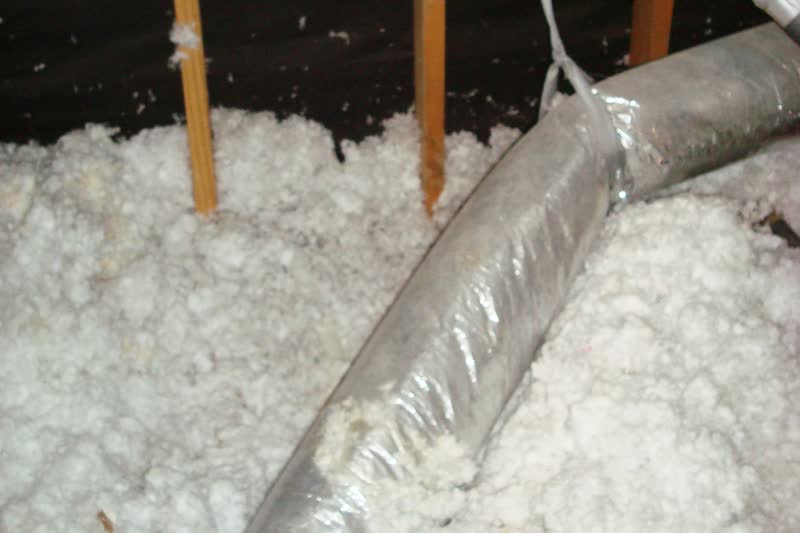
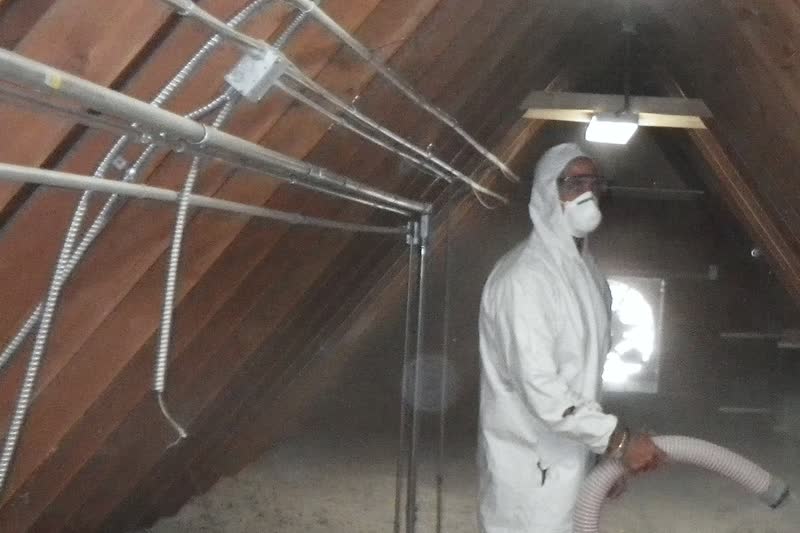
Blown-in fiberglass attic insulation, added to the depth your home needs, to even out hot and cold rooms and cut wasted heating and cooling.
Upstairs too hot in a Greensboro two-story, or a drafty first floor all winter? Our insulation company adds blown-in attic insulation, replaces failed layers, seals leaks and ducts, and insulates walls and floors. Free estimates.
Greensboro is the seat of Guilford County, the third-largest city in North Carolina and the largest in the Triad. Inside the city limits stand houses from the textile boom and houses finished last year. Their attics have very little in common. By the Census Bureau's estimates for 2020 to 2024, 43 percent of its housing units were built before 1980, give or take 1 point, and the median year built is 1985. Our guide on how old homes in North Carolina are sets those figures beside Guilford County's and the state's.
When a house was built tells us most of what to expect overhead. So this page goes in that order. It starts with adding attic insulation and with taking out old insulation that has failed, walks through Greensboro's houses era by era, and ends with air sealing, duct sealing and the rebate worth checking.
Insulation Pros is a family owned and operated insulation company. In Greensboro we take the whole house: attic insulation, removal of a layer that has failed, and the air sealing and duct sealing that go with them, then wall insulation for closed or open walls, garage insulation and crawl space insulation under the floor. If you're comparing insulation contractors for a Greensboro house, here's how we work. We price most Greensboro attics by the size of the attic floor. You can give us that figure, or we'll work it out from the house's outline seen from above, and for most homes nobody has to come by. An attic that needs a closer look gets a special trip. Either way, you pay for what your attic needs and nothing it doesn't.
More for Greensboro homeowners: Attic insulation removal in Greensboro, Attic insulation in Greensboro.

Monday to Sunday 8:00 am to 5:00 pm.
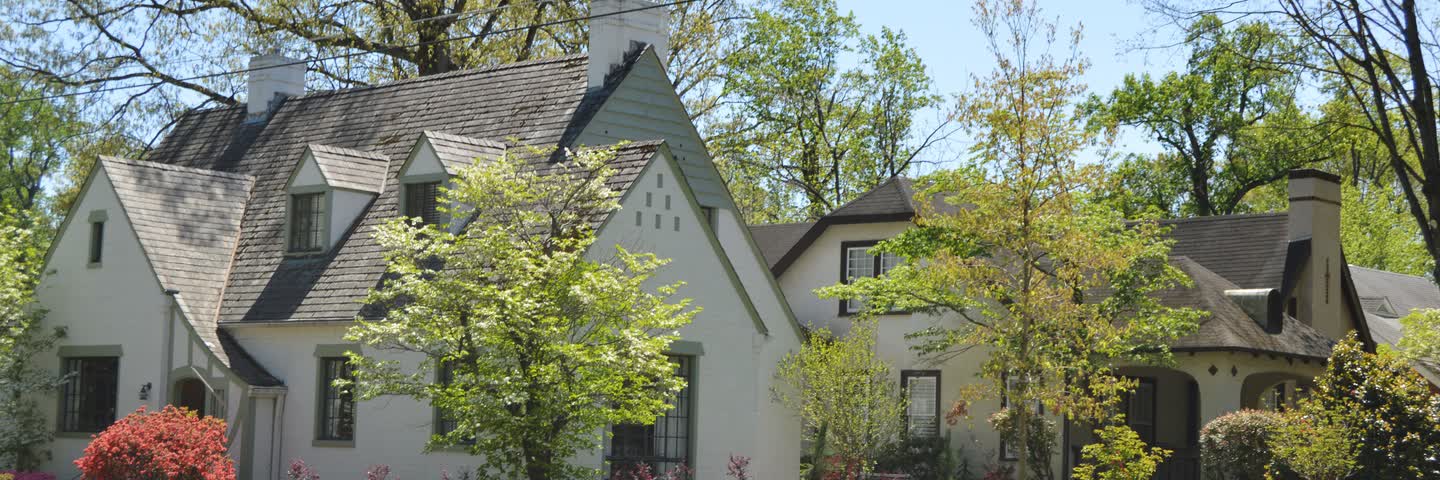
Greensboro's National Register districts run from a company mill village of stucco houses built about 1920 to brick suburbs that filled with Cape Cods in the 1930s and 1940s. Each of those house types tucks its attic into a different part of the roof, so each needs a different plan.
The Cone family's Proximity Manufacturing Company built White Oak New Town around 1920 for its White Oak mill, one hundred houses with hollow tile walls finished in stucco. Eighty are one-story, four-room bungalows of about 1,100 square feet. The other twenty, two stories with six rooms, face each other on Hubbard Street. The nomination notes that the one-story houses kept two interior brick chimney stacks after coal heat ended, and the two-story ones have a single stack off center. A chimney that no longer carries smoke still leaves an open gap where it passes the attic floor. We bridge it with a collar of aluminum sheet bedded in caulk rated for high heat. A ring of metal around the stack then keeps the insulation at least 2 inches off the brick.
Sunset Hills, west of the university campus, was platted by a realty company in 1926 and built up from the late 1920s into the early 1960s, mostly in brick veneer. Its nomination says Cape Cods were especially popular there in the 1930s and 1940s: one-and-a-half-story, side-gabled houses with dormers lighting the upstairs. Period Cottages with steep front gables went up in the same years, and some are a story and a half as well. A house of that shape tucks its second floor under the slope of the roof. Behind the short knee walls of those dormered rooms lie wedge-shaped side attics, and an Iowa state guide to old houses calls them often leaky. Both side wedges get sealed and filled, and so does the shallow strip of attic over the upstairs ceiling.
Attic insulation, removal, air sealing and more. Open one to see how the work goes.
Blown-in fiberglass attic insulation, added to the depth your home needs, to even out hot and cold rooms and cut wasted heating and cooling.
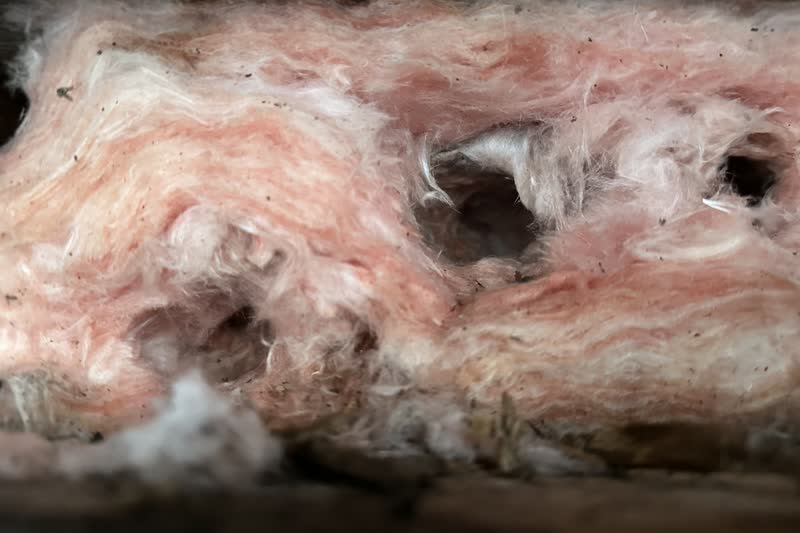
Old, wet, matted or animal-soiled attic insulation vacuumed out, so new insulation can go in on a clean, sealed attic floor.
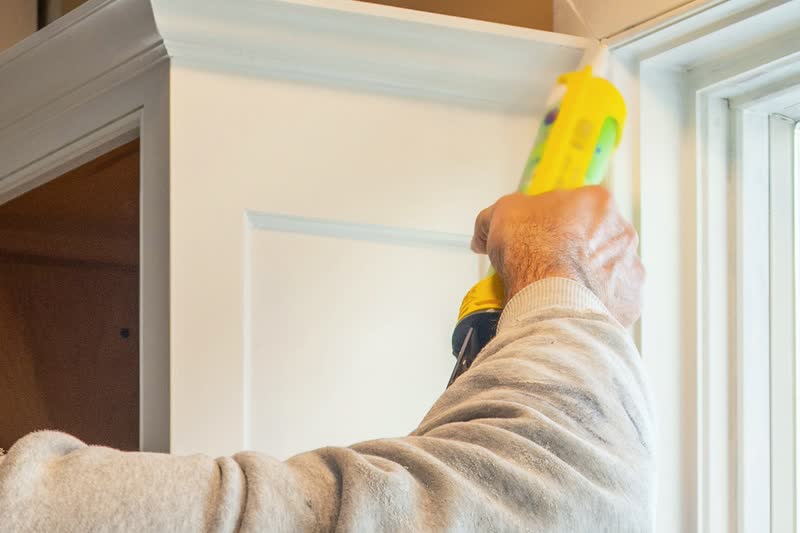
Sealing the gaps between your rooms and the attic, and leaky ductwork, so the air you pay to heat and cool stays inside.
Insulation blown into the closed walls of an existing house, batts in open walls for additions, remodels and new builds, and garage walls and ceilings.
Insulation for the garage ceiling under a bonus room, the wall shared with the house and the garage attic, with air leaks sealed first.
Floor insulation under the house: wet or fallen insulation pulled out, new batts between the floor joists, plastic over the dirt and the floor leaks sealed.
Savings vary. Find out why in the seller's fact sheet on R-values. Higher R-values mean greater insulating power.
In a Greensboro house the attic job can mean blowing loose-fill over the dry layer already up there until the whole floor reaches its target depth. How deep that is, what each era of house may need and what sets the price are on our page about attic insulation in Greensboro.
Greensboro's center sits about 820 feet above sea level, 1 mile from NOAA's Greensboro Water Plant station, the best match. The station's 1991 to 2020 normals average about 3,440 heating and 1,570 cooling degree days a year, so heating needs outweigh cooling there.
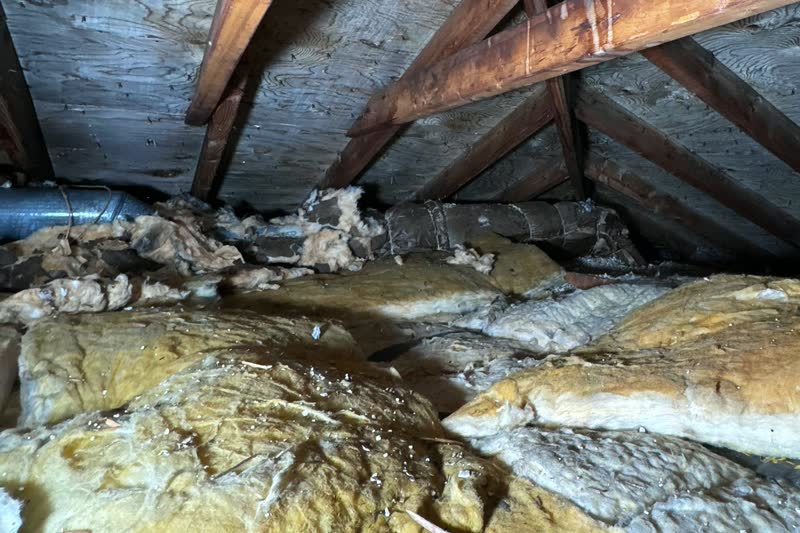
Some old insulation can't be saved: a roof leak soaked it, rats or squirrels nested in it, or it smells of smoke or mildew. A roofer or a wildlife control company stops the cause first, and once the mice are gone, we vacuum the ruined layer out, an attic that mice have used is sanitized and deodorized, and we seal the bare ceiling and blow in a fresh layer, or leave the floor bare if that's all you want.
Vermiculite is the one fill we never vacuum out. The EPA tells homeowners to assume it contains asbestos, so if it turns up in a Greensboro attic, the job stops there for an asbestos contractor. Our page on attic insulation removal in Greensboro covers the rest of the job step by step.
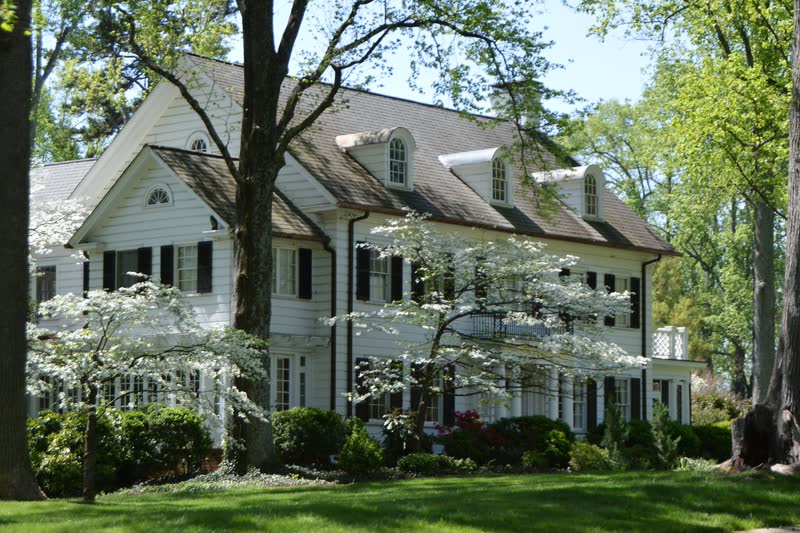
Fisher Park, where a trolley line was running by 1902, and Irving Park, a planned suburb whose houses went up mostly between 1911 and the 1930s, are two of Greensboro's well-known early-1900s neighborhoods. Houses like these can have plaster walls, and very little insulation overhead.
They need a careful hand in the attic. Original wiring gets checked before anything covers it, and anything an electrician should see goes to one first. Some of these attics have plank flooring over the joists or a finished room under the roof. That's the kind of Greensboro house where we're most likely to make a special visit before pricing, because an address can't tell us what's up there.
Greensboro grew fast after World War II, and ranches and split-levels from those years are part of its housing. Overhead there may be an attic that's easy to move around in, with a layer of insulation that's light by today's standards or has packed down over the years. Where the roof drops low at the eaves, the outer edges are the easiest part to miss.
If that layer is still dry and clean, it stays, and new loose-fill goes over it. A patch ruined by an old roof leak or by animals gets vacuumed out first. The attic hatch is weatherstripped and insulated so it stops being the weakest spot in the ceiling, and baffles at the eaves keep the soffit vents open.
In High Point, next door, close to half the housing went up between 1960 and 1999, and our page on attic insulation in High Point covers topping up attics from those decades.
The longer the duct run, the more places it can leak. In a bigger house with the heating and cooling system in the attic, loose joints and boots blow conditioned air into the attic instead of the rooms. Sealing them can make the house more comfortable and ease the load on the equipment. How much depends on how leaky the system was to begin with, so we won't promise you a number.
ENERGY STAR's attic air sealing guide lists recessed lights and the attic hatch among the common places air leaks into the attic. A fixture that isn't rated to be covered gets clear space around it before any insulation goes in.
Tall two-story houses act a bit like chimneys in winter. They lose warm air near the top and pull cold air in down low, so sealing the top-floor ceiling can be where to start.
In Kernersville, a little over half the homes went up between 1990 and 2019, and our page on attic insulation in Kernersville covers what those attics tend to need, from settled loose-fill to plywood storage decks.
Most air sealing is done from the attic side, before insulation covers the leaks. ENERGY STAR tells homeowners to make sure attic holes and gaps are sealed before any insulation is added, whoever does the work. That's the order we follow.
Small gaps around pipes and wiring get caulk or sealant. Bigger openings, like chases and dropped soffits, get rigid blocking sealed in place, and a chimney or flue gets metal flashing and high-temperature caulk around it. Which of these your house needs depends on how it was built, and your price spells out which ones are in it.
Duct sealing does for the ductwork what air sealing does for the ceiling. Joints, connections and the boots behind the registers get mastic or metal tape, the two materials ENERGY STAR recommends over ordinary duct tape, which doesn't last. It matters most in the bigger, newer houses above, where long runs cross the attic. A crushed or disconnected duct needs an HVAC contractor, and we tell you when we find one.
Duke Energy supplies Greensboro's electricity. For gas, the city is in the Guilford County franchise of Piedmont Natural Gas, and 41 percent of homes heat with piped gas.
Rebate to check here: Smart $aver Insulate and Seal (Duke Energy's contractor network). Before a job, check its current terms; the Guilford County page lists every program.
Each page has local notes on the homes and attics in that town.
Guilford County, 8 miles northwest
Median home built 2000, 15 years newer than Greensboro's
Insulation contractor in SummerfieldGuilford County, 12 miles southwest
Median home built 1989, 4 years newer than Greensboro's
Insulation contractor in High PointForsyth County, 14 miles west
Median home built 1995, 10 years newer than Greensboro's
Insulation contractor in KernersvilleRandolph County, 15 miles southwest
Median home built 1986, 1 year newer than Greensboro's
Insulation contractor serving ArchdaleAlso in Guilford County: Jamestown, Oak Ridge, Gibsonville, Pleasant Garden, Sedalia, Stokesdale, and Whitsett. Every town in Guilford County. See all service areas.
Local service pages near Greensboro: Attic Insulation in Summerfield, Attic Insulation in Jamestown, Attic Insulation in Archdale, Attic Insulation in Trinity, Attic Insulation in Burlington, Attic Insulation in Thomasville, Attic Insulation in Winston-Salem, Attic Insulation in Asheboro, Attic Insulation in Clemmons, Attic Insulation in Lexington, Attic Insulation in Lewisville, Attic Insulation Removal in Summerfield, Attic Insulation Removal in High Point, Attic Insulation Removal in Kernersville, Attic Insulation Removal in Archdale, Attic Insulation Removal in Burlington, Attic Insulation Removal in Thomasville, Attic Insulation Removal in Winston-Salem.
What each estimate covers, before the totals. ENERGY STAR's advice on hiring for attic insulation is to get estimates from several contractors. Each estimate should include rafter vents (the baffles that keep the soffit vents open), and the contractor should seal the air leaks in the attic floor before adding insulation; if one won't seal first, ENERGY STAR says to call someone else. Ask for the finished attic as an R-value, with any removal of old insulation on its own line. Duke Energy's Smart $aver rebate only counts work by contractors in Duke's network.
It can be both, and the order matters. Leaks in the ceiling and the ductwork waste the insulation you already have. Tell us which rooms run hot or cold and where the ducts run, and we'll tell you which step is likely to help most in your house. If one step is enough, that's the only one we'll price.
A flashlight at the hatch is enough for a first look. Insulation that's stained or clumped from a roof leak, full of droppings or tunnels, or smelling of mildew or smoke has to come out. A layer that's only thin or dusty can stay under new insulation. We vacuum out what has failed, and most homes get a new layer blown in after it. Removal by itself, leaving the floor bare, is something we do as well.
It may be cellulose or rock wool. Cellulose is small gray flat pieces or fibers, like shredded newsprint. Rock wool is a denser gray or near-white fiber, sometimes with black specks. Either one can stay under a top-up when it's dry and clean, and our R-value guide shows how to turn its depth into an R-value. A gray layer that's loose and pebbly instead of fibrous may be vermiculite, the fill described above, and it stays untouched.
They can be. Older framing is less regular, the ceilings below may be plaster over lath, and old wiring may need attention first. None of that rules anything out. For a house like that, someone may come out to see the attic before we give you a number. We'll recommend what suits the house, and tell you if something needs an electrician or another pro first.
In cold weather warm air rises and slips out through leaks near the ceiling, and outside air gets pulled in down low to replace it. So a draft at floor level can trace back to gaps at the top of the house. People call this the stack effect. Sealing the attic floor and the holes through the ceiling may cut it down. Windows and doors play a part too, and we'll tell you about anything we notice.
Yes. Air sealing is a job of its own, and an attic that already has a deep, even layer may need only that. In that case we price the sealing by itself and tell you how the leaks under that layer will be reached. Where the attic is also short on insulation, we seal first and add the new layer after, so no leak gets buried.
Usually not. The size of the attic floor drives the price, and the outline of your house tells us that if you don't know it. A 1920s house with a finished room under the roof is different, and for one like that we'll set up a special visit. On the day of the job, the installers look over the attic with you before they start. Nobody pushes you to decide.
Not by itself. White Oak New Town, Sunset Hills and South Greensboro are among the city's listed districts. State preservation staff explain that a listing, on its own, leaves an owner free to repair or change a house paid for privately. Greensboro also has its own Historic Preservation Commission and three local historic districts: College Hill, Dunleath and Fisher Park. In those, exterior changes need the commission's Certificate of Appropriateness first, but state law gives it no say over interior arrangement. Insulating an attic is inside work. Ask the city before adding roof or soffit vents.
Not overhead. The district's nomination describes walls of hollow clay tile covered in stucco, with plastered partitions dividing the rooms inside. None of that changes the attic floor, which is sealed and insulated from above like any other. The walls only come into it if you ask about wall insulation. In that case the estimate says plainly whether those walls can take it.
Yes. The attic belongs to the owner, and so does the decision. Greensboro is home to several colleges and universities, among them the University of North Carolina at Greensboro and North Carolina Agricultural and Technical State University. Insulating a rental is the same work as in a house the owner lives in. If a tenant will be home on install day, we set the time with both of you so someone can let the crew into the attic.
Attic Insulation
Sound old attic insulation can stay under a fresh top-up. Wet, moldy, animal-soiled or smoke-damaged material cannot. Learn how to tell the difference, what removal involves and what to do about vermiculite.
Attic Insulation
Uneven rooms, creeping energy bills and insulation you can barely see are all clues. These are the safe checks any homeowner can do from the attic hatch, and how to decide between topping off and starting over.
Census Bureau figures for Greensboro, NOAA normals for the Greensboro Water Plant station, Duke Energy (October 2026). Compiled by Insulation Pros. How the town pages are made.
Sources for the Greensboro notes and questions:
Greensboro, NC
Open in Google Maps (opens in a new tab)Insulation Pros is an insulation contractor serving North Carolina, and Greensboro estimates come free, with no sales pitch.
Not sure where to start with your Greensboro attic? Send us your address and the size of the house, or give us a call. You'll get a straight price, a plain answer, and the decision stays yours.
What You Can Count On
Insulation Pros just finished sealing and insulating the attic in our 4,500-square-foot home, and they did a really solid job. They were here for two full days and were careful about every detail—installing the insulation properly and sealing everything up tight. They also gave us the best price by a long shot. Nobody else came close. The whole time they made us feel like we were their only customer, which was nice. When they wrapped up, they cleaned everything so thoroughly it looked like they had never even been here. I could tell right away that the new insulation is helping keep the house cooler. … I'd recommend them 100% to anyone in the Lexington, NC area.
Jeremy S.
Attic Air Sealing & InsulationLexington area
… Needed insulation added and received Quick service, a friendly demeanor, and great prices! … They did great work and left things clean after work was done. Would recommend to anyone needing insulation services.
Ellen N.
Insulation Added
For some time I had issues with my home staying cool/heated. Insulation Pros came out and insulated my attic and crawl space. The guys were so polite and worked in a timely manner. Satisfied customer!
Daisy D.
Attic & Floor Insulation
Very impressed with the work they did. They came out to quote the job, and had the job completed within the week! Great turn around time and we did not have to wait. Very professional. Would recommend them to anyone!
Landon R.
Great job, very fast follow up, and scheduling. Good pricing…. Totally recommend this company for your insulation needs.
Bobby W.
Great job for a great price!
Dale B.
We serve homes across North Carolina. Listed here: the Triad area first, then the big cities.
Davidson County
Guilford County
Forsyth County
Rowan County
Across the State