


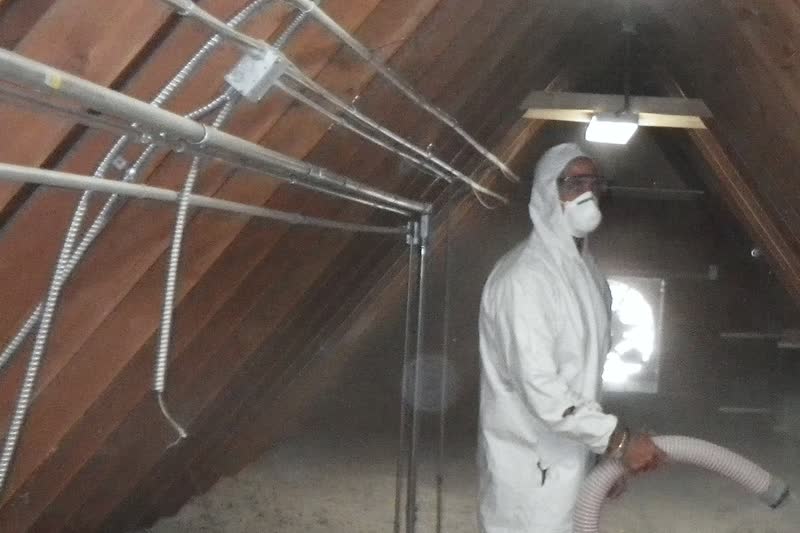
Attic Insulation
Blown-in fiberglass attic insulation, added to the depth your home needs, to even out hot and cold rooms and cut wasted heating and cooling.
Attic insulation for Thomasville homes. We blow new insulation over a sound layer, or vacuum out a spoiled one and replace it, after sealing the air leaks. Most attics we price from the square footage, with no visit, and the estimate is free.
Our attic insulation is blown-in loose-fill, brought up to one level depth across the whole attic floor, and in Thomasville the job follows the age of the house. The Census Bureau's 2020 to 2024 survey dates about 8 percent of Thomasville's homes to before 1940, about a quarter to the 1950s and 1960s, and roughly 60 percent to 1970 or later.
The target is the same across town. Davidson County sits in zone 3 on the county lists the Department of Energy published in 2015 and revised in 2022 for the 2021 map, and for existing zone 3 homes ENERGY STAR asks for R-49 over a bare attic floor, or R-38 where 3 to 4 inches is already in place. The R-value guide below gives the inches.
Every Thomasville estimate starts with the size of your attic. Give us the square footage, or the address so we can work it out from the footprint, and we'll put our advice and the price in an estimate. Sometimes it says to leave the attic as it is. If your attic needs a closer look first, we make a special visit, and on install day the crew checks the depth in more than one spot with you before any work starts.
See all of our insulation services in Thomasville.

Monday to Friday 8:00 am to 5:00 pm. Saturday by appointment. Sunday closed.
Attic insulation, removal, air sealing and more. Open one to see how the work goes.
Blown-in fiberglass attic insulation, added to the depth your home needs, to even out hot and cold rooms and cut wasted heating and cooling.
Old, wet, matted or animal-soiled attic insulation vacuumed out, so new insulation can go in on a clean, sealed attic floor.
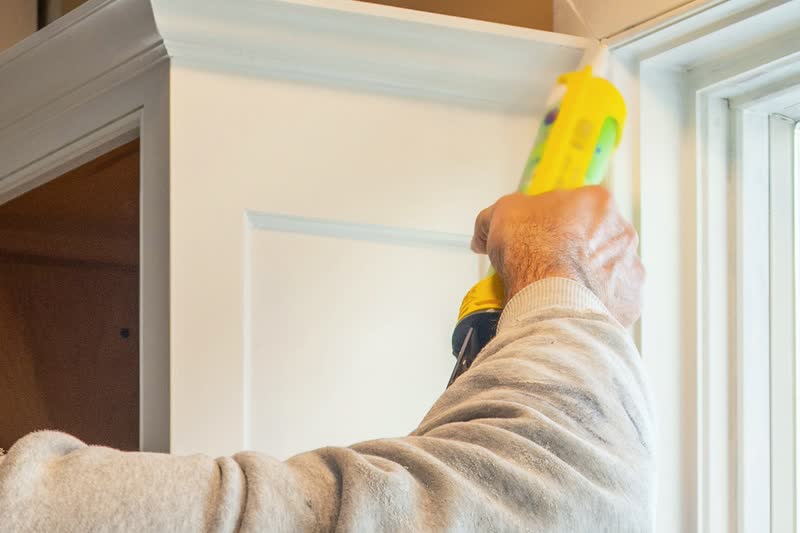
Sealing the gaps between your rooms and the attic, and leaky ductwork, so the air you pay to heat and cool stays inside.
Insulation blown into the closed walls of an existing house, batts in open walls for additions, remodels and new builds, and garage walls and ceilings.
Insulation for the garage ceiling under a bonus room, the wall shared with the house and the garage attic, with air leaks sealed first.
Floor insulation under the house: wet or fallen insulation pulled out, new batts between the floor joists, plastic over the dirt and the floor leaks sealed.
The State Historic Preservation Office's 2004 survey of Thomasville dates the weatherboard mill houses south of the Amazon Cotton Mill to 1909 through 1920, and frame construction accounts for nearly three quarters of the main buildings in the Salem Street historic district. Many frame houses that old have only a thin layer over the ceiling, which puts them on ENERGY STAR's R-49 line.
First the wiring. These attics may still hold knob and tube wiring, the pre-1930 system ENERGY STAR flags as a fire hazard when insulation touches it, and an electrician deals with any we find before we start. Then the roof: the district's National Register nomination describes the typical cottage of the 1900s and 1910s as one or one and a half stories under a steep roof. Loose-fill suits the flat ceilings, and we tell you which sloped and kneewall areas we can reach.
The 1950s and 1960s account for roughly one in four Thomasville homes. The 2004 survey says postwar demand was met first with small, plain cottages and then with single-story ranches with low-pitched roofs. Erwin Heights is full of ranches, and Wallcliff Park, started in the mid-1950s, mixes the two. A ranch's attic floor is as large as the house.
Where 3 to 4 inches is already down, ENERGY STAR's zone 3 figure is R-38. The weak spot is the edge, where the shallow roof drops close to the ceiling. ENERGY STAR notes that an attic can be well filled in the middle and nearly bare along the eaves, and it warns against covering soffit vents with insulation. So baffles are fitted at the eaves, the leaks are sealed, and the loose-fill is blown right to the edges at full depth.
Start with the age of the house. Homes from 1970 on are the city's largest group, with about a third of all its homes from 1990 to 2009, and there the usual question is coverage: loose insulation settles, and anyone working up there can leave a bare trench.
ENERGY STAR's test needs only a look from the hatch. Joists in view, or insulation that only comes up even with them, usually mean more is needed. If the joists have vanished under it, you probably have enough, and ENERGY STAR adds that more may not be cost-effective. If yours passes, we'll say so.
Air sealing comes first in every Thomasville attic we insulate, because a new layer buries the gaps under it. ENERGY STAR's air sealing guidance for attics ends with EPA's advice to insulate afterwards, and it lists the usual leaks: the hatch, wiring and plumbing holes, recessed lights, dropped soffits left open to the attic, flue and duct chases, and the hollows behind and beneath kneewalls.
Older houses add two concerns. Rooms built into an attic often leave open cavities in the floor framing under the kneewalls, ENERGY STAR explains, and insulation pushed against them still lets air through, so they get plugged. ENERGY STAR adds that codes usually want 1 inch of space around a metal flue and 2 inches around a masonry chimney, and insulation stays out of that gap.
Old insulation rarely has to go. ENERGY STAR's page on hiring an attic insulation contractor says removal is usually unnecessary: new material can be added over the old unless that layer is wet, moldy or smelly, or holds animal waste. The cause is fixed first, roof leaks by a roofer and animals by a wildlife control company. Then we vacuum out the spoiled insulation, seal the leaks in the bare ceiling and finish with a new blown-in layer.
Vermiculite stops the job. ENERGY STAR describes it as a lightweight, pea-size, flaky gray mineral that may contain asbestos, and says to leave it undisturbed unless an approved lab has tested it. Your local health department can name a lab. If we find it, we leave it alone.
Call or text us, or use the contact form, and give us the square footage of the attic or the house. Most Thomasville attics we price from that, with no visit. If yours needs a closer look, we make a special visit. On install day the crew goes into the attic with you first: they check from the middle out to the eaves, look for the leaks listed above and flag anything that needs an electrician or a roofer before work starts.
The estimate gives the target R-value and depth, with air sealing and any removal and replacement on lines of their own. There's no figure here, since each attic prices differently: the floor area, the depth already there, the leaks to seal, how reachable the edges are and whether a damaged layer has to come out. Our cost guide explains each one.

Each page has local notes on the homes and attics in that town.
Randolph County, 7 miles east
Median home built 1986, 3 years newer than Thomasville's
Insulation contractor serving ArchdaleGuilford County, 9 miles northeast
Median home built 1989, 6 years newer than Thomasville's
Insulation contractor serving High PointDavidson County, 12 miles southwest
Median home built 1969, 14 years older than Thomasville's
Insulation contractor serving LexingtonRandolph County, 19 miles southeast
Median home built 1981, 2 years older than Thomasville's
Insulation contractor serving AsheboroAlso in Davidson County: Denton and Wallburg. Every town in Davidson County. See all service areas.
Local service pages: Attic Insulation in Asheville, Attic Insulation in Charlotte, Attic Insulation in Durham, Attic Insulation in Fayetteville, Attic Insulation in Greensboro, Attic Insulation in Greenville, Attic Insulation in High Point, Attic Insulation in Lexington, Attic Insulation in Raleigh, Attic Insulation in Wilmington, Attic Insulation in Winston-Salem.
It depends on the attic. We start from the size of the attic floor: a ranch puts the whole house under it, a half-story cottage has cramped spaces that are slower to work in, and spoiled insulation has to be cleared first. Give us the square footage and the free estimate lists each part of the job and the total, with nothing in it the attic doesn't need.
Not usually as a first step. The Department of Energy's Building America Solution Center points out that an attic already at R-30 or better lets so little heat through that a barrier hasn't much to stop, though in summer it does help keep ducts in the attic cooler. It suits a Thomasville attic with ducts in it best, after the ceiling is sealed and the insulation is up to depth, which is the work we do.
If water, mold, odor or animals have ruined it, we vacuum it out once the cause is fixed, sanitize and deodorize after mice, then seal the bare ceiling and put a fresh layer of blown-in fiberglass down. A sound layer in a Thomasville attic is kept and built on. Vermiculite we leave untouched until it has been tested for asbestos.
Only what you can see safely from the hatch. ENERGY STAR warns to step only on joists or truss chords, never on the drywall or insulation, so you don't come through the ceiling. Note whether joists show, thin spots near the eaves, stains and signs of animals. If you know the square footage of the attic or the house, have that handy too.
Yes. Most of Thomasville lies in Davidson County, but the city line crosses into Randolph County, home to about 520 of its 27,605 residents in the Census Bureau's estimates for July 2024. The Department of Energy's 2022 county guide places Randolph in zone 3 as well, so the attic target does not change.
Call or text us on a weekday, ask about a Saturday, or use our contact form. Tell us the square footage of the attic or the house, or the street so we can work it out, and the house's age. Most attics we price with no visit, and the estimate is free.
Attic Insulation
North Carolina's energy code requires R-38 in a new ceiling, and ENERGY STAR recommends more for existing attics. See both numbers, which climate zone your county is in and how many inches each R-value takes.
Attic Insulation
There is no price list here, on purpose. See the seven things that move attic insulation cost up or down, why a per-square-foot number misleads and how to compare two written estimates line by line.
Census Bureau figures for Thomasville, NOAA normals for the High Point station, Duke Energy Carolinas (October 2026). Compiled by Insulation Pros. How the town pages are made.
Thomasville, NC
Open in Google Maps (opens in a new tab)Insulation Pros is an insulation contractor serving North Carolina. Thomasville prices are free and start from the attic's size.
What's above your Thomasville ceilings? Send the square footage from the contact page, or call. You'll hear whether the attic needs more insulation, new insulation or nothing, with a free estimate.
What You Can Count On
We serve homes across North Carolina. These are the largest towns we work in.
Alamance County
Buncombe County
Cabarrus County
Cumberland County
Durham County
Forsyth County
Gaston County
Guilford County
Mecklenburg County
New Hanover County
Onslow County
Orange County
Pitt County
Wake County