


Attic Insulation
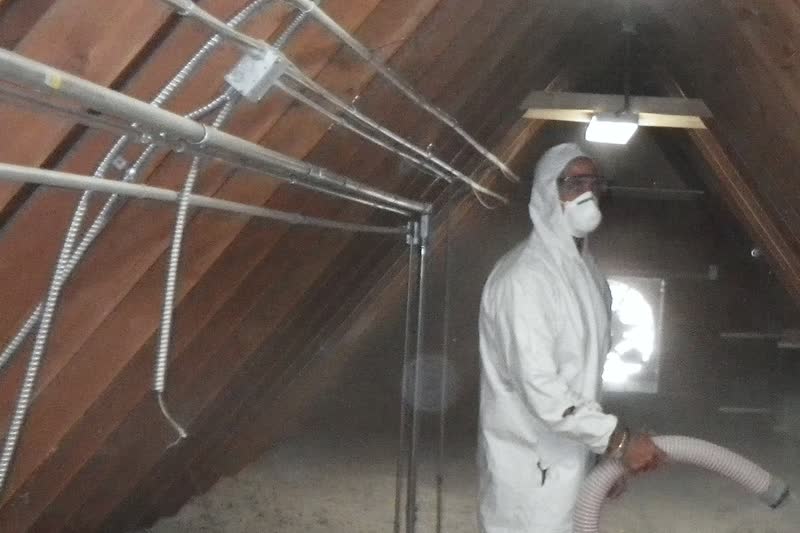
Blown-in fiberglass attic insulation, added to the depth your home needs, to even out hot and cold rooms and cut wasted heating and cooling.
Coastal summers are long and sticky, and a Wilmington attic that's short on insulation lets that heat right into the rooms below. We do attic insulation, insulation removal and air sealing for Wilmington homes, from bungalows near downtown to townhouses finished in the 2010s. We're a family owned insulation contractor serving the whole state, and we can price most attics for free from their size alone.
Wilmington has about 63,000 housing units, houses and apartments together, by the Census Bureau's 2020 to 2024 survey, and about 48 percent of them were built in 1990 or later. About 42 percent are in buildings with two or more units, from duplexes to big complexes, and about 9 percent go back to before 1940. A bungalow near downtown and a 2010s townhouse have very different attics, so this page takes the houses one kind at a time.
Summer is what works these attics hardest. At Wilmington International Airport, NOAA's 1991 to 2020 normals give an average July high of 90 degrees, about 45 days a year at 90 or above and about 60 inches of rain. The Department of Energy's Building America county guide puts New Hanover County in its hot-humid region, a label it saves for places where humid summer air hangs on for long stretches of the year.
If you're weighing insulation contractors in Wilmington, here's how we work. Most attics get priced by the square foot. Tell us the size, or give us the address and we'll figure it from the footprint, and you'll have a written price without waiting on anyone to come by. When an attic needs a closer look, we make a special visit. We're family owned, and we don't upsell. The sections below cover adding attic insulation, removing insulation that's failed, the city's newer houses, and air and duct sealing.
More for Wilmington homeowners: Attic insulation in Wilmington.

Monday to Friday 8:00 am to 5:00 pm. Saturday by appointment. Sunday closed.
Wilmington, the New Hanover County seat, grew from a street grid laid out in 1737 on the bluff above the Cape Fear River. Its older houses range from vented Italianate homes downtown to bungalows in its first streetcar suburb and wartime Cape Cods in Sunset Park, and each kind hides a different attic.
The 1974 nomination for the Wilmington Historic District says the Italianate style shaped the city's houses from the 1830s into the 1890s. Its favorite form was a two-story frame box under a low hip roof with deep, bracketed eaves, a wide frieze broken by louvered vents, and chimneys set inside the house. A low hip roof makes a shallow attic that pinches down at the edges. Every interior chimney comes up through that attic floor. Around each one, the open gap is covered with light aluminum and sealed with heat-proof caulk, and a sheet-metal ring stops the new insulation short of the brick. If the frieze louvers open into the attic, they carry its airflow, so nothing is piled against them.
Carolina Place was laid out in 1906 as Wilmington's first planned streetcar suburb, its 1992 nomination says, and most of its houses are modest bungalows built between then and World War II. They tend to be narrow and deep, set close together on small lots, under front gables, cross gables or low hipped roofs. Many have a front attic dormer or a gable vent. The earliest were finished before 1930. Wiring from then may still run on porcelain knobs and tubes, a system ENERGY STAR lists among the fire hazards to correct before insulating. So the first step in one of these attics is an electrician's look at the wiring. Under a low roof, the strip along the eaves often holds the least insulation, so it is brought up to the depth of the middle.
In the Sunset Park Historic District, listed in 2003, Cape Cod and Minimal Traditional houses are the most numerous types. The nomination dates them from the 1930s through the 1950s and says many were built to house shipyard workers and their families during World War II. Some rise a story and a half, with gabled dormers, so the upstairs rooms sit partly within the roof slope. Their side walls are short partitions with slim attic spaces behind them. ENERGY STAR's list of common leak points includes the areas behind and beneath kneewalls. The Iowa training text Building Construction Problem Areas adds that the joist bays under them are usually left open. We close those bays and insulate the kneewalls and side spaces, not just the flat ceiling.
Attic insulation, removal, air sealing and more. Open one to see how the work goes.
Blown-in fiberglass attic insulation, added to the depth your home needs, to even out hot and cold rooms and cut wasted heating and cooling.
Old, wet, matted or animal-soiled attic insulation vacuumed out, so new insulation can go in on a clean, sealed attic floor.
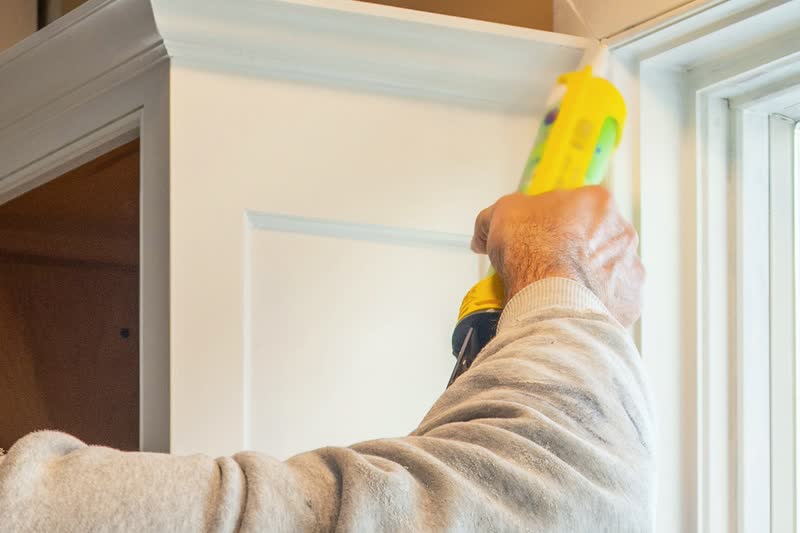
Sealing the gaps between your rooms and the attic, and leaky ductwork, so the air you pay to heat and cool stays inside.
Insulation blown into the closed walls of an existing house, batts in open walls for additions, remodels and new builds, and garage walls and ceilings.
Insulation for the garage ceiling under a bonus room, the wall shared with the house and the garage attic, with air leaks sealed first.
Floor insulation under the house: wet or fallen insulation pulled out, new batts between the floor joists, plastic over the dirt and the floor leaks sealed.
Most attic insulation work in Wilmington adds to what's already up there. Blown-in fiberglass goes over the dry old layer until the whole floor sits at one even depth, out to the eaves. The ceiling gaps get sealed first, and baffles go in at the eaves so the soffit vents stay open. ENERGY STAR's guide to hiring an attic insulation contractor asks for both steps.
New Hanover County is climate zone 3, on the state code's map and the newer national one alike. ENERGY STAR's target there is R-49 for an empty attic, or R-38 on top of an existing 3 to 4 inches. Depths by material, what each age of house tends to need and what moves the price are on our page on attic insulation in Wilmington.
Wilmington's center sits about 40 feet above sea level, 4 miles from NOAA's Wilmington International Airport station, the best match for Wilmington. The station's 1991 to 2020 normals average about 2,330 heating and 2,130 cooling degree days a year, so Wilmington attics work in both seasons.
Readings change over short distances around Wilmington: NOAA's Wilmington 7 N station, 7 miles away, averages about 2,750 heating degree days. The state energy code marks New Hanover County warm and humid.
Most old insulation can stay. ENERGY STAR's hiring guide says new insulation can go on top unless the old stuff is wet, growing mold, smells, or contains animal waste. Wet insulation, ENERGY STAR notes, points to a leaky roof, so a roofer fixes that first. Animals have to be gone, with their way in closed, before anything new goes up.
When the old layer fails that test, attic insulation removal comes first, and we vacuum it out. The bare attic floor shows every hole in the ceiling, so each one gets sealed before new insulation is blown in. Most homes get the new layer right after. If all you want is the old insulation gone, say so when you call.
Vermiculite is the exception. The EPA describes it as a pebble-like fill, usually gray-brown or silver-gold, and tells homeowners to assume it contains asbestos, to leave it undisturbed and to hire a professional asbestos contractor before any work that would disturb it. If it's in your attic, we stop and tell you.
About a quarter of the city's housing dates from the 1970s and 1980s, the Census figures show, and the 1980s were the bigger decade of the two. These houses were insulated when they were built, to the rules of the day, and the layer has had forty years or more to settle and get dug through for new cable, ducts and fans.
ENERGY STAR's quick check suits them well. Stand at the hatch and look across the attic floor. If the insulation sits at or below the tops of the joists, you probably need more. A ruler gives you the depth, and at ENERGY STAR's rule of thumb of about R-3 per inch, 6 inches works out to roughly R-18. Send us that number with your square footage and we can price the top-up. Look out by the eaves too, since the edges are easy to miss from the opening.
About 48 percent of Wilmington's housing went up in 1990 or later. A newer attic was insulated when it was built, so the questions narrow down to whether the layer has settled, whether it reaches the eaves and whether it got trampled when equipment or lights went in. North Carolina's current energy code asks for R-38 in a new ceiling, the low end of ENERGY STAR's range for this zone, so a house built to code can still be short of R-49.
Many Wilmington homes share a roof: about 42 percent of the city's units are in buildings with two or more homes. An attic over a townhouse or condo may be shared with the units next door or run by an owners' association, so check the association's rules before you book. Your price spells out which part of the attic the work covers.
Where the ceiling has recessed lights, ENERGY STAR says to keep insulation at least 3 inches from each one unless it's rated IC, for insulated ceiling. Its hiring guide adds that older can lights sticking up into the attic should be covered and sealed before any insulation goes in.
Air goes right through loose fill, so the leaks get closed first. ENERGY STAR's attic air sealing guide points you to the spaces behind and under kneewalls, the hatch, the holes for wiring and plumbing, dropped soffits open to the attic, recessed lights and the chase around a flue or duct. Darkened insulation shows where air has been moving through.
In a humid county, moisture is the next thing to check. ENERGY STAR lists kitchen, bath and dryer vents that blow moist air into the attic, instead of outdoors, among the problems to correct before insulating. If you know where your fan pipes end, tell us. The crew follows each one on install day, and any that stop in the attic get pointed out to you before the new layer goes down.
Ducts are the other half. ENERGY STAR names ducts in an attic as one sign of a poorly performing system, and it says a typical house loses 20 to 30 percent of the air moving through its ducts to leaks, holes and poor connections. We seal the joints we can reach, and the boots behind the ceiling registers, with mastic or metal tape. Never cloth duct tape, which doesn't hold up. A crushed or disconnected duct goes to an HVAC contractor, and we'll show you where it is.
A radiant barrier is reflective foil fastened under the roof deck to block the heat it radiates. The Building America Solution Center is plain about the order: once an attic is insulated to R-30 or better, little heat flow is left for the foil to stop. The case it makes for one is ductwork in the attic, which a radiant barrier keeps cooler in summer.
So in Wilmington the barrier is an add-on, not a first step. With July highs averaging 90 degrees, it can earn its keep where the ducts or the air handler sit in the attic. More insulation and a sealed ceiling come first, and that's the work we do.
Duke Energy Progress supplies Wilmington's electricity. For gas, Wilmington is in the New Hanover County franchise of Piedmont Natural Gas, and 13 percent of Wilmington homes heat with piped gas. Duke's free House Call fits many Wilmington homes: 84 percent heat with electricity.
Rebate to check in Wilmington: Smart $aver Insulate and Seal (Duke Energy; Insulation Pros is an approved trade ally). Before a Wilmington job, check its current terms; the New Hanover County page lists every program.
Each page has local notes on the homes and attics in that town.
New Hanover County, 5 miles east
Median home built 1978, 11 years older than Wilmington's
Attic insulation in Wrightsville BeachBrunswick County, 6 miles west
Median home built 2005, 16 years newer than Wilmington's
Attic insulation in BelvilleBrunswick County, 9 miles west
Median home built 2010, 21 years newer than Wilmington's
Attic insulation in LelandNew Hanover County, 12 miles south
Median home built 1988, 1 year older than Wilmington's
Attic insulation in Carolina BeachAlso in New Hanover County: Kure Beach. Every town in New Hanover County. See all service areas.
Local service pages: Attic Insulation in Asheville, Attic Insulation in Charlotte, Attic Insulation in Durham, Attic Insulation in Fayetteville, Attic Insulation in Greensboro, Attic Insulation in Greenville, Attic Insulation in High Point, Attic Insulation in Lexington, Attic Insulation in Raleigh, Attic Insulation in Thomasville, Attic Insulation in Wilmington, Attic Insulation in Winston-Salem.
Pick one who'll put everything in writing and only charge for what your attic needs. ENERGY STAR's hiring guide suggests getting estimates from more than one contractor, and it says each should include baffles at the eaves and sealing of the attic floor before any insulation goes in. Ask for the target as an R-value, not only in inches. When the job is done, the FTC's R-value Rule requires the installer to give you a receipt, and for blown-in insulation it shows the square footage covered, the depth as installed and after settling, the R-value and how many bags went in.
Sometimes. A house from the 1990s or later was insulated when it was built, so what matters is whether the layer has settled, whether it covers the eaves and whether it got disturbed when equipment went in. Built to today's code, the ceiling would hold R-38, which is short of ENERGY STAR's R-49 for this zone. If your attic is already deep and even, we'll tell you to leave it alone.
No. ENERGY STAR puts kitchen, bath and dryer vents that exhaust into the attic, instead of outdoors, on its list of problems to fix before an attic is insulated. Here on the coast, that means warm, wet air with nowhere to go but the attic. If yours ends in the attic, it gets run to the outdoors before the new layer goes down.
Yes. Insulation Pros serves homes across North Carolina, so the towns around Wilmington, on both sides of the Cape Fear, are in the same service area. Each has a page of its own among the nearby towns above. Pricing works the same way there, from the square footage for most attics.
Attics come first: attic insulation, insulation removal and air sealing. We also insulate garages, including the ceiling under a room over the garage, insulate the closed walls of a house that's already standing, insulate the floors over crawl spaces and insulate commercial buildings. Home energy audits are a paid service of their own, separate from the free estimate.
Start with the size: the attic floor's square footage, or the address for us to work from. It also helps to know roughly when the house was built, whether the air handler or ducts are up there, any roof leak you know about and which rooms never feel right. ENERGY STAR suggests telling the contractor if the house is from the 1930s or earlier, since its attic may hold knob-and-tube wiring. Before install day, clear a path to the hatch or pull-down stairs.
Usually not. The city says houses in its National Register districts, such as Carolina Place, Sunset Park and Brookwood, fall outside Historic Preservation Commission review unless they also lie within a local district. The local districts and overlays include the Residential Historic District, the downtown commercial overlay and the Carolina Heights and Winoca Terrace overlay. There, exterior alterations require a certificate of appropriateness. Under state law, a commission does not rule on how the inside of a house is arranged. Insulating and sealing the attic is interior work. Cutting vents into the roof or soffits changes the outside, so check with the city's preservation staff first.
Look at the insulation near any damaged part of the roof: wet, flattened or discolored insulation means water came in. After Hurricane Fran in 1996, the National Weather Service reported damage to about three of every four homes in the city. It called the wind damage to roofs across the area from Florence in 2018 some of the worst in modern memory. In ENERGY STAR's guidance, insulation that is wet tells you the roof is leaking. The roofer comes first. Once the roof is sound, we vacuum the ruined layer out and blow fresh insulation in its place.
Mostly because heat and cold reach it from below as well as from above. The Brookwood Historic District's nomination notes that two-story garages with apartments over them began going up there in the 1950s, and the garage under such a room is not heated or cooled. The Building America Solution Center says a garage ceiling with living space above should be air sealed, with the floor insulation touching the underside of the subfloor all the way across. The room's own ceiling and any kneewalls need the same care. We insulate garages as well as attics.
Air Sealing
Wet nails, a stained roof deck or a home inspector's note about growth all trace back to a moisture source. Learn the four usual causes, how to tell condensation from a roof leak, and the order of repairs that stops it.
Attic Insulation
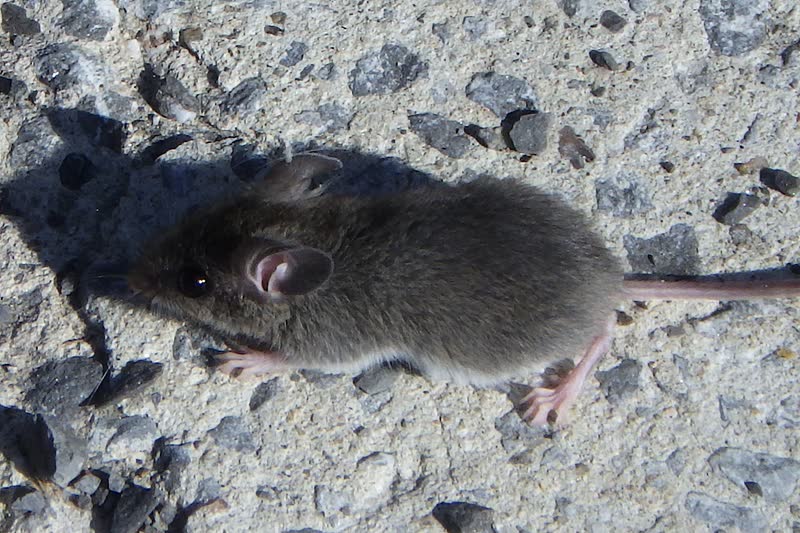
Droppings or tunnels in the insulation? Learn who removes the animals in North Carolina, how the CDC says to clean up, when soiled insulation must come out and why the ceiling is sealed before new insulation goes in.
Census Bureau figures for Wilmington, NOAA normals for the Wilmington International Airport station, NOAA monthly normals for Wilmington International Airport, Duke Energy Progress, Guide to Determining Climate Zones by County (PNNL, for the U.S. Department of Energy), How to Hire an Attic Insulation Contractor (ENERGY STAR), How to Check Your Home's Attic Insulation Level (ENERGY STAR), Recommended Home Insulation R-Values (ENERGY STAR), Attic Air Sealing Project (ENERGY STAR), Attic Insulation Project (ENERGY STAR), Duct Sealing (ENERGY STAR), Asbestos-contaminated vermiculite insulation (EPA), Attic Radiant Barriers (Building America Solution Center), FTC R-value Rule (16 CFR 460.17), North Carolina codes in force (Office of State Fire Marshal) (October 2026). Compiled by Insulation Pros. How the town pages are made.
Sources for the Wilmington notes and questions (read October 20, 2026):
Wilmington, NC
Open in Google Maps (opens in a new tab)Insulation Pros is an insulation contractor serving North Carolina, Wilmington and the coast included. Attics here usually get priced from their square footage, and that's free.
Not sure what's going on over your Wilmington ceilings? Text or call with the size of the attic, or use the contact form. We'll tell you what it needs, if anything, and put the price in writing for free.
What You Can Count On
We serve homes across North Carolina. These are the largest towns we work in.
Alamance County
Buncombe County
Cabarrus County
Cumberland County
Durham County
Forsyth County
Gaston County
Guilford County
Mecklenburg County
New Hanover County
Onslow County
Orange County
Pitt County
Wake County