Attic Insulation
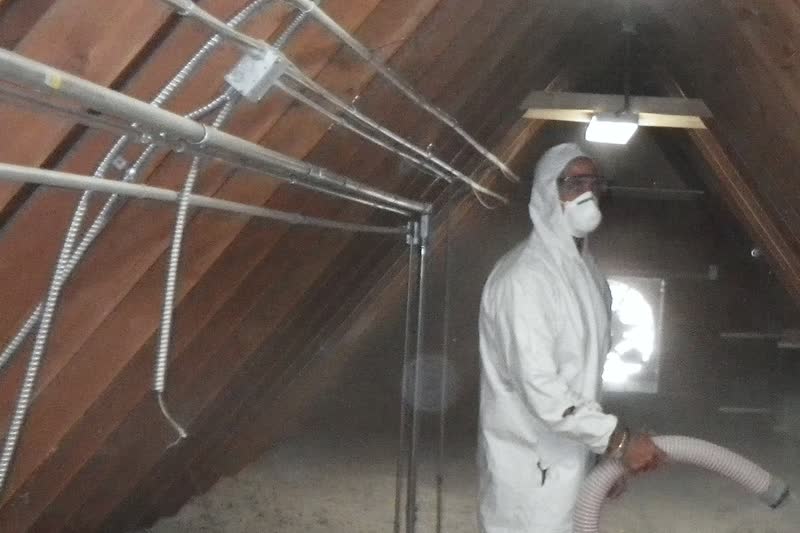
Blown-in fiberglass attic insulation, added to the depth your home needs, to even out hot and cold rooms and cut wasted heating and cooling.
July highs in Concord average about 92 degrees, and a thin attic lets that heat right into the bedrooms. We blow insulation in to full depth, vacuum out what's spoiled, and seal the ceiling, in old houses near downtown and new subdivisions alike. Free estimates.
Concord is the seat of Cabarrus County and its largest city, founded in 1796 and a textile town by 1900. Near downtown, the Union Street and Logan historic districts hold houses from the late 1800s through the mid-1900s. Around them is a much newer city: the Census Bureau's 2020-2024 survey estimates that about 64 percent of Concord's housing units were built in 1990 or later.
Concord summers are hot: NOAA's 1991-2020 normals for the Concord weather station put the average July high at about 92 degrees. The insulation on the attic floor, and how well the ceiling under it is sealed, decide how much of that heat gets down into the rooms, and in winter how much of the rooms' heat escapes upward.
Insulation Pros is a family owned and operated insulation company, and Concord is part of the area we serve. A Concord price is built from two things: the size of your attic and what it actually needs. You can usually get it without anyone coming to the house. This page starts with the jobs themselves, attic insulation and attic insulation removal. Concord's houses come next, by age, then air sealing and duct sealing.

Monday to Friday 8:00 am to 5:00 pm. Saturday by appointment. Sunday closed.
Concord got its name, and its main street got the name Union, from the settling of an old quarrel over where the Cabarrus County seat should stand. Its older housing, as the nominations record it, runs from the company houses built north of the Odell mill after 1877 to the two-story frame homes and bungalows of South Union Street.
Concord's first mill hands lived in log cabins just north of town before the Civil War, the 1983 nomination for the Odell mill records. After John Milton Odell reopened the mill in 1877, most of its new workers settled in company-built houses north of the plant, and the Forest Hill neighborhood joined the city in 1889. The nomination does not describe those houses room by room, so each attic is judged by what is there. Where an old brick chimney passes up through the attic floor, the opening beside it is closed with thin aluminum and caulk rated for heat. A short metal barrier then holds loose fill 2 inches off the masonry.
The South Union Street Historic District's 1986 nomination describes a residential street that grew fastest in the 1920s. About half of its houses have two stories, about three-fourths are frame, and most follow the styles of the late 1800s and early 1900s. A frame house can be balloon framed, with no plate across the top of its walls. If yours is one, which only a look from the attic will show, the wall cavities can open straight into the attic, and warm air rises up them like a chimney. Those open tops are found and sealed from the attic side before any insulation goes down.
Concord's handbook for its three local historic districts ends with a chapter on upkeep, and its roof section asks owners to ventilate the attic so condensation does not form. It adds that roof and soffit vents help an attic dry out after a leak. Insulation and that airflow are meant to work together. ENERGY STAR describes air coming in at the soffits and leaving at the ridge or gables, and it warns never to bury soffit vents. Baffles at the eaves hold the new layer back so that air keeps moving above it.
Attic insulation, removal, air sealing and more. Open one to see how the work goes.
Blown-in fiberglass attic insulation, added to the depth your home needs, to even out hot and cold rooms and cut wasted heating and cooling.
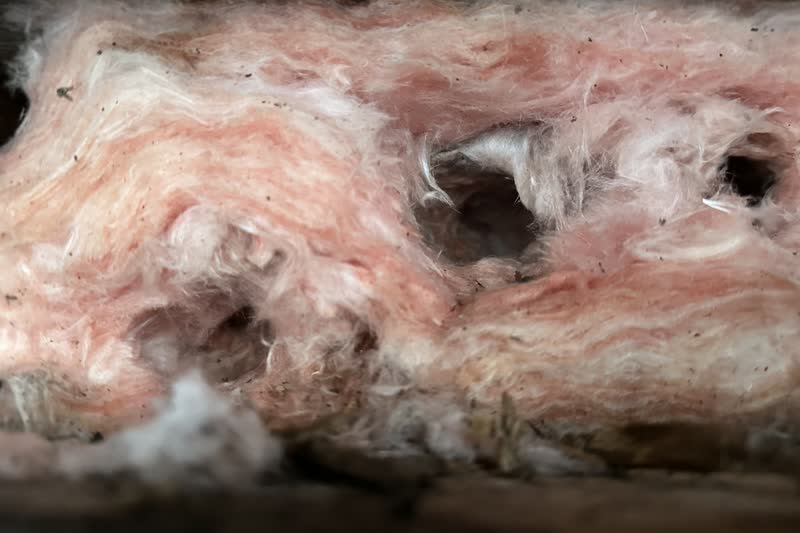
Old, wet, matted or animal-soiled attic insulation vacuumed out, so new insulation can go in on a clean, sealed attic floor.
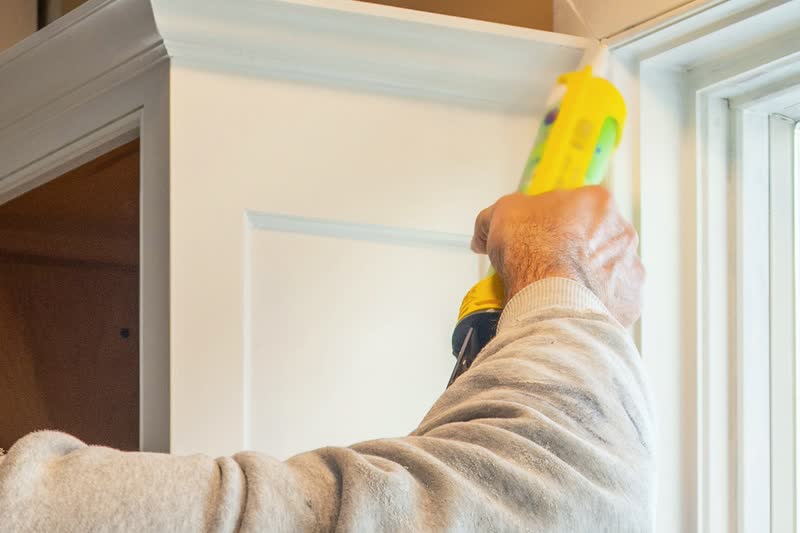
Sealing the gaps between your rooms and the attic, and leaky ductwork, so the air you pay to heat and cool stays inside.
Insulation blown into the closed walls of an existing house, batts in open walls for additions, remodels and new builds, and garage walls and ceilings.
Insulation for the garage ceiling under a bonus room, the wall shared with the house and the garage attic, with air leaks sealed first.
Floor insulation under the house: wet or fallen insulation pulled out, new batts between the floor joists, plastic over the dirt and the floor leaks sealed.
Cabarrus County is in climate zone 3 on the U.S. Department of Energy's county list, and the 2021 redraw of the national map left it there. ENERGY STAR's table for that zone puts the target at R-49 when you start from a bare attic floor, or R-38 added on top when 3 to 4 inches are already in place.
We blow loose-fill insulation across the attic floor to one even depth, out to the eaves. ENERGY STAR's guide to hiring an attic insulation contractor says any estimate should include baffles at the eaves, and that removing the old layer is usually unnecessary. How much your attic needs depends on the house: a pre-1950 attic may hold almost nothing, a low-roofed ranch runs thin at the edges, and a newer house may need a modest top-up or nothing at all. Your price gives the amount as an R-value, not only in inches.
Concord's center sits about 710 feet above sea level, under a mile from NOAA's Concord station, the best match for Concord. The station's 1991 to 2020 normals average about 3,290 heating and 1,760 cooling degree days a year, so at Concord's station, heating needs outweigh cooling.
Most Concord attics don't need it, and we won't tell you otherwise. ENERGY STAR's advice is that new insulation can go on top of old unless the old layer is wet, moldy, smelly or contains animal waste. Wet insulation points to a leaking roof, in ENERGY STAR's reading, so the leak gets repaired first. That repair is a roofer's work, and animals have to be gone, with their way in closed, before anything new goes up there.
When the old layer is spoiled, or so matted over the ceiling that the leaks under it can't be reached, we vacuum it out of the attic. With the ceiling bare, we seal the gaps, and most homes then get new insulation blown in to the depth the attic needs. If you only want the old layer gone, with nothing new blown in, that's a job we take too.
One kind of old fill we never vacuum out. Pebble-like granules, gray-brown or silver-gold, are likely vermiculite, and the EPA tells homeowners to assume it contains asbestos and not to disturb it. If it turns up in a Concord attic, we stop and tell you. Taking it out is a job for a professional asbestos contractor, and new insulation can go in once that's done.
The city's handbook for its historic districts says textile mill owners and professionals built along North Union Street. South of downtown, the Logan neighborhood joined the National Register of Historic Places in December 2025. Its nomination covers buildings put up from 1876 to 1972, and most of the dwellings it describes have one story.
In a one-story house the attic sits over nearly every room, so what's up there shapes the whole house. In houses this old the wiring comes first. ENERGY STAR warns that knob and tube wiring, used before 1930, can be a fire hazard when insulation touches it, and any the crew finds goes to an electrician before insulation is added. Then come the holes. Every pipe, wire and duct added since the house was built passed through the ceiling somewhere, and each one is sealed before a deep layer covers it. If you suspect old wiring up there, say so, and we may want to see the attic on a special visit first.
The census survey puts about a quarter of Concord's housing units between 1950 and 1989. The Logan nomination describes the plainest ranch houses built after 1950 as brick-veneered rectangles under low-pitched roofs with deep eaves.
A low roof leaves little height where it meets the outside walls, and that edge is the hardest part of the attic to insulate to full depth. Where the house has soffit vents, they sit along that same edge, and ENERGY STAR's attic insulation guidance says insulation should never be laid over them. The crew makes sure they're open and keeps the new layer back from them. Across the rest of the floor, the job is one even layer over a sealed ceiling.
This is most of the city. The 2020 census counted about 80 percent more housing units in Concord than the 2000 census did. Houses this age were insulated to the code of their day. The North Carolina energy code that took effect in 2012, for one, asked for R-30 in a new ceiling in climate zone 3, Cabarrus County's zone.
So the attic should already hold insulation. The questions are whether it's settled, whether it reaches the eaves and whether it sits over a sealed ceiling. The answer is often sealing and a top-up, not a fresh start, and that's how we'll price it.
Insulation slows heat, but air passes straight through loose fill. ENERGY STAR's list of common attic leaks includes recessed lights, dropped soffits, the chase around a flue or duct, the hatch, and holes for wiring and plumbing. It treats dirty insulation as a sign that air has been moving through. Air sealing closes those openings from the attic side before new insulation buries them.
Duct sealing does the same for the ductwork, with mastic or metal tape at the joints we can reach. ENERGY STAR names ducts located in an attic as one sign of poor duct performance, and by its estimate a typical house loses 20 to 30 percent of its duct airflow to leaks. Just over half of Concord's occupied homes heat with electricity, the census survey shows, so there one bill carries those leaks winter and summer.
Concord, an ElectriCities public power town, runs its own electric system, and Duke Energy Carolinas and Union Power Cooperative serve some Concord homes too. For gas, Concord is in the Cabarrus County franchise of Enbridge Gas North Carolina, and 46 percent of Concord homes heat with piped gas.
Program to ask about in Concord: ElectriCities energy audits (Concord's electric system), home energy audits for member-town customers; ask Concord's utility office. Before a Concord job, check its current terms; the Cabarrus County page lists every program.
An address and a square footage figure are all we usually need. No figure? We'll estimate the attic floor from the house's footprint. For most Concord homes that's enough to give you a price, at no charge and without a visit.
If the attic sounds unusual, like a Union Street house with old wiring or a ceiling with fresh water stains, we'll come out specially to look before we price it.
On install day the crew walks you through the attic before starting: depth readings from the hatch out to the eaves, the ceiling leaks, each duct run, and any stains, droppings or flattened patches. If garage insulation or wall insulation is on your list too, ask. And if the house turns out to need nothing, we'll say so.

Each page has local notes on the homes and attics in that town.
Cabarrus County, 6 miles north
Median home built 1989, 9 years older than Concord's
Insulation contractor serving KannapolisIredell County, 17 miles northwest
Median home built 2006, 8 years newer than Concord's
Insulation company serving MooresvilleRowan County, 21 miles northeast
Median home built 1976, 22 years older than Concord's
Insulation company serving SalisburyIredell County, 30 miles northwest
Median home built 1982, 16 years older than Concord's
Insulation contractor serving StatesvilleAlso in Cabarrus County: Harrisburg, Midland, and Mount Pleasant. Every town in Cabarrus County. See all service areas.
Local service pages: Attic Insulation in Asheville, Attic Insulation in Charlotte, Attic Insulation in Durham, Attic Insulation in Fayetteville, Attic Insulation in Greensboro, Attic Insulation in Greenville, Attic Insulation in High Point, Attic Insulation in Lexington, Attic Insulation in Raleigh, Attic Insulation in Thomasville, Attic Insulation in Wilmington, Attic Insulation in Winston-Salem.
Yes. Concord sits inside the area we serve, which is homes across North Carolina. Send your street address and we'll get back to you with a price.
Your address, your square footage if it's handy, the year the house went up and where the way into the attic is: a ceiling hatch, pull-down stairs or a small door. Then tell us what you've noticed, like an upstairs that won't cool down, high summer bills or insulation that looks dark or flattened.
Sometimes, and often less than people expect. A house from the 2000s or 2010s was insulated when it was built, so the first question is whether the layer is even, dry and out to the eaves. If it's thin or patchy, a top-up over a sealed ceiling is the usual answer. If the attic is fine, we say so.
Only when it's spoiled: wet, moldy, smelly or fouled by animals, the cases ENERGY STAR names, or packed so flat over a leaky ceiling that the leaks can't be reached. Anything else can stay under new insulation. When it does have to come out, we vacuum it away. The empty ceiling is sealed next, and for most homes a new layer of insulation finishes the job. Whatever spoiled it, like a roof leak, gets fixed first.
Yes, where we can reach them. Duct sealing closes the leaks at the joints and seams and where each duct meets its ceiling vent. In an attic it's done before the new insulation goes in, while the runs are still easy to get at. Damaged ductwork, like a run that's crushed or split apart, belongs with an HVAC contractor, and the crew will show you where it is.
The attic does. Its size, how far today's layer is from the target R-value, how many ceiling leaks need sealing and whether old insulation has to be vacuumed out first all count. So does access, since a small hatch or a low roof slows the work. No price appears on this page, because the number depends on your attic. Give us the size and we'll work yours out, free.
Only if the vents will show. The approval table in the city's historic district handbook lets new roof vents that cannot be seen from the public right-of-way go ahead without approval. Vents in public view need a hearing before the Historic Preservation Commission. Insulating and sealing the attic is inside work, and state law gives a commission no say over a building's interior arrangement. So the attic itself needs no approval. Only vents people can see from the street do.
Yes. The city designated Edgewood as a local historic district in 1988, and local designation is what brings the commission's review of outside changes. The National Register works differently: by the State Historic Preservation Office's account, a listing by itself sets no limits on owners who pay for their own work. North and South Union Street carry both: Register listing and local districts set up in 1982. In all three, work up in the attic stays outside the commission's review.
Attic Insulation
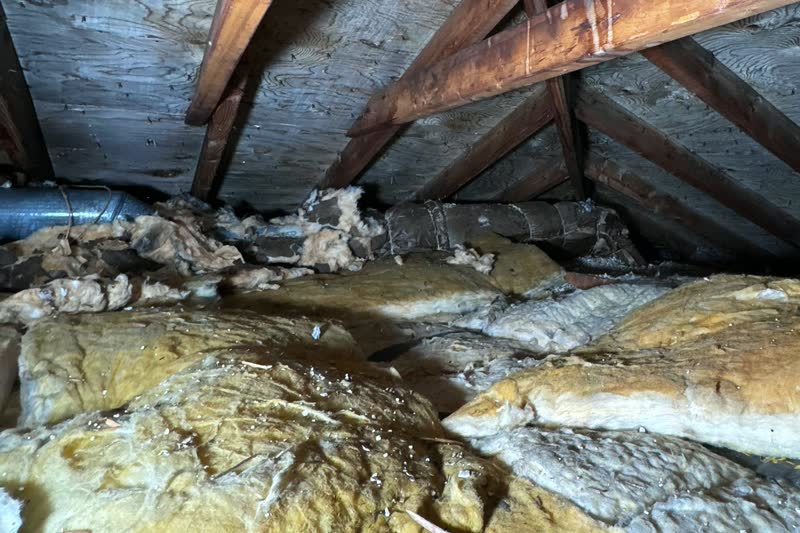
Uneven rooms, creeping energy bills and insulation you can barely see are all clues. These are the safe checks any homeowner can do from the attic hatch, and how to decide between topping off and starting over.
Attic Insulation
Most old attic insulation can stay under a fresh top-up. Wet, moldy, animal-soiled or smoke-damaged material cannot. Learn how to tell the difference, what removal involves and what to do about vermiculite.
Census Bureau figures for Concord, NOAA normals for the Concord station, Concord's municipal electric system (October 2026). Compiled by Insulation Pros. How the town pages are made.
Sources for the Concord notes and questions (read October 20, 2026):
Concord, NC
Open in Google Maps (opens in a new tab)Insulation Pros is an insulation contractor serving North Carolina, Concord's historic streets and its newer subdivisions alike. Most Concord prices come from the attic's size, with no visit and no pressure.
Has anyone measured the attic in your Concord house lately? If not, start with a free price from its square footage. You'll only pay for what it needs.
What You Can Count On
We serve homes across North Carolina. These are the largest towns we work in.
Alamance County
Buncombe County
Cabarrus County
Cumberland County
Durham County
Forsyth County
Gaston County
Guilford County
Mecklenburg County
New Hanover County
Onslow County
Orange County
Pitt County
Wake County