


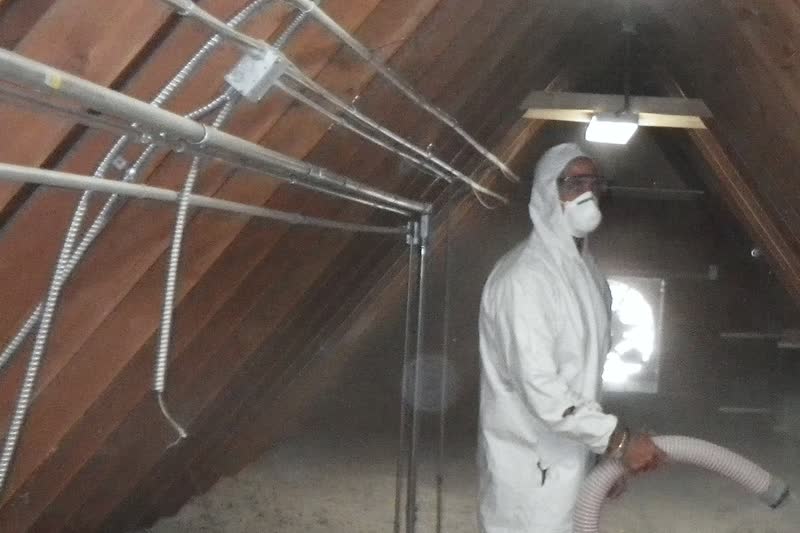
Attic Insulation
Blown-in fiberglass attic insulation, added to the depth your home needs, to even out hot and cold rooms and cut wasted heating and cooling.
Ten-foot ceilings in an old Cannon mill cottage hold the heat right up where the attic leaks. We insulate attics, vacuum out the ruined stuff and air seal in Kannapolis mill houses, mid-century homes and new subdivisions. Free estimates, honest prices.
Kannapolis began as a mill village. James W. Cannon bought the land in 1906, and over the next twenty years Cannon Mills put up row after row of frame houses for its workers. Today the city lies in Cabarrus and Rowan counties. By Census Bureau estimates, about three in ten of its housing units were built before 1960, three in ten from 1960 through 1999, and four in ten in 2000 or later.
The weather explains why the attic comes first. NOAA's climate normals for nearby Concord show about 60 days a year that reach 90 degrees, and on each of them a thin or leaky attic floor lets heat down into the house. Through the winter the same floor lets heat out. That's why attic insulation, attic insulation removal and air sealing lead this page.
Insulation Pros is a family owned and operated company, and our work covers homes across North Carolina, Kannapolis included. Duct sealing, wall insulation, garage insulation and crawl space insulation are part of our work too. Most Kannapolis prices come together over the phone or by message, from the size of the house.

Monday to Friday 8:00 am to 5:00 pm. Saturday by appointment. Sunday closed.
Kannapolis was built as Cannon's company town, with plans for its first mill and worker housing drawn by Stuart Cramer, and it had no town government of its own until 1984. Beyond the rows of mill cottages, a 2007 nomination records boarding houses and larger homes for mill supervisors near downtown.
As the workforce grew, the company put up dormitories and boarding houses near the center of town. A 2007 National Register nomination for a 1923 house nearby shows how big homes there changed. After 1929 that house took in teachers and workers as boarders, and in the 1970s its upstairs was split into two apartments, with the rear bedrooms turned into kitchens. A house that gained kitchens and baths this way can have fans that empty into the attic instead of outdoors. Each new fan duct is traced to its end before insulating, since ENERGY STAR puts an exhaust that ends in the attic on its list of things to correct first.
Mill supervisors and managers got somewhat larger houses near the village center, mostly along South Ridge Avenue and Main Street, with more Craftsman and bungalow features than a standard mill house. The same nomination describes Craftsman houses as one or one-and-a-half stories under broad, low roofs, often with large dormers. Where rooms sit up under the roof, short knee walls stand between them and narrow side attics. ENERGY STAR's air sealing guide puts the cavities under and behind knee walls on its list of leaks. Those wedge-shaped spaces need their own sealing and insulation, apart from the main floor, which is why upstairs rooms in such houses need more than a deeper layer overhead.
Attic insulation, removal, air sealing and more. Open one to see how the work goes.
Blown-in fiberglass attic insulation, added to the depth your home needs, to even out hot and cold rooms and cut wasted heating and cooling.
Old, wet, matted or animal-soiled attic insulation vacuumed out, so new insulation can go in on a clean, sealed attic floor.
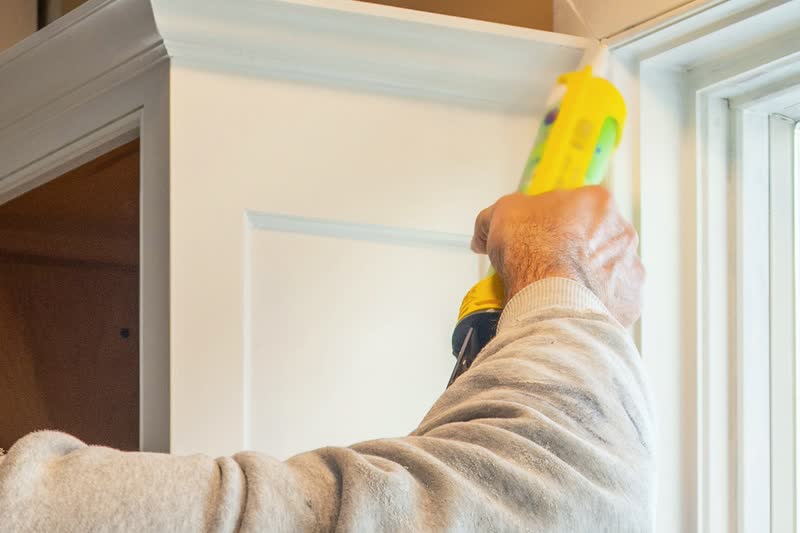
Sealing the gaps between your rooms and the attic, and leaky ductwork, so the air you pay to heat and cool stays inside.
Insulation blown into the closed walls of an existing house, batts in open walls for additions, remodels and new builds, and garage walls and ceilings.
Insulation for the garage ceiling under a bonus room, the wall shared with the house and the garage attic, with air leaks sealed first.
Floor insulation under the house: wet or fallen insulation pulled out, new batts between the floor joists, plastic over the dirt and the floor leaks sealed.
We blow in loose-fill insulation to one even depth in every roof space we can reach. Here in zone 3, ENERGY STAR's table recommends R-49 where an attic has none and an added R-38 where it has 3 to 4 inches. Dry, clean insulation already in place stays, and the new layer goes over it.
Two things get handled before the loose-fill goes down. The ceiling is sealed, because a deep new layer buries every gap in it. And each recessed can light is checked: ENERGY STAR wants insulation held at least 3 inches back from one unless the fixture is rated IC (insulated ceiling). If the low end of a shed roof is out of reach, we'll tell you, and the price covers the rest.
Kannapolis' center sits about 800 feet above sea level, 6 miles from NOAA's Concord station, the best match for Kannapolis. The station's 1991 to 2020 normals average about 3,290 heating and 1,760 cooling degree days a year, so at Kannapolis' station, heating needs outweigh cooling.
Readings change over short distances around Kannapolis: NOAA's Salisbury 9 WNW station, 15 miles away, averages about 3,760 heating degree days.
Only spoiled insulation needs to come out. ENERGY STAR names the cases in its advice on hiring an attic insulation contractor: insulation that's wet, moldy, smelly or contains animal waste. Anything else can stay, with new material over it, and we won't charge you to remove it.
When yours has to go, we vacuum the old insulation out. The bare ceiling shows every gap, so we seal them while we can get at them, and in most homes a fresh layer is blown in afterward. Whatever spoiled the old layer is dealt with first: a roof leak by a roofer, animals by the trade that removes them and closes their way in. If you'd like the old insulation gone with nothing added, that's fine too. The exception is pebble-like fill that may be vermiculite, which we leave in place for a professional asbestos contractor, as the EPA advises.
Air sealing comes before insulation, and ENERGY STAR's attic air sealing guidance puts the two in that order. In a Kannapolis mill cottage the place to start is the chimney: the gap where it rises through the attic floor is closed with metal flashing and high-temperature sealant, not the ordinary kind. Then come the holes cut through the ceiling for plumbing, wiring and ducts added over the years, along with the hatch and any recessed lights.
Ducts in the attic are part of the same job: the joints and seams within reach get sealed. ENERGY STAR's signs of a duct system that needs attention include rooms that are difficult to heat and cool, and flexible ducts that are tangled or kinked. Ductwork that's crushed or pulled loose is a job for a heating and cooling contractor to repair, and you'll hear about it from us.
Duke Energy Carolinas serves most of Kannapolis, EnergyUnited its edges; your bill says which. Kannapolis' gas comes from Enbridge Gas North Carolina or Piedmont Natural Gas, by street. Duke's free House Call fits many Kannapolis homes: 56 percent heat with electricity.
Rebate to check in Kannapolis: Smart $aver Insulate and Seal (Duke Energy; Insulation Pros is an approved trade ally). Before a Kannapolis job, check its current terms; the Cabarrus County page lists every program.
The National Register nomination for the Harvey Jeremiah Peeler House, in the heart of the mill village, describes what Cannon Mills built around it: one-story frame cottages with rear wings and shed-roofed sections, others under pyramidal or high hipped roofs, and front-gable bungalows. Inside were ten-foot ceilings and coal-burning fireplaces. The company began selling the houses in the 1980s, and many have been re-sided and remodeled.
Each detail changes the attic work. A rear wing and a shed-roofed section mean two or three separate roof spaces, and a shed roof can be too low to get into. A hipped roof comes down on all four sides, so the attic floor is hard to reach at the edges. Where a chimney rises through that floor, there's usually a gap around it. Ten-foot ceilings put the warmest air in the room right against those openings. Wiring is the other question in a house this old: ENERGY STAR dates knob and tube wiring to before 1930 and says contact with insulation can make it a fire hazard, so an electrician deals with any we find before the attic is insulated.
With that many roof spaces, a mill cottage is one of the houses we may want to see on a special visit before pricing.
Nearly half of the city's homes date from these decades by the Census Bureau's estimate: about 19 percent from the 1940s and 1950s and about 30 percent from 1960 through 1999. Most of those years fall inside the span the EPA gives for vermiculite. It says a mine near Libby, Montana was the source of more than 70 percent of the vermiculite sold nationwide between 1919 and 1990, and that the mine also held a deposit of asbestos.
So an attic from these years gets a careful look before anyone works in it. Vermiculite looks like small pebbles, often gray-brown or silver-gold, poured loose between the joists, and the EPA says to assume asbestos is in it, leave it undisturbed and never take it out yourself. If it turns up, we stop and tell you, and a professional asbestos contractor takes it from there. If you already suspect it, say so when you first get in touch. Where the old layer is fiberglass or cellulose that has settled thin, the usual job is sealing the ceiling and topping it up. The crew also looks at the attic's vents and tells you if any are blocked.
About four in ten Kannapolis homes were built in 2000 or later, and the city keeps growing: the Census Bureau's population estimate for July 2025 is about 16 percent above its 2020 count. Cabarrus and Rowan counties are in climate zone 3A, where North Carolina's 2012 energy code required R-30 in a new ceiling. The 2018 code, in force from January 2019, raised that to R-38.
So a house finished a few years before that change can have an attic that met code when it was built and now sits below the minimum for a new one. Fixing that usually means adding to what's there, and these attics are the easiest kind to price from their square footage.
Start with your list: rooms that run hot or cold, a smell, the bills. Add the address and the square footage. Without the square footage, the footprint of the house is our guide. That's usually all we need to give you a number, and it's free.
Once the job's booked, the crew's first move on site is a trip into the attic with you. They check the insulation in each roof space, look around every chimney, pipe and duct, and point out any stains, droppings or matted patches that show the old layer has failed. If the house needs little, you'll hear that too, and the price stays small.

Each page has local notes on the homes and attics in that town.
Cabarrus County, 6 miles south
Median home built 1998, 9 years newer than Kannapolis'
Insulation company serving ConcordIredell County, 12 miles northwest
Median home built 2006, 17 years newer than Kannapolis'
Insulation company serving MooresvilleRowan County, 16 miles northeast
Median home built 1976, 13 years older than Kannapolis'
Insulation company serving SalisburyIredell County, 25 miles northwest
Median home built 1982, 7 years older than Kannapolis'
Insulation contractor serving StatesvilleAlso in Cabarrus County: Harrisburg, Midland, and Mount Pleasant. Every town in Cabarrus County. See all service areas.
Local service pages: Attic Insulation in Asheville, Attic Insulation in Charlotte, Attic Insulation in Durham, Attic Insulation in Fayetteville, Attic Insulation in Greensboro, Attic Insulation in Greenville, Attic Insulation in High Point, Attic Insulation in Lexington, Attic Insulation in Raleigh, Attic Insulation in Thomasville, Attic Insulation in Wilmington, Attic Insulation in Winston-Salem.
Yes. Insulation Pros serves homes across North Carolina, so both the Cabarrus County and the Rowan County sides of Kannapolis are inside our area. Send the address and the house's size, and we'll price it.
The address, roughly when the house was built, the square footage if you know it, what you've noticed and in which rooms, and where the way into the attic is. For a mill house, also tell us whether it has a rear wing or a shed-roofed section.
Yes, with care at each one. ENERGY STAR notes that building codes usually require 2 inches of clearance between a masonry chimney and anything combustible, insulation included, and says the gap should be closed with metal flashing and high-temperature caulk. We seal each chimney that way, keep the insulation back from the brick and insulate the rest of the attic floor as usual. Tell us if a chimney is still in use.
Often it is. Loose-fill slows heat but lets air through, so a gap around a pipe, a wire, the hatch or a light fixture keeps leaking however deep the layer is. To reach the gaps under insulation that's already there, we pull it back, seal them and put it back, and that's a good time to top it up if it's thin. If your ceiling has no leaks worth sealing, we won't price any.
Yes, when it needs to come out: when it's wet, moldy, smells or has been fouled by animals. It gets vacuumed out, the ceiling under it is sealed while it's open, and most homes then get fresh insulation. If you want it taken out and nothing put back, we do that as well. Pebble-like fill that may be vermiculite is the one thing we leave alone until a professional asbestos contractor has handled it.
Mostly the attic itself. One open space under a simple roof is quicker to seal and fill than a main roof, a rear wing and a shed-roofed section with separate ways in. Depth matters too: R-49 over a bare ceiling takes more material than a top-up, and anything that has to come out first adds work. We don't print prices here. Yours starts with the square footage, and for a house with several roof spaces we may come look first so the number isn't a guess.
No rule asked it to. The company raised its cottages over the twenty years after 1906, long before North Carolina tied new homes to insulation standards for houses started January 1, 1978 or later. A National Register nomination from the village says the company kept its houses well maintained, but it says nothing about insulation. So on install day the crew opens every roof section with you rather than guessing what was added since.
Not under any the state lists. Kannapolis has two individual National Register listings, the Gem Theatre and the Peeler House, and no listed district. The state's 2023 roster of local commissions names none for Kannapolis itself. Even a Register listing would not tie your hands: the State Historic Preservation Office says listing sets no limits for owners paying for their own work. No historic approval is needed for insulating or sealing an attic here.
It can. On one listed 1923 house near downtown, its nomination notes, vinyl now covers the broad eaves and hides the original bead board. Covered eaves are worth a look, because an attic draws its air in at the soffits, ENERGY STAR explains. We check whether air can still get in there, and baffles keep new insulation off any soffit vents. If the attic has little or no ventilation, you hear that from us before any insulation is added.
Attic Insulation
IC, non-IC and ICAT labels, the 3-inch rule, sheet metal dams at flues and chimneys, and the bath fans and junction boxes in between. How to check your own attic and what a careful job should leave in place.
Attic Insulation
North Carolina's energy code requires R-38 in a new ceiling, and ENERGY STAR recommends more for existing attics. See both numbers, which climate zone your county is in and how many inches each R-value takes.
Census Bureau figures for Kannapolis, NOAA normals for the Concord station, Duke Energy Carolinas (October 2026). Compiled by Insulation Pros. How the town pages are made.
Sources for the Kannapolis notes and questions (read October 20, 2026):
Kannapolis, NC
Open in Google Maps (opens in a new tab)Insulation Pros is an insulation contractor serving North Carolina, on the Cabarrus and Rowan sides of Kannapolis both. Mill cottage or new build, the price is free and starts with the square footage.
Say what's bothering you in your Kannapolis home and how big it is. The attic price is free, and a small job stays small.
What You Can Count On
We serve homes across North Carolina. These are the largest towns we work in.
Alamance County
Buncombe County
Cabarrus County
Cumberland County
Durham County
Forsyth County
Gaston County
Guilford County
Mecklenburg County
New Hanover County
Onslow County
Orange County
Pitt County
Wake County