Attic Insulation
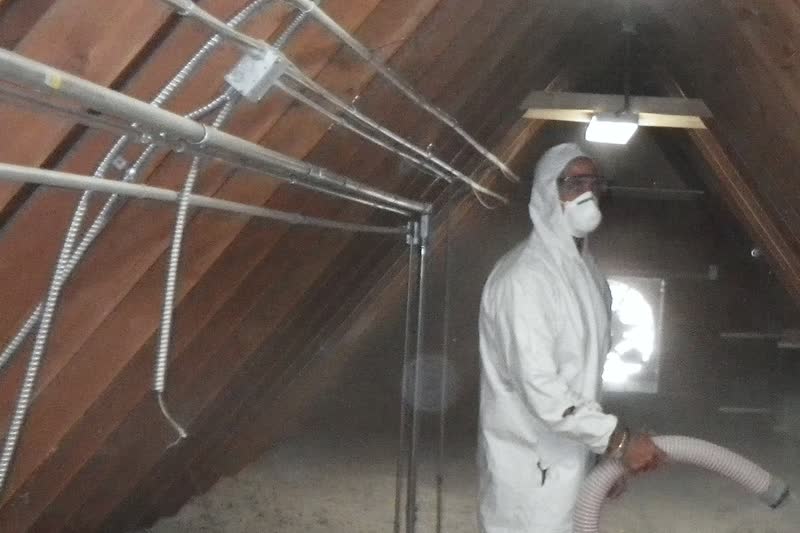
Blown-in fiberglass attic insulation, added to the depth your home needs, to even out hot and cold rooms and cut wasted heating and cooling.
A Greenville attic that's short on insulation shows up as a hot upstairs in summer and a power bill that won't come down. We do attic insulation, insulation removal and air sealing for Greenville homes, from the older streets west of downtown to townhouses and subdivisions built in the 2000s. Insulation Pros is a family owned company serving all of North Carolina, and most attics we can price free from their square footage.
Greenville grew from about 90,900 people in 2020 to about 96,400 in 2025, by Census Bureau estimates, and its housing is young. Of roughly 46,000 housing units, about 60 percent were built in 1990 or later, and the 2000s alone account for about a quarter. Only about 16 percent predate 1970.
It's also a city of shared walls. About 52 percent of the housing units are in buildings with two or more homes, and another 15 percent are attached houses such as townhouses. About two thirds of the occupied homes are rented. So the attic over a Greenville home may be shared with the neighbors, and it often belongs to a landlord rather than the people living under it.
If you're comparing insulation contractors in Greenville, here's how we price. For most attics we only need the square footage, from you or worked out from your home's footprint, and you get a written price without anyone coming out. Shared attics and older houses with complicated roofs sometimes need a closer look, so we make a special visit for those. Either way you pay for what the attic needs, not for extras. This page covers attic insulation, insulation removal, the city's newer houses and townhouses, air and duct sealing, and whether a radiant barrier is worth it.
More for Greenville homeowners: Attic insulation in Greenville.

Monday to Friday 8:00 am to 5:00 pm. Saturday by appointment. Sunday closed.
Greenville, the Pitt County seat on the Tar River, began in the 1770s as Martinsborough and is home to East Carolina University, which dates from 1908. Its oldest neighborhoods lie just west of downtown, on streets first platted as Skinnerville in 1882 and Greenville Heights in 1907.
The Skinnerville and Greenville Heights district covers about 95 acres between downtown and the Tar River. Its 2005 nomination found most of the houses one story and frame, and the 1920s the busiest decade for building. Bungalows, Period Cottages, Cape Cods and Minimal Traditional houses fill the streets, and entry after entry in the inventory lists an interior brick chimney. Where one of those stacks comes up through the ceiling joists, warm house air escapes around it. We close that opening with a strip of thin aluminum and a heat-rated caulk. Foam does not belong on that joint. A metal shield around the brick then keeps the new insulation at a safe distance.
Rambling early houses in that district stand close to the street that was West Fifth Street, near Pitt Street. Two of them are listed on the National Register by themselves. One, finished in 1902, has a round tower with a conical roof. The other, begun late that year, sits under a high hip roof broken by several projecting gables. Beneath a roof like that the attic can come in pieces: one big space in the middle, and small nooks tucked behind every gable and the tower. Insulation does its job only where it lies at full depth, so every nook gets an even layer, including the awkward ones near the eaves.
Going by the Census table on this page, most Greenville homes date from 1970 on. If your kitchen has a box built out over the wall cabinets, check whether the box is open to the attic, because ENERGY STAR counts that as a leak. The fix is to rake the insulation aside, cap the box with board and sealant, and rake it back. Flue and duct chases and the holes bored for pipes and wires are closed the same way, before any new insulation goes on top.
Attic insulation, removal, air sealing and more. Open one to see how the work goes.
Blown-in fiberglass attic insulation, added to the depth your home needs, to even out hot and cold rooms and cut wasted heating and cooling.
Old, wet, matted or animal-soiled attic insulation vacuumed out, so new insulation can go in on a clean, sealed attic floor.
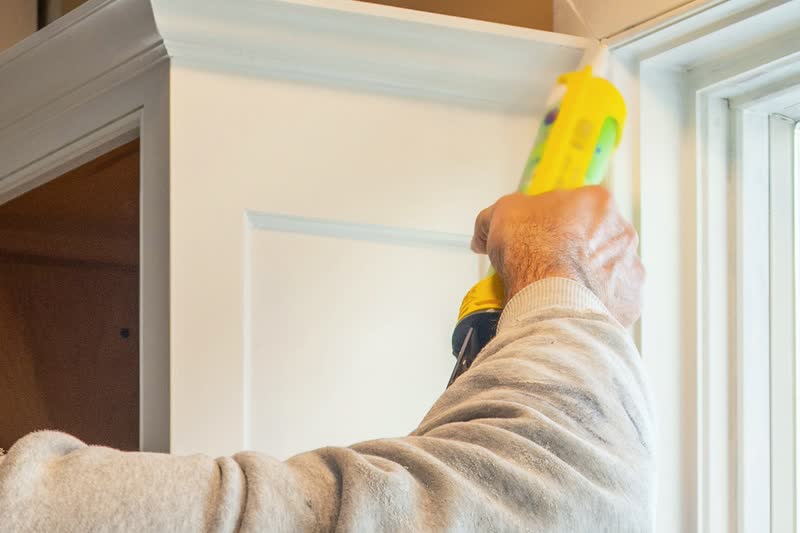
Sealing the gaps between your rooms and the attic, and leaky ductwork, so the air you pay to heat and cool stays inside.
Insulation blown into the closed walls of an existing house, batts in open walls for additions, remodels and new builds, and garage walls and ceilings.
Insulation for the garage ceiling under a bonus room, the wall shared with the house and the garage attic, with air leaks sealed first.
Floor insulation under the house: wet or fallen insulation pulled out, new batts between the floor joists, plastic over the dirt and the floor leaks sealed.
Both of the climate maps North Carolina uses put Pitt County in zone 3. ENERGY STAR recommends R-49 for an uninsulated attic there, and R-38 added over 3 to 4 inches that are already in place. The state energy code sets R-38 for a new ceiling, which leaves a house built to code in the 2000s short of ENERGY STAR's figure.
Most of the work is a top-up. The ceiling's leaks get sealed, baffles go in at the eaves, and blown-in fiberglass is spread over the dry old layer to one depth. The page on attic insulation in Greenville covers depths, what houses of each age tend to need and what sets the price.
Greenville's center sits about 60 feet above sea level, 3 miles from NOAA's Greenville station, the best match for Greenville. The station's 1991 to 2020 normals average about 2,940 heating and 1,920 cooling degree days a year, so at Greenville's station, heating needs outweigh cooling.
Removal is for insulation that has failed, not insulation that's just old. ENERGY STAR's hiring guide gives the signs: it's wet, it's grown mold, it smells, or it holds animal waste. Each has a cause that gets dealt with first, whether that's a roof leak for a roofer or squirrels and mice that have to be gone, with their way in closed.
With the cause fixed, attic insulation removal is done by vacuum, straight out of the attic. The bare ceiling then gets its air sealing while every gap is easy to reach, and a new blown-in layer goes down in most homes. Removal on its own, with nothing put back, is a job we'll take too.
Vermiculite stays where it is. That pebble-like fill, usually gray-brown or silver-gold, should be assumed to contain asbestos, the EPA says, and left undisturbed until a professional asbestos contractor handles it. If we see it, we stop and explain.
The Census estimates in the card here show how recent most of the city is. Building picked up in the 1970s and peaked in the 2000s, when about 11,600 of today's housing units went up. Only about 4 percent of the housing predates 1950.
Each era points to a different first check. In the older houses west of downtown it's the chimneys and the small attic spaces under complicated roofs, which the notes above cover. In the houses of the 1970s and 1980s it's depth, since the layer has had decades to settle and get disturbed. In the 1990s and 2000s houses it's the edges. ENERGY STAR notes that an attic can hold plenty of insulation in the middle and very little along the eaves.
About 23 percent of Greenville's housing units are attached houses or sit in buildings of two to four homes, the Census figures show. Over a row of townhouses, each unit's attic may be walled off from the next or open across several, and which one you have decides how the work gets planned. An owners' association may also have rules about the roof and the attic.
For a walled-off unit, your own square footage is usually enough to price it. Where the attic runs over more than one home, we'll often make a special visit first, and the price says which part the work covers. Air sealing gets planned unit by unit, since each home's ceiling has its own lights, pipes and hatch.
Electricity heats about 84 percent of homes in Greenville, and where the heat and the air conditioning move through ducts, those ducts often run through the attic. ENERGY STAR counts attic ducts among the signs of a poorly performing system, and it says leaks, holes and loose connections let 20 to 30 percent of the air in a typical house's ducts escape. We seal the joints and the register boots we can reach with mastic or metal tape, never plain duct tape.
The ceiling gets the same treatment. Before the new insulation goes down, we close the openings around plumbing vent pipes and wiring, the tops of walls open to the attic, recessed lights and the hatch, which ENERGY STAR's hiring guide says should be weatherstripped and insulated. Dirty streaks in the old insulation show where air has been moving, and those spots get sealed first.
By NOAA's 1991 to 2020 normals for the Greenville station, July's average high is about 90 degrees, and the station reaches 90 or more on about 53 days a year. A radiant barrier, the reflective foil under the roof that blocks heat radiating off the deck, is the fix people often ask about, and the Building America Solution Center notes that one keeps attic ductwork cooler in summer.
It's not a substitute for depth, though. Over an attic insulated to R-30 or better, the same source says, the foil has little heat flow left to stop. So sealing and insulation come first, and that's the work we do. Where foil would add anything, it's likeliest where the ducts cross the attic.
Greenville runs its own electric system. Greenville's natural gas comes from Greenville Utilities Commission, a municipal system, and 14 percent of Greenville homes heat with it.
Program to ask about in Greenville: Energy Audit Program (GUC), a free on-site check of insulation, air sealing, ducts and heating and cooling. Before a Greenville job, check its current terms; the Pitt County page lists every program.
Each page has local notes on the homes and attics in that town.
Pitt County, 5 miles south
Median home built 2001, 5 years newer than Greenville's
Attic insulation in WintervillePitt County, 6 miles east
Median home built 1983, 13 years older than Greenville's
Attic insulation in SimpsonPitt County, 15 miles north
Median home built 1964, 32 years older than Greenville's
Attic insulation in BethelAlso in Pitt County: Falkland, Fountain, Grifton, and Grimesland. Every town in Pitt County. See all service areas.
Local service pages: Attic Insulation in Asheville, Attic Insulation in Charlotte, Attic Insulation in Durham, Attic Insulation in Fayetteville, Attic Insulation in Greensboro, Attic Insulation in Greenville, Attic Insulation in High Point, Attic Insulation in Lexington, Attic Insulation in Raleigh, Attic Insulation in Thomasville, Attic Insulation in Wilmington, Attic Insulation in Winston-Salem.
Start by asking what's on the price and why. ENERGY STAR's hiring guide says a sound estimate covers baffles at the eaves and air sealing of the attic floor before any insulation, and it recommends getting more than one. The estimate should give the target as an R-value. Anything you didn't ask for deserves a question. When the work is done, the FTC's R-value Rule entitles you to a receipt that lists the area covered, the thickness and the R-value installed.
Sometimes. A house that age was insulated when it was built, usually to the code of its day, and today's code minimum of R-38 is still below ENERGY STAR's R-49 for this zone. What matters is whether the layer has settled, whether it reaches the eaves and whether it got pushed aside when the ducts, lights or attic equipment went in. If yours is deep and even, we'll tell you to leave it alone.
Usually, once we know how the attic is laid out and who controls it. If your unit's attic is walled off, the work is like any small attic, and your square footage is enough to price it. If it's open over several units, or the association manages the roof, the owners or the association decide, and the price says which part is covered.
Yes. Insulation Pros serves homes all over North Carolina, so Winterville, Ayden, Farmville and the smaller towns of Pitt County are covered. The nearby towns above each have their own page. Wherever you are, the price comes in writing, usually from the square footage.
The attic comes first for us: insulation, removal and air sealing. We can also blow insulation into walls that are already closed up, insulate a garage ceiling or the wall it shares with the house, insulate the floor over a crawl space and insulate commercial buildings. A home energy audit is a separate paid service. The attic estimate is free.
The size of the attic, mainly. Send the square footage, or the address and let us work it out. Tell us roughly when the house was built, whether it's a townhouse, where the air handler is and which rooms are hard to keep comfortable. Before install day, make sure there's a clear way to the attic, whether that's a ceiling hatch in a closet or pull-down stairs in a hallway or garage.
No, attic insulation is not its business. Greenville has a Historic Preservation Commission, and North Carolina law gives such commissions a say over the exterior of designated local landmarks and districts, with no authority over interior arrangement. Insulating and air sealing an attic are indoor jobs. National Register listing alone, as in College View or Skinnerville and Greenville Heights, does not restrict a private owner. If the work would add ridge, roof or soffit vents, ask the city whether your house is locally designated before that step.
If you own it, yes. Attic work is up to the owner, so a student or other tenant who finds a place hard to keep warm should take it to the landlord. The university dates from 1908, and Greenville has long been a college town. The attic opening is often inside the unit, so the tenant needs to know the day of the work. We seal the ceiling from above before any insulation goes down.
It sits with outdoor conditions on several sides. Below the floor is an unheated garage, and beside and above the room are attic spaces, often hidden behind short walls under the roof slope. Building America guidance says the floor between the garage and the room is air sealed, with insulation pressed up tight against the plywood. The small attics behind those short walls leak too, says ENERGY STAR. We seal and insulate both, and we insulate garages as well.
Attic Insulation
The room over the garage sits on a garage, beside two wedges of attic and under a third. Learn which surface is failing, how each one is sealed and insulated, and the order of work that makes the room livable.
Air Sealing
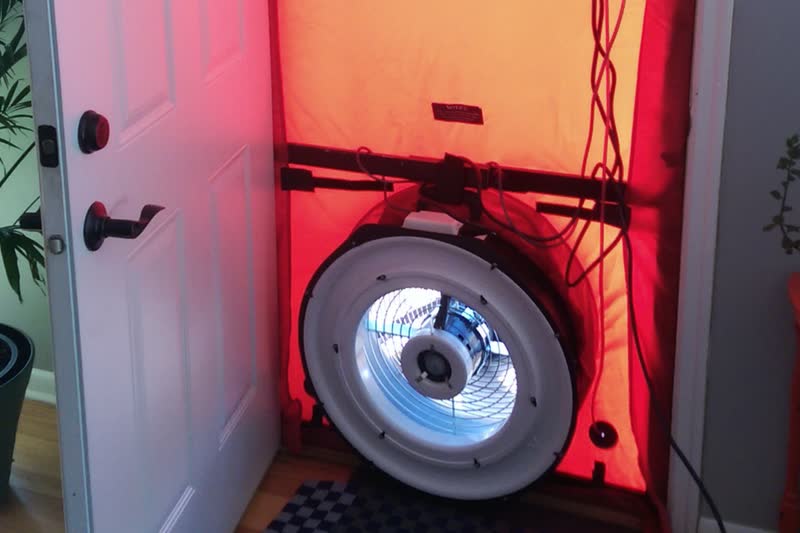
A step-by-step look at the audit visit: the interview, the bill review, the blower door and the infrared camera. Plus what a useful report contains, and the honest cases where you do not need an audit at all.
Census Bureau figures for Greenville, NOAA normals for the Greenville station, NOAA monthly normals for the Greenville station, Greenville Utilities Commission (GUC), Census Bureau population estimates for cities and towns, How to Hire an Attic Insulation Contractor (ENERGY STAR), Adding Attic Insulation (ENERGY STAR), Recommended Home Insulation R-Values (ENERGY STAR), Attic Air Sealing Project (ENERGY STAR), Duct Sealing (ENERGY STAR), Asbestos-contaminated vermiculite insulation (EPA), Attic Radiant Barriers (Building America Solution Center), FTC R-value Rule (16 CFR 460.17), North Carolina codes in force (Office of State Fire Marshal) (October 2026). Compiled by Insulation Pros. How the town pages are made.
Sources for the Greenville notes and questions (read October 20, 2026):
Greenville, NC
Open in Google Maps (opens in a new tab)Insulation Pros is an insulation contractor serving North Carolina, Greenville and Pitt County included. For most homes here, a free price starts with the attic's square footage.
Curious what's over the ceilings of your Greenville home? Call, text or send the attic's size, and we'll tell you what it needs, if anything, with a free written price.
What You Can Count On
We serve homes across North Carolina. These are the largest towns we work in.
Alamance County
Buncombe County
Cabarrus County
Cumberland County
Durham County
Forsyth County
Gaston County
Guilford County
Mecklenburg County
New Hanover County
Onslow County
Orange County
Pitt County
Wake County