

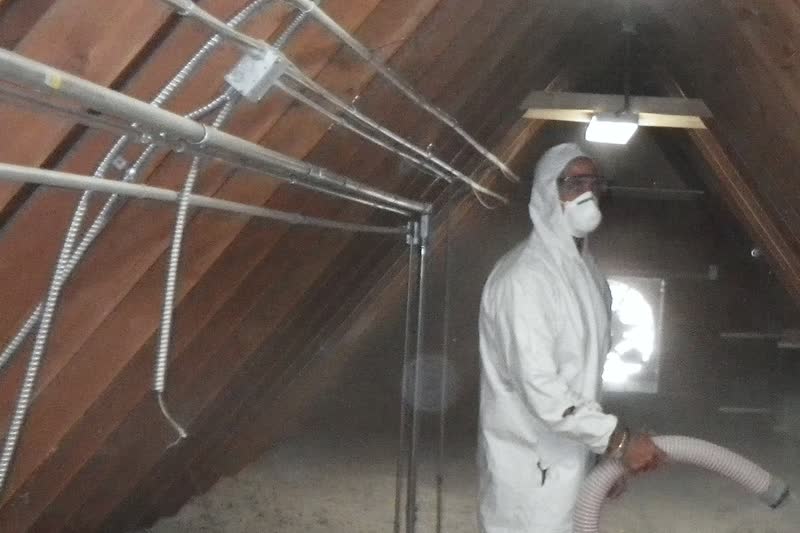
Attic Insulation
Blown-in fiberglass attic insulation, added to the depth your home needs, to even out hot and cold rooms and cut wasted heating and cooling.
Attic insulation in Archdale, NC, mostly for houses built from the 1980s through the 2000s. We seal the ceiling, then top it up with blown-in fiberglass, or vacuum out a damaged layer and replace it. The estimate is free and rarely needs a visit.
Archdale is a city of homeowners. Nearly four in five of its occupied homes are lived in by the people who own them, and a little over half of its housing went up between 1980 and 2009, by the Census Bureau's 2020 to 2024 survey. Those attics usually have insulation in them. The question is whether there's enough, and whether it's spread evenly.
We blow loose-fill fiberglass to one level depth over the whole attic floor, once the ceiling's leaks are sealed. On both sides of the county line, the 2021 national climate map puts Archdale in zone 3, where ENERGY STAR's attic insulation target for an existing home is R-38 over the 3 to 4 inches many attics already hold, or R-49 over a bare floor.
Savings vary. Find out why in the seller's fact sheet on R-values. Higher R-values mean greater insulating power. In blown-in fiberglass, the attic insulation we install, ENERGY STAR's estimating figure puts R-38 at about 15 inches and R-49 at about 20; the coverage chart of the product used gives the exact installed thickness for each R-value.
Your home's square footage, or just its street address, is usually all we need to tell you what the attic needs. If it needs nothing, that's what the estimate will say.
See all of our insulation services in Archdale.

Monday to Sunday 8:00 am to 5:00 pm.
Attic insulation, removal, air sealing and more. Open one to see how the work goes.
Blown-in fiberglass attic insulation, added to the depth your home needs, to even out hot and cold rooms and cut wasted heating and cooling.
Old, wet, matted or animal-soiled attic insulation vacuumed out, so new insulation can go in on a clean, sealed attic floor.
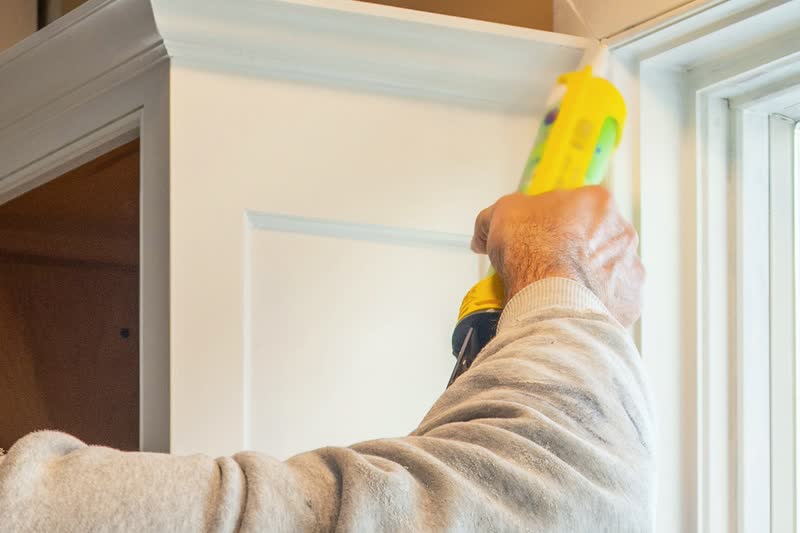
Sealing the gaps between your rooms and the attic, and leaky ductwork, so the air you pay to heat and cool stays inside.
Insulation blown into the closed walls of an existing house, batts in open walls for additions, remodels and new builds, and garage walls and ceilings.
Insulation for the garage ceiling under a bonus room, the wall shared with the house and the garage attic, with air leaks sealed first.
Floor insulation under the house: wet or fallen insulation pulled out, new batts between the floor joists, plastic over the dirt and the floor leaks sealed.
NOAA's 1991 to 2020 normals for the High Point station, about 4 miles from the center of Archdale, count roughly 3,120 heating degree days and 1,710 cooling degree days a year. Winter is still the larger load, but the cooling figure is more than half the heating one, so the attic works hard in both seasons.
On a July afternoon the roof deck heats the attic, and a thin or patchy layer lets that heat work down through the ceiling. Ducts in the attic sit in the same heat. That's why duct sealing goes on the same job when the ducts run overhead, and why the fiberglass is carried to full depth at the eaves, where it's usually thinnest.
The 1980s, 1990s and 2000s each built roughly one Archdale home in six. Twenty to forty years is plenty of time for loose-fill to sink, and it's rarely even. Look for low spots where someone walked to a furnace or ran a cable, thin coverage along the eaves, and a hatch or pull-down stair with nothing on the back of it.
A dry, clean layer stays. Air sealing comes first: around the hatch, the light fixtures, the wiring and plumbing holes and the tops of interior walls. Baffles go in at the soffit vents, then new fiberglass is blown over the old until the floor is level. Recessed lights that aren't rated for insulation contact keep 3 inches of clear space, as ENERGY STAR advises.
Roughly one Archdale housing unit in nine is a single-family attached home, such as a townhouse, by the same Census estimates. Insulating one is the same job on a smaller floor: the ceiling is sealed, and fiberglass is blown to depth over the unit's own attic.
The difference is at the edges. A townhouse attic may be closed off at the walls between units or open to the neighbors' side. We work over the home you own and show you where it ends before we price it. If an owners' association looks after the building, check whether it needs to know before work starts.
About a quarter of Archdale's homes date from the 1950s and 1960s, and only a few go back further. An attic from those years may have been insulated once or twice by earlier owners, often thinly, with the gaps in the drywall or plaster left open underneath.
Old wiring is checked before anything is covered, and anything doubtful goes to an electrician. Pour-in granules the EPA describes as pebble-like, gray-brown or silver-gold, may be vermiculite, and the agency says to leave them undisturbed. Gaps around a chimney or flue are closed with metal and heat-rated caulk, never stuffed with insulation.
In most Archdale attics the old layer is worth building on. Attic insulation removal is for a layer that's soaked from a roof leak, moldy or smelly, or soiled by mice or squirrels. The leak is repaired or the animals are removed first, by a roofer or a wildlife company.
After that, the ruined insulation is vacuumed out. Where mice were in it, the attic is sanitized and deodorized. The bare ceiling is sealed and fresh fiberglass is blown in on the same job. Removal on its own, with nothing put back, is also something we do.
Square footage is where an Archdale price starts. If you don't have the number, an address lets us measure the house from above. Add the year it was built and what's bothering you, whether that's a warm upstairs or a summer bill that jumped. When an attic needs a closer look first, we make a special visit.
The estimate names the target R-value and depth and lists air sealing, any duct sealing and any removal on their own lines, with the total. There's no price on this page because each attic is different: the floor area, the depth already there, the leaks to close and whether a damaged layer comes out. The cost guide explains each one.

Each page has local notes on the homes and attics in that town.
Guilford County, 6 miles north
Median home built 1989, 3 years newer than Archdale's
Insulation contractor in High PointDavidson County, 7 miles west
Median home built 1983, 3 years older than Archdale's
Insulation contractor in ThomasvilleGuilford County, 15 miles northeast
Median home built 1985, 1 year older than Archdale's
Insulation contractor in GreensboroRandolph County, 15 miles southeast
Median home built 1981, 5 years older than Archdale's
Insulation contractor in AsheboroAlso in Randolph County: Trinity, Randleman, Franklinville, Liberty, Ramseur, Seagrove, and Staley. Every town in Randolph County. See all service areas.
Local service pages near Archdale: Attic Insulation in High Point, Attic Insulation Removal in High Point, Attic Insulation in Thomasville, Attic Insulation in Greensboro, Attic Insulation Removal in Greensboro, Attic Insulation in Asheboro, Attic Insulation in Kernersville, Attic Insulation in Lexington, Attic Insulation in Winston-Salem, Attic Insulation Removal in Winston-Salem.
On paper the codes differ: North Carolina's energy code lists Randolph County in zone 3 and Guilford in zone 4. The 2021 national map that ENERGY STAR's chart follows puts both in zone 3, and North Carolina asks for R-38 in a new home's ceiling in all of its zones. Your estimate gives one target for your house, as an R-value, whichever side of the line it's on.
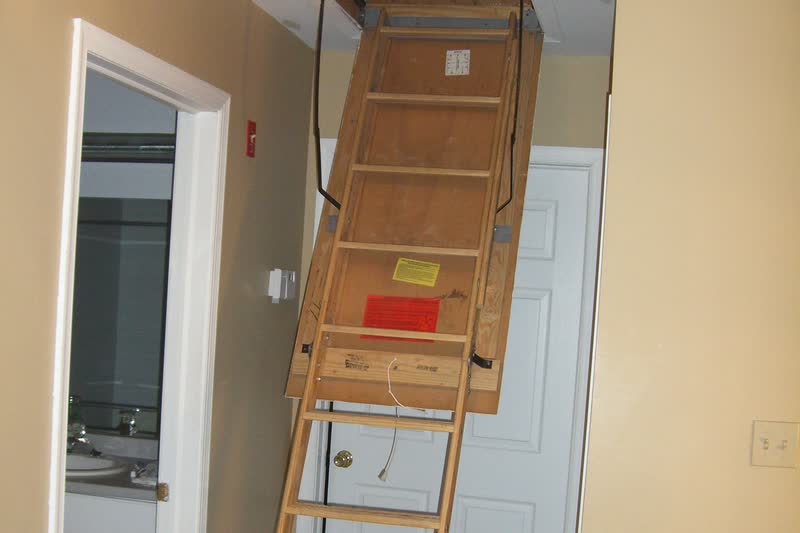
Yes. A pull-down stair is often one of the biggest leaks in a ceiling: the frame around it is rarely sealed, and the door is a thin panel. We seal the gaps around the frame, insulate the back of the door and build a dam around the opening so the loose fiberglass stays put. Our guide to attic stairs and hatches goes through each step in order.
Often, yes. A layer that's dry and clean keeps doing its job. It has usually just settled and thinned at the edges. ENERGY STAR's advice for hiring an attic contractor is that new insulation can go over the old unless the old is wet, moldy, smelly or holds animal waste. So in most Archdale attics we seal the ceiling and build on what's there.
Archdale is on Duke Energy, which runs an attic insulation and air sealing rebate through contractors in its network, and Insulation Pros is an approved Duke Energy trade ally. For income-eligible households, the state runs Energy Saver North Carolina and the Weatherization Assistance Program. Each program sets its own rules on who qualifies, so its own page is the place to check before you plan around it.
Call or text from 8 to 5, seven days a week, or use the contact form any time. Send the square footage, or the street address so we can measure the footprint, plus the year the house was built. Most Archdale attics are priced from that with no visit, and the estimate is yours to keep and think over.
Attic Insulation
There is no price list here, on purpose. See the seven things that move attic insulation cost up or down, why a per-square-foot number misleads and how to compare two written estimates line by line.
Air Sealing
A quarter-inch gap around an attic opening can leak about as much air as a bedroom heating duct supplies. Here is the whole fix in order: seal, latch, insulate the door, dam the opening and cover the stairs.
Census Bureau figures for Archdale, NOAA normals for the High Point station, Duke Energy (October 2026). Compiled by Insulation Pros. How the town pages are made.
Archdale, NC
Open in Google Maps (opens in a new tab)Insulation Pros is an insulation contractor serving North Carolina, on the Randolph and Guilford sides of Archdale alike. Most prices here need nothing more than the size of the house.
Wondering if your Archdale attic is keeping up? Send the square footage for a free price, with only the work the attic actually needs on it.
What You Can Count On
We serve homes across North Carolina. These are the largest towns we work in.
Alamance County
Buncombe County
Cabarrus County
Cumberland County
Durham County
Forsyth County
Gaston County
Guilford County
Mecklenburg County
New Hanover County
Onslow County
Orange County
Pitt County
Wake County


