What Is a Home Energy Audit, and Is It Worth It?
A home energy audit is a visit from a trained assessor who works out where your house wastes heating and cooling, then ranks the fixes in order. A thorough one includes a look at your bills, a room-by-room walk-through, a blower door test and often an infrared scan. It is worth paying for when a problem has no obvious cause, such as bills that keep climbing, rooms that never feel right or a big equipment decision ahead. It is not worth it when the answer is already plain, like an attic you can see is thin.
This guide follows the visit in order, using the U.S. Department of Energy's own description of a professional assessment. It explains what the blower door and the infrared camera actually measure, how a free utility assessment differs from a paid diagnostic audit, what a useful report should contain and how to get the house ready. Many of the fixes an audit turns up are attic jobs, such as air sealing the attic floor and adding attic insulation, so we also say plainly when you can skip the audit and ask for an estimate instead.
What a Home Energy Audit Actually Is
The Department of Energy describes a home energy assessment, which it also calls a home energy audit, as a way to see the whole picture of a home's energy use, comfort and safety. It tells you how much energy the house uses, where it is inefficient and which problems to fix first. The Department calls it the first step before making energy-saving improvements, not an extra you add at the end.
Audits come in two depths. The Department's Energy Saver guide says some take about an hour, need no specialized equipment and are relatively inexpensive. More thorough assessments take about four hours, use diagnostic equipment and cost more, but they tell you much more about the house. Both get sold as an audit, so the name alone does not tell you which one you are buying. The scope does.
An audit is not an insulation estimate, which prices one job you already want, or a sale inspection, which looks for defects of every kind. It is a diagnosis that ends in a ranked list. The savings come later, from the work you choose to do.
Who carries out a home energy assessment?
A trained energy assessor. The Department of Energy points homeowners to three places to find one: a state or local energy or weatherization office, the electric utility, and the directories kept by industry training programs. It also suggests asking which tools they use, such as a blower door or a thermographic inspection, and whether they offer the Department's Home Energy Score, a rating it compares to a car's miles-per-gallon figure.
What Happens During the Visit, Step by Step
A thorough visit follows a set order. Put together from the Department of Energy's description of a professional assessment, and the in-depth version it calls the test in, the steps look like this:
- The interview. The assessor asks about your concerns, such as comfort and high bills, and about how you use the house: whether anyone is home during the workday, your usual summer and winter thermostat settings, how many people live there and whether every room is in use.
- The bill review. The Department tells homeowners to have copies or a summary of the home's yearly energy bills ready. The assessor uses them to decide what to look for and compares the house with what the bills show.
- The measurements. The size and features of the house get recorded: wall area, the number and size of windows, and the insulation levels.
- The room-by-room walk-through. Every room, the attic and the heating, cooling and hot water equipment get a look, including a check for signs of moisture and mold.
- The diagnostic tests. In a thorough audit, a blower door test for air leakage, often with an infrared scan at the same time, plus safety tests.
- The report. A written description of the house and the actions that would cut its energy use and make it more comfortable.
How long does the visit take?
Plan on most of a morning if the audit includes testing. The Department puts a thorough assessment at about four hours, and says the blower door part alone can take up to an hour or more. A quick audit without equipment can take about an hour. Be home if you can: the Department's advice is to walk through the house with the assessor and ask questions. You know which bedroom never cools down in July, and pointing it out saves time.
Rather Talk It Through Than Read?
Call (336) 870-3893Monday to Friday 8:00 am to 5:00 pm. Saturday by appointment. Sunday closed.
How a Blower Door Test Finds Air Leaks
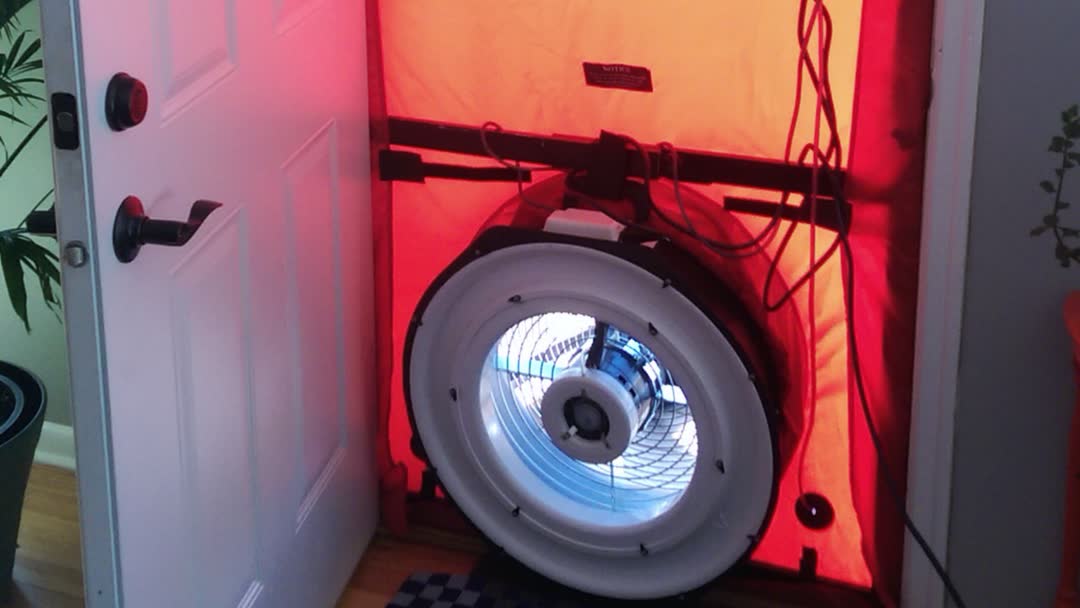
A blower door is a powerful fan that the assessor mounts for a short time in the frame of an exterior door. According to the Department of Energy, the fan pulls air out of the house and lowers the pressure inside. Outside air then pushes in through every unsealed gap, crack and wiring hole. Leaks that were invisible become drafts that can be found, felt and fixed.
The equipment is a frame and flexible panel that fit the doorway, a variable-speed fan and a digital pressure gauge called a manometer. While the fan runs, the assessor may scan walls, ceilings and floors with an infrared camera, or hold a nontoxic smoke pencil near a suspected leak and watch where the smoke goes. If conditions in the house do not allow the pressure to be lowered, the Department notes, the fan can run in reverse and push the pressure up instead.
Why a calibrated blower door matters
The Department draws a clear line here. A calibrated blower door has gauges that measure how much air flows out through the fan, so it gives a figure for how leaky the whole house is. An uncalibrated one can only locate leaks. It has no way to say how tight the house is overall. The Department says it is important that auditors use a calibrated door.
That figure is what makes the test useful after the audit. The Department explains that it lets a contractor put a number on the leakage before air sealing and on the reduction afterward. Some contractors also run the blower door while they seal, so they can find leaks as they work. Ask for the measured result to be written in your report, not just described.
What else does a blower door test tell you?
The Department lists more reasons than energy: avoiding condensation problems and drafts, keeping outdoor pollutants, pests and odors out, sizing heating and cooling equipment, and deciding whether the house needs mechanical ventilation for fresh air. A house that is much tighter after sealing still needs fresh air handled on purpose.
Infrared Cameras and the Other Tools an Auditor Uses
An infrared camera shows surface temperatures. The Department of Energy's page on thermographic inspections explains that the images record temperature differences across a building's surfaces, from white for warm areas to black for cool ones. That lets the assessor see where insulation is missing or thin, and it doubles as a quality check that insulation was installed properly. With the blower door running, air leaks show up as black streaks in the camera's view.
Weather matters for a good scan. The Department says the clearest images come with a large difference between inside and outside temperatures, at least 20 degrees Fahrenheit. In northern states scans are usually done in winter. In southern states they are usually done in warm weather with the air conditioner on. North Carolina sits in climate zones 3, 4 and 5, so depending on where you live and the season, a hot afternoon can serve as well as a cold morning. The Department adds that the house may need to hold a steady difference for up to four hours first, by running the air conditioner or the heat, so ask the assessor beforehand.
Can a thermal camera see inside the walls?
No. It reads the temperature of whatever surface it points at. A cool patch on an inside wall in winter, or a warm one in summer, suggests missing insulation or air moving behind it. The Department cautions that heat lost at one spot can start somewhere else inside the wall, which is why the camera works best alongside the blower door and a look in the attic.
What other equipment comes out during an audit?
The Department's list includes gas leak and carbon monoxide detectors, moisture meters, furnace efficiency meters, surface thermometers and nontoxic smoke pens. Not every audit uses all of them. The safety tools matter most in a house with gas appliances, because tightening a house changes how air moves through it.
Free Utility Assessments Compared With a Paid Diagnostic Audit
A free utility assessment is worth using if you qualify, but read what it covers. Duke Energy's page for its Home Energy House Call says qualified homeowners may request a free in-home energy assessment. Duke says its energy professional checks the home's insulation, ductwork and more, and that you receive a detailed report of ways the home could be more efficient, information on home improvement rebates and free energy-saving products. The page says the assessment and the products are free, that eligibility depends on the type of assessment, and that savings depend on the type of home and the changes made afterward.
What the page does not say is whether a blower door test or an infrared scan is part of it. If a measured leakage figure matters to you, ask Duke when you schedule. Customers of Dominion Energy, a city-owned utility or an electric cooperative should ask their own provider what it offers.
Two state programs also build an assessment into their work. Energy Saver North Carolina offers rebates to homeowners and renters with household incomes under 150 percent of the area median income, and its site says the eligible upgrades depend on your home and its assessment results. The Weatherization Assistance Program, run by the State Energy Office with local weatherization agencies, serves income-eligible households: the local provider carries out a home energy assessment, then writes up and installs the work.
A paid diagnostic audit differs in three ways. You agree on the scope, including the tests, in advance. The findings answer your own questions rather than a program's list. And the report is yours to take to any contractor. Ours is a paid service. If you qualify for a free assessment, use it first.
| Question | Free utility assessment | Paid diagnostic audit |
|---|---|---|
| Cost to you | Free, per Duke's page | Paid, priced at booking |
| Who can get one | Varies by assessment type | Any homeowner who books |
| Blower door test | Not stated; ask Duke | Included if the scope says so |
| What you receive | Report, rebate info, products | Written findings, ranked |
| Who does the work after | Depends on the program | Any contractor you choose |
Is there still a tax credit for an energy audit?
Not for one done in 2026. The federal Energy Efficient Home Improvement Credit used to cover home energy audits, but the IRS page for it says the credit can be claimed for improvements made through December 31, 2025. For an audit done in 2025, a tax professional can tell you how to claim it.
What a Useful Audit Report Should Tell You
The Department of Energy says the assessor gathers information during the visit and produces a report that describes your home and the actions you can take to cut its energy use while making it more comfortable. It adds that the right mix of improvements depends on the age and quality of the current equipment, the local climate and your own goals.
The recommendations that come up most often, in the Department's list, are these:
- Whole-home air sealing to reduce air leakage and drafts.
- More insulation where the house lacks it, such as the attic or the walls.
- Sealing and insulating ducts that run through unconditioned spaces.
- Removing or repairing parts of the home with moisture or mold.
- More efficient heating, cooling and hot water equipment.
- Ventilation, smart thermostats, LED lighting and efficient appliances.
How to judge the report you get
A simple test: could you hand it to a contractor and get a price from it? A useful report does these things:
- It gives measured figures, such as the blower door result and the insulation depth found in the attic.
- It shows where the problems are, with photos or infrared images tied to rooms.
- It ranks the fixes, with safety items first.
- It separates small jobs from large ones and names the trade for each.
- It is honest that savings are estimates, not promises.
Why the order of the fixes matters
Sequence changes the result. ENERGY STAR's attic air sealing project says the EPA recommends doing the attic insulation project after the sealing, because a deep new layer buries the gaps you still need to reach. Our guide on why air sealing comes before insulation explains the reasoning. Equipment usually comes last, since the Department notes that knowing how tight a house is helps size heating and cooling equipment correctly.
Ask, too, about a test-out. The Department describes a final step after the work, where safety tests and a visual inspection check what the contractors did. It says not every home energy professional offers it, so ask whether yours does or whether you can request it.
When a Home Energy Audit Is Worth It, and When You Can Skip It
An audit earns its cost when a problem has more than one possible cause, or when a big decision is coming and you want to spend in the right order. It is a poor buy when you can already see the answer from the attic hatch. If a summer bill is what sent you looking, our checklist on why the electric bill is so high in summer helps you rule out the weather and the rate first.
Signs an audit will pay its way
These are the situations where a ranked list beats a guess:
- Bills that climb even though your rates and habits have not changed.
- Several comfort problems at once: a hot upstairs, a cold back room and drafts.
- A new heat pump or furnace on the horizon, since the house affects what size you need.
- Buying a house: the Department suggests a thermographic scan before purchase, because even new houses can have defects in their insulation and air barrier.
- Condensation on windows, musty rooms or other moisture clues.
- Plans to tighten an older house a lot, where fresh air and gas appliance safety need checking first.
When you can skip it and get an estimate
ENERGY STAR's quick check takes a minute. Look across the attic floor. If the insulation is level with or below the floor joists, you probably need more. If you cannot see the joists because the insulation sits well above them, you probably have enough. When the attic is visibly thin, an audit will mostly tell you what you can already see. Measure the depth, compare it with the R-value recommended for your climate zone, and ask for a written estimate instead. We price most attics from the square footage, so that estimate doesn't need a visit.
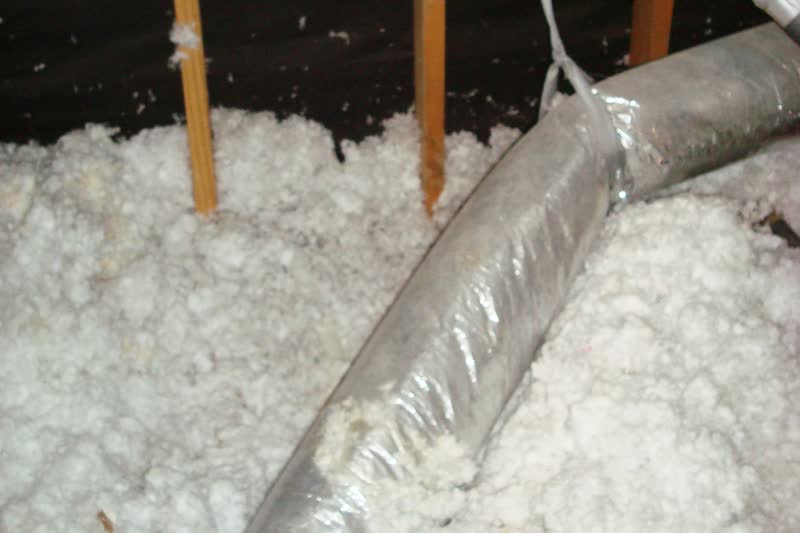
The same goes for one plain problem. Insulation soaked by a roof leak needs the roof repaired first, and then we vacuum out the old insulation and replace it. A duct you can see has come loose needs reconnecting and sealing. A bath fan blowing into the attic needs venting outdoors. Fix the obvious thing first. If the house still misbehaves, then pay for the audit. Our guide on how to tell if your attic needs more insulation walks through the attic checks step by step.
How to Prepare Your Home for the Audit
A little preparation makes the visit faster and the findings sharper. The Department of Energy's checklists for an assessment and for a blower door test come down to this:
- List the problems. Write down condensation, uncomfortable or drafty rooms, and when each one happens.
- Gather a year of bills. Copies or a summary of the home's yearly energy use. Your utility may provide them, or you may be able to download them.
- Clear the way. The assessor needs access to every area, including closets, built-in cabinets, the attic and rooms you do not use. Move stored boxes away from the attic hatch or pull-down stairs.
- Let the fire go out. If you heat with wood, every fire must be completely out, not even coals, before the assessor arrives, and ashes should be removed from open fireplaces.
- Expect the house to be set up for the test. Outside doors and windows closed, inside doors open, fireplace dampers closed, and fuel-burning appliances set so they do not fire during the test, then put back afterward.
- Ready the walls for a scan. For an indoor infrared scan, move furniture away from outside walls and pull back drapes.
Questions to ask before you book
Ask any auditor the same questions, so you can compare one offer with another:
- How long will the visit take?
- Is a calibrated blower door test included, and will the measured figure be in the report?
- Is an infrared scan included, and does the weather on that day suit one?
- Are combustion safety tests included if the house has gas appliances?
- What form does the report take, and when will I receive it?
- Is a test-out after the work available?
- Who will do the testing, and will they walk me through the results?
Get a Free Estimate
Not sure whether you need an audit or just more insulation? Call and tell us what's going on. If the attic is plainly thin, we'll price it from the square footage and save you the audit. If the cause isn't plain, we'll tell you what our paid audit covers.

Prefer to talk? Call (336) 870-3893.