Attic Insulation
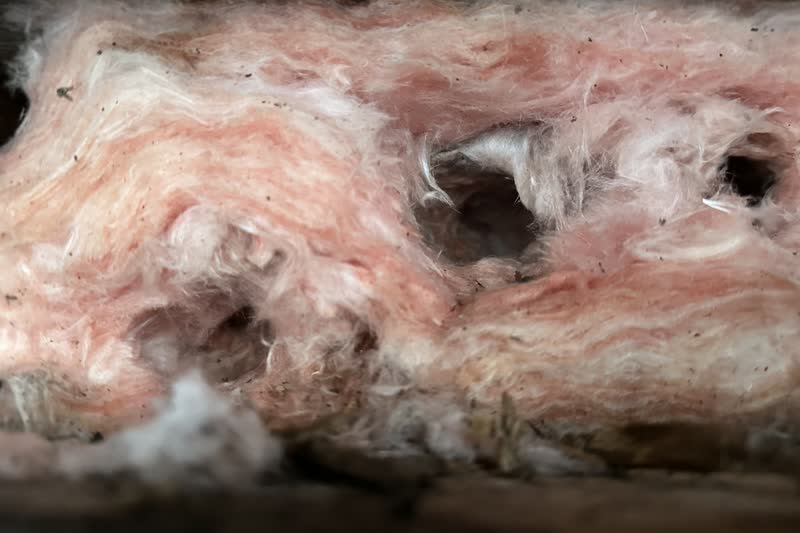
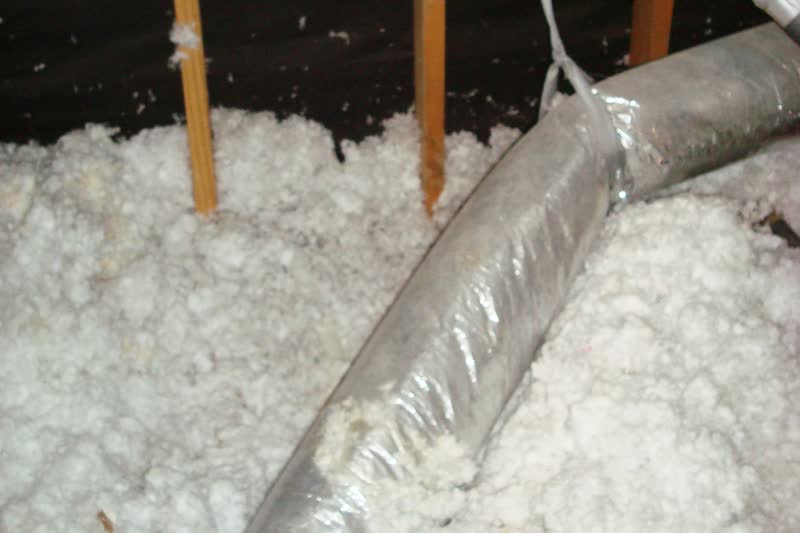
Blown-in fiberglass attic insulation, added to the depth your home needs, to even out hot and cold rooms and cut wasted heating and cooling.
Mill house, 1960s ranch or something newer: the fix usually starts in the attic. We top up attic insulation in Lexington, vacuum out layers too far gone to keep, and seal the ceiling's air leaks. The estimate is free.
Lexington is the Davidson County seat, and the Census Bureau's population estimates put it at about 20,000 people. Early in the 1900s most residents worked in furniture and textile plants or the businesses that served them, and many mill houses and bungalows from those years still stand. In the Census Bureau's American Community Survey for 2020 to 2024, roughly two of every three housing units here date from before 1980, and about one in seven from before 1940.
Every one of those houses went up long before North Carolina's energy code asked for the R-38 it now wants in a new ceiling. What's in each attic today depends on what its owners have added over the years. Nobody should guess at that, so the crew measures before any work starts.
Ours is a family company, and its area is the whole state, so every Lexington address is covered. Most of our work here is overhead: blown-in attic insulation, vacuuming out old layers that have gone bad, and air sealing the ceiling before anything new goes down. And you can get a price over the phone or by message, no appointment needed.
More for Lexington homeowners: Attic insulation in Lexington.

Monday to Friday 8:00 am to 5:00 pm. Saturday by appointment. Sunday closed.
Lexington, incorporated in 1827 and laid out around a central public square, has mill houses from as early as about 1886 to 1896, the Wennonah Cotton Mills houses recorded in 2019. Between those and the postwar ranches came period cottages and story-and-a-half Cape Cods.
The bungalows are only part of the Lexington Residential Historic District. Its 2007 nomination also describes period cottages and Tudor Revival houses, and Minimal Traditional houses that appeared just before World War II and caught on in the late 1940s. The inventory lists many one-and-a-half-story houses, Cape Cods with gabled dormers among them. In a Cape Cod the bedrooms upstairs share the roof's slope, and low knee walls close them in at the sides. Behind those walls lie narrow, three-cornered attics that tend to leak, and the floor framing under them is usually left open. Both get sealed and insulated, along with the small attic above the top ceiling.
Attic insulation, removal, air sealing and more. Open one to see how the work goes.
Blown-in fiberglass attic insulation, added to the depth your home needs, to even out hot and cold rooms and cut wasted heating and cooling.
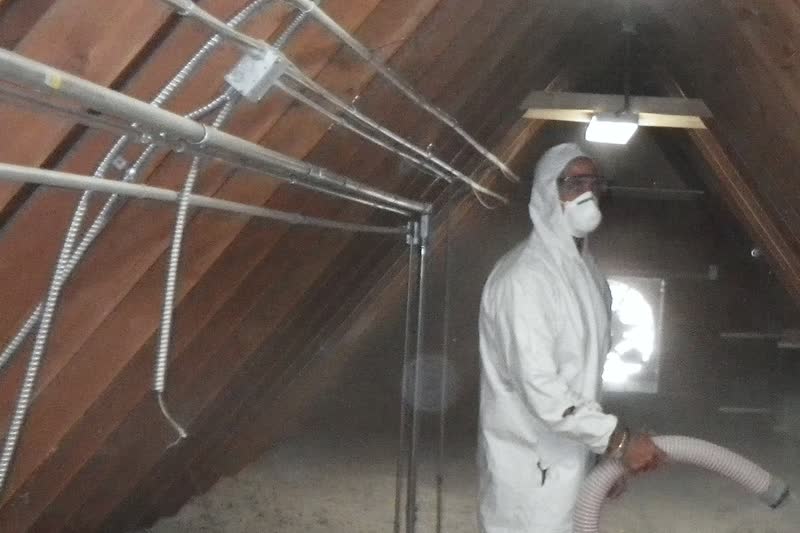
Old, wet, matted or animal-soiled attic insulation vacuumed out, so new insulation can go in on a clean, sealed attic floor.
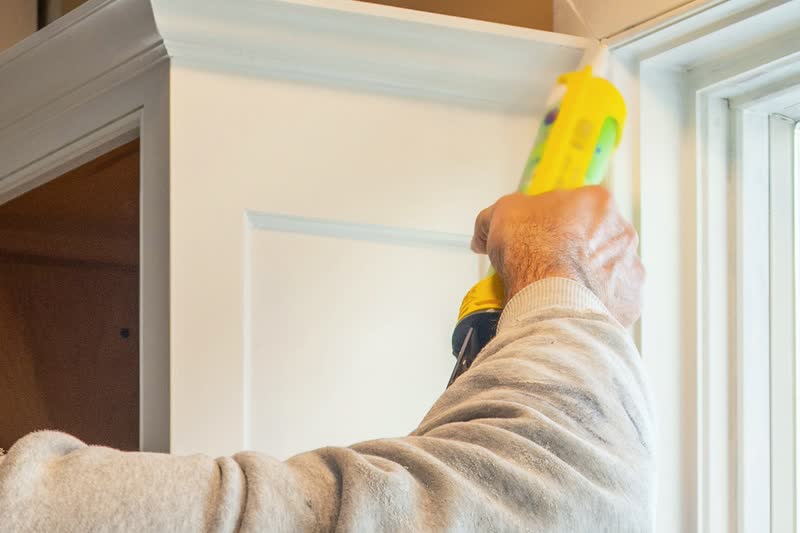
Sealing the gaps between your rooms and the attic, and leaky ductwork, so the air you pay to heat and cool stays inside.
Insulation blown into the closed walls of an existing house, batts in open walls for additions, remodels and new builds, and garage walls and ceilings.
Insulation for the garage ceiling under a bonus room, the wall shared with the house and the garage attic, with air leaks sealed first.
Floor insulation under the house: wet or fallen insulation pulled out, new batts between the floor joists, plastic over the dirt and the floor leaks sealed.
For most Lexington houses the job is a top-up. The ceiling leaks get sealed, then new insulation is blown over the layer that's already there until the attic floor has one even depth.
Our page on attic insulation in Lexington, NC goes further, from the R-value to aim for in Davidson County to mill house chimneys, ranch eaves and what moves the price.
Lexington's center sits about 810 feet above sea level, 2 miles from NOAA's Lexington station, the best match for Lexington. The station's 1991 to 2020 normals average about 3,500 heating and 1,450 cooling degree days a year, so at Lexington's station, heating needs outweigh cooling.
Dry, clean insulation can stay, however old it is. It has to come out when a roof leak has soaked or stained it, when rodents or other animals have nested in it and left droppings, or when it's crushed so flat it won't fluff back up. On ENERGY STAR's attic insulation project page, damp insulation is a sign of a leaky roof, and a professional should correct the leak before more insulation goes in.
So attic insulation removal starts with the cause. A roofer repairs the leak, and a wildlife company handles any animals still getting in. Then we vacuum out the ruined layer, seal the gaps it was hiding and, in most homes, blow a fresh layer onto the clean attic floor. Rather have it hauled out and left bare? That's a job we take as well.
A block from the commercial core, the Lexington Residential Historic District has 1920s bungalows lining Vance, Park and Williams streets. About a mile north of downtown sits the Erlanger Mill Village Historic District, a mill village where most of the buildings went up between 1913 and 1929.
The Erlanger district's National Register nomination describes one-story frame houses with interior brick chimneys and vents in the gable ends, many with a rear wing. The mill company started selling the houses to individual owners in 1953, and the nomination says most have been changed since.
Up in the attic, that history means you can't assume two of these houses are alike. An interior chimney leaves a gap in the ceiling that has to be closed with the right materials before insulation goes near it. A rear wing under a lower roof can hide a second, smaller attic. Wiring old enough to run on porcelain knobs and tubes gets an electrician's look before we cover anything. A mill house like this is one we may visit before we price it.
Nearly half of Lexington's housing units were built in those three decades, by the Census Bureau's estimate. The residential district's nomination notes that the ranch house, with its low-pitched roof, was popular here in the 1950s and 1960s.
A low roof makes a wide attic. It's easy to cross in the middle and tight at the edges, where the rafters come down to the outside walls. ENERGY STAR's quick test fits these houses well: if the joists show through the insulation or sit level with it, you probably need more. So on install day the crew measures out at the edges, not only beside the hatch.
ENERGY STAR's guide to attic air sealing puts the large openings first, because plugging them saves the most. The ones it names include dropped soffits left open to the attic, the spaces behind and under knee walls, and the chase around a furnace flue or a run of ducts. After those come the small ones: holes drilled for wiring and plumbing, recessed lights and the attic hatch.
The Census Bureau estimates that electricity heats about 62 percent of Lexington's occupied homes. In those houses, warm air leaking through the ceiling is electricity you paid for and lost. That's why the sealing comes before the insulation, not after.
Lexington, an ElectriCities public power town, runs its own electric system. Lexington's natural gas comes from Lexington Utilities, a municipal system, and 33 percent of Lexington homes heat with it.
Program to ask about in Lexington: ElectriCities energy audits (Lexington's electric system), home energy audits for member-town customers; ask Lexington's utility office. Before a Lexington job, check its current terms; the Davidson County page lists every program.
Square footage is where a Lexington price starts. No figure handy? The address is enough, and the footprint tells us the rest. From there the price reflects only the work the attic needs. If all it needs is more on top, that's all you'll pay for.
A mill house with a rear wing, or an attic showing signs of an old leak, is hard to judge from a description. We'll come out specially for one of those.
The morning of the job, you and the crew go over the attic together before anything starts. They measure the insulation in several spots, look at the chimney, the hatch, the wiring and any ducts, and check the vents at the gables or eaves. If they find something the price didn't count on, you hear it before anything is done.
Renters hold 58 percent of Lexington's occupied homes, by Census Bureau estimates. In a rented house, the owner is the one who asks for the price and decides on the work.

Each page has local notes on the homes and attics in that town.
Davidson County, 12 miles northeast
Median home built 1983, 14 years newer than Lexington's
Insulation contractor serving ThomasvilleRowan County, 15 miles southwest
Median home built 1976, 7 years newer than Lexington's
Insulation company serving SalisburyAlso in Davidson County: Denton and Wallburg. Every town in Davidson County. See all service areas.
Local service pages: Attic Insulation in Asheville, Attic Insulation in Charlotte, Attic Insulation in Durham, Attic Insulation in Fayetteville, Attic Insulation in Greensboro, Attic Insulation in Greenville, Attic Insulation in High Point, Attic Insulation in Lexington, Attic Insulation in Raleigh, Attic Insulation in Thomasville, Attic Insulation in Wilmington, Attic Insulation in Winston-Salem.
Yes. We take homes all over North Carolina, Welcome, Tyro and Southmont next door included. Send the street address our way, with the square footage if you have it, and you'll have a price back.
In most attics, yes. ENERGY STAR's step-by-step attic insulation guide says loose fill can be added on top of fiberglass batts or blankets, and the other way around. That only works over a dry, clean layer, though, and the ceiling's air leaks get sealed before anything goes over it. Anything wet, crushed flat or fouled by animals gets vacuumed out first.
Not for that reason alone. ENERGY STAR's attic air sealing guide reads dirty insulation as evidence that air is moving through it, which points to a leak in the ceiling underneath, and it says dirty insulation is still okay to use. So in a Lexington attic we follow those dark patches to the gap below and seal it. We won't charge you to haul out insulation that can stay. Removal is for insulation that's wet, fouled by animals or packed down past use.
We price it from the attic's square footage and what the attic needs: how much good insulation is already there, how much air sealing the ceiling needs, and whether wet or animal-soiled material has to come out first. A ranch with an open attic is quicker work than a mill house with a chimney to seal and a rear wing to reach. Your size and those details give us the number, and asking costs nothing.
Because once new insulation is down, the gaps under it are buried and much harder to get at. On its ENERGY STAR attic insulation page, EPA recommends finishing an attic air sealing project before the insulation goes in, and we keep to that order in every Lexington attic.
Yes, we seal attic ducts along with the ceiling. ENERGY STAR puts what a typical duct system loses through leaks, holes and poor connections at 20 to 30 percent of the air it moves, and it recommends mastic sealant or metal tape for the joints, never duct tape. Ducts that cross a Lexington attic should be sealed before new insulation covers them, so tell us if yours run through the attic and we'll include them in the price.
For the insulation itself, no. The city has four National Register districts: Uptown, Lexington Residential, Erlanger Mill Village and Lexington Industrial. National Register listing alone puts no limit on a private owner's own work, the state preservation office says. There is also a city Historic Preservation Commission. Where it has designated a local district or landmark, state law requires its certificate of appropriateness for outside changes, but it has no say over interior arrangement. New roof or soffit vents count as outside changes, so ask the city before anyone cuts one in.
Yes. Insulating a rental is the owner's call. The 2019 nomination for the Lexington Industrial Historic District describes 24 Wennonah Cotton Mills houses on South Salisbury Street and Wenco Drive. They were built about 1886 to 1896 as one-story frame houses with small louvered vents in the gables, and the nomination says all of them are now rentals. Before install day, let your tenant know, since the attic is usually reached from inside the house.
Attic Insulation
Most old attic insulation can stay under a fresh top-up. Wet, moldy, animal-soiled or smoke-damaged material cannot. Learn how to tell the difference, what removal involves and what to do about vermiculite.
Air Sealing
Thick insulation over a leaky ceiling is like a wool sweater in a stiff wind. Learn why sealing has to happen first, where leaks hide in attics and ducts, and what a sensible job looks like.
Census Bureau figures for Lexington, NOAA normals for the Lexington station, Lexington's municipal electric system (October 2026). Compiled by Insulation Pros. How the town pages are made.
Sources for the Lexington notes and questions (read October 20, 2026):
Lexington, NC
Open in Google Maps (opens in a new tab)Insulation Pros is an insulation contractor serving North Carolina, and a Lexington price needs no appointment.
A mill built some Lexington houses and 1960s builders built others. Either way, the attic price is free, and you'll hear what it needs and what it doesn't.
What You Can Count On
We serve homes across North Carolina. These are the largest towns we work in.
Alamance County
Buncombe County
Cabarrus County
Cumberland County
Durham County
Forsyth County
Gaston County
Guilford County
Mecklenburg County
New Hanover County
Onslow County
Orange County
Pitt County
Wake County