Attic Insulation Removal and Replacement: When Old Insulation Has to Go
Removing and replacing attic insulation is the exception, not the routine. ENERGY STAR's advice is that a contractor can add new insulation right on top unless the old material is wet, moldy, smelly or contains animal waste, and that taking it out is usually not necessary. So the useful question is not how old your insulation is. It is whether what is up there is still dry, clean and worth building on.
Below is how to tell a top-up from a tear-out, which problems call for removal, how the work is done, what a do-it-yourself removal takes and where it goes wrong, and what vermiculite changes. Attics across North Carolina sit through humid summers, the occasional roof leak and the odd squirrel, so it pays to know which situation you have.
Does Attic Insulation Need to Be Replaced, or Just Topped Up?
Usually a top-up is all it needs. Attic insulation replacement is rarely about age: nothing in ENERGY STAR's list of exceptions mentions how old the material is, so a layer that is dry, clean and free of odor can stay. What it loses over time is depth, because loose-fill settles and batts get flattened, and more material on top brings the attic back to its target R-value.
That leaves three outcomes, and a flashlight at the hatch usually points to one:
- Top-up: the material is dry and loose, with no stains, no musty or smoky smell and no droppings. It is simply shallow.
- Partial removal: the damage is confined to one area, such as the patch under an old roof leak. That section comes out and the rest stays.
- Full removal: the problem runs through the whole layer, as with droppings from end to end, widespread dampness or smoke.
How long does attic insulation last before it needs replacing?
It has no expiry date, so we will not give you a number of years. Fiberglass and mineral wool are spun glass and rock, and the federal Agency for Toxic Substances and Disease Registry notes that fibers of this kind are generally not broken down in the environment. Cellulose is treated paper, and a guide for contractors prepared for the U.S. Department of Energy's Building America program warns that wetting cuts its insulating value and can drain its fire retardant. In a dry attic that nobody disturbs, all three can keep doing their job.
Loose-fill does settle, and that is planned for. A Federal Trade Commission labeling rule makes every bag of loose-fill state its minimum settled thickness, and depth rulers, where an installer fastened them up, let you check the level years later.
Insulation goes bad when something happens to it: a leaking roof, a bath fan that blows damp air into the attic, animals, smoke or years of stored boxes. So judge yours by condition and depth, not by the age of the house. A look from the hatch once or twice a year tells you where it stands.
Can you put new insulation over old?
In most attics, yes. ENERGY STAR notes the new layer does not have to match the old: loose-fill can go over batts, and batts over loose-fill if they are unfaced, with no paper or foil backing. Ceiling leaks get closed first, because a deep new layer buries them, which is why air sealing belongs in the same job.
When to Replace Attic Insulation: Four Clear Cases, One Judgment Call
Replace attic insulation when it is wet, moldy, soiled by animals or smoke-damaged, and sometimes when it is badly matted. The cause gets fixed first, because new insulation laid over a problem only hides it.
Why remove old insulation from an attic at all?
Most of the time you do not have to. Old insulation that is dry, clean and free of pests can stay where it is, and new insulation goes on top of it. It comes out when it can no longer do its job or would spoil what goes over it: when it is wet or water-stained, moldy, fouled by animals or damaged by smoke, or when it lies matted over a ceiling full of air leaks that have to be sealed first. The cases below take each one in turn.
Wet or water-stained insulation
ENERGY STAR treats wet or damp insulation as the sign of a leaky roof, to be corrected before insulation work goes ahead. The source might be flashing, a roof penetration or a bath fan venting into the attic. Once that is fixed, material that was soaked, matted or stained comes out.
Moldy or musty insulation
Insulation is porous, and the EPA's mold guidance says porous materials may have to be thrown away once moldy, because growth works into crevices and may be impossible to remove completely. Mold is also likely to return if the water problem is not fixed. So moldy insulation comes out, and new insulation goes in only once the attic has stopped getting wet.
Droppings, nests and animal odor
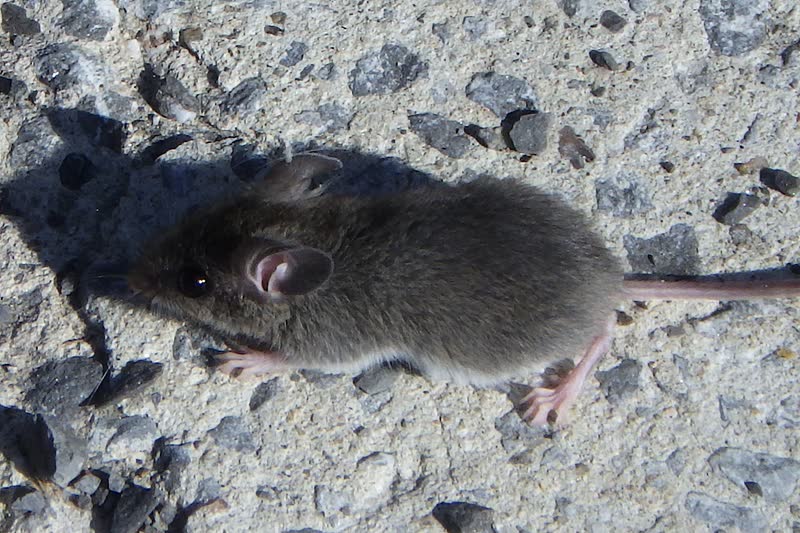
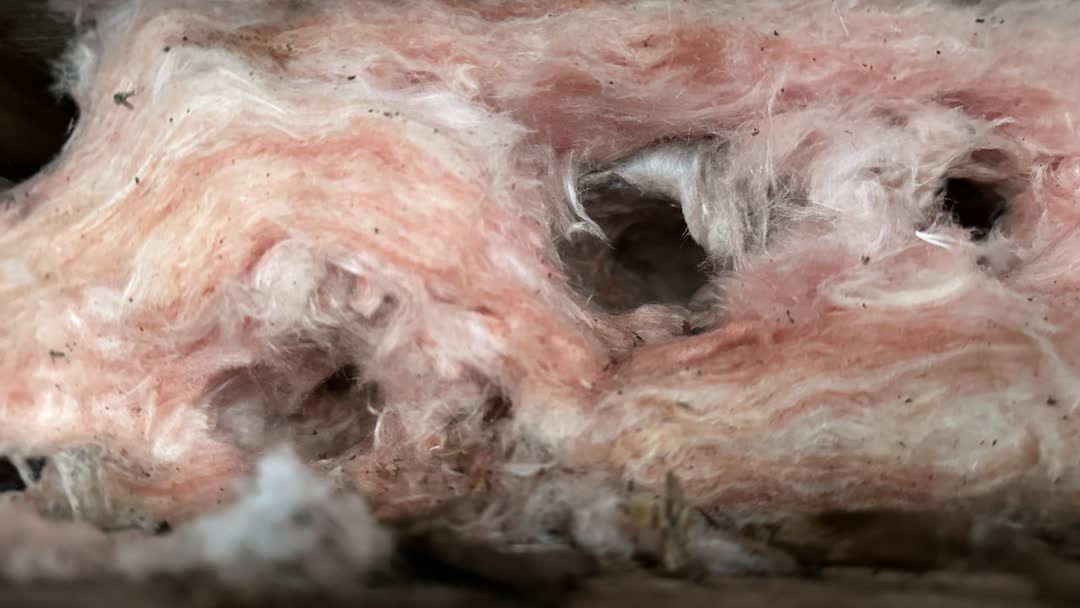
Mice and squirrels tunnel through insulation and leave droppings, urine and nests behind. The CDC's cleanup advice explains why this is not a broom job: sweeping or vacuuming droppings can put contaminated particles into the air, so contaminated insulation gets bagged for removal. The animals have to be gone and their entry points closed first, which is a separate trade from ours. Once the soiled insulation is out, we sanitize and deodorize the attic before any new insulation goes in. Our guide to mice in attic insulation covers the cleanup order and who does each step.
Smoke or fire damage
Insulation that sat through an attic fire or heavy smoke comes out too. ENERGY STAR's exceptions include material that is simply smelly, and an odor buried under a fresh layer is still in the house.
A matted layer over a leaky ceiling
Here is the judgment call. Insulation that is dirty and packed down often sits right over the gaps that most need sealing. Sometimes it can be moved aside, the leaks sealed and the material put back. Sometimes it is too compressed to be worth keeping, or clearing it is the only practical way to reach the whole ceiling. A U.S. Department of Energy checklist for attic work has the contractor state up front whether existing insulation will be removed or moved aside for air sealing, so ask, and ask why.
What does mold on the roof deck or rafters mean?
It means the attic has been damp, usually for a while. ENERGY STAR's attic guidance reads moldy or rotted rafters and joists as a sign of moisture problems, to be corrected before any insulation is added. Three sources come up most: a roof leak, a kitchen, bath or dryer vent that blows damp air into the attic when it should run outdoors, and house air leaking up through gaps in the ceiling. A U.S. Department of Energy fact sheet gives the last one as a plain example: warm, moist air carried from a bathroom into the attic in winter.
The cause gets fixed first. The EPA's reason is simple: mold that is cleaned off while the water keeps coming will most likely be back. Roof repairs belong to a roofer. Closing the ceiling leaks is air sealing, and replacing the insulation that moisture ruined is attic insulation work, and both of those are ours. A damp attic is one we come out to see before we price it, and the written estimate sets out what we'll take care of. Our guide to attic condensation explains each moisture source and how to tell it from a roof leak.
Rather Talk It Through Than Read?
Call (336) 870-3893Monday to Friday 8:00 am to 5:00 pm. Saturday by appointment. Sunday closed.
How Attic Insulation Removal and Replacement Works
In most homes, removal and replacement is a single job: the old insulation is vacuumed out, and new insulation is blown in after it. If all you want is the old material gone, we do that too, with nothing put back. Every attic changes the details, but the work generally runs in this order:
- Find the cause. The leak, the misrouted vent or the animal entry comes first, or the new insulation meets the same fate.
- Protect the house. Ask how the path to the hatch is covered and how dust is kept out of the rooms below.
- Take out the old material. Loose-fill is vacuumed out through a hose, and batts are rolled up and bagged by hand. Ask how soiled material will be handled and where the old insulation goes.
- Clear the floor. Leftover debris comes off the ceiling drywall and joists, which exposes every gap.
- Seal and prep. Air leaks are sealed while the ceiling is bare, baffles go in at the eaves and dams go around the hatch and any flue.
- Replace. New blown-in insulation goes in at an even depth to the agreed R-value.
What to ask before work starts
The same Department of Energy checklist calls for the attic to be inspected for water leaks, moisture and pest damage, and for the homeowner to get a list of needed repairs before work begins. Ask for the removal in the same detail: what comes out, how it leaves the house and what goes back in.
How to Remove Attic Insulation Yourself: The Risks and What It Takes
Wondering how to remove attic insulation yourself? Removal vacuums can be rented, so it can look like a weekend project. But an attic that needs removal is, by definition, an attic with a problem, and these are the risks:
- What you breathe. Old insulation is dusty and may carry mold or dried animal waste. For heavy rodent infestations the CDC calls for a respirator, goggles, gloves and coveralls.
- Where you stand. Only the joists hold your weight, and ENERGY STAR's attic safety notes warn against stepping on the ceiling drywall.
- Heat. An attic gets dangerously hot in a North Carolina summer, and insulation removal is slow, physical work.
- What is buried. Old wiring, junction boxes, recessed lights and flue pipes sit under the material.
- What you cannot identify. If any of it is vermiculite, it is not a do-it-yourself job at all.
Attic insulation vacuum rental: what a do-it-yourself removal takes
If the material is dry, clean loose-fill and you are certain none of it is vermiculite, taking it out yourself is hard, dirty work but not complicated. It is also the kind of insulation that can usually stay, so be sure it has to come out before you rent anything.
The machine is a vacuum made for insulation, and it is not a shop vacuum. It is a high-volume machine with a gasoline engine or an electric motor that stays outdoors. A long, wide hose runs from it up to the attic, and it blows what it pulls out into large collection bags. Tool rental counters carry them, though not every counter does, so call first and ask four things: whether the machine is gasoline or electric, how much hose comes with it and whether that reaches the far end of your attic, how many bags are included and what more cost, and whether it is meant for loose-fill only. Batts do not go up a hose. They are rolled up and bagged by hand.
A gasoline machine runs outside, well away from open windows, doors and vents. The CDC warns that small engines give off carbon monoxide, which builds up indoors. Then there is what you wear and work from, and ENERGY STAR and the EPA are specific about it:
- Breathing: ENERGY STAR's attic safety list includes a dust mask or protective face mask. An N-95 respirator is what the EPA names for small mold cleanups, and the EPA notes that a respirator only works if it fits properly.
- Eyes and skin: safety glasses or goggles, gloves, and a lightweight disposable coverall and hat, which ENERGY STAR recommends to keep itchy fibers off you.
- Head and knees: a hard hat or cap against the roofing nails overhead, and kneepads where the roof is too low to stand.
- Footing and light: boards to lay across the joists, a drop light and a flashlight.
- For the house: plastic sheeting and tape to cover the path from the hatch to the door.
How to remove blown-in insulation from an attic, step by step
Plan the disposal before the first bag is filled. An attic's worth of loose-fill fills a lot of bags, and they have to go somewhere. Call your county's landfill or transfer station before you rent and ask whether it takes bagged insulation, how it wants it bagged and what it charges. The rules differ from county to county. Then work in this order:
- Look before you rent. From the hatch, check for pebble-like granules, droppings, damp or moldy patches, cloth-covered wiring on ceramic knobs and recessed lights. Any of the first three changes the job, as the list of mistakes below explains.
- Fix the cause, or have it fixed: the roof leak, the bath fan that empties into the attic, the hole the animals used.
- Pick a cool morning. ENERGY STAR's advice for attic work in hot weather is to start early and drink plenty of water.
- Protect the house. Cover the path to the hatch, and switch the heating and cooling off while you work: a U.S. Department of Energy guide warns that leaky attic ducts draw loose fibers into the air the system delivers.
- Set the machine and its bags outdoors, run the hose in by the shortest route and lay boards across the joists to work from.
- Start at the far end and work back toward the hatch. Keep the hose off wiring, junction boxes, ducts and bath fan housings, and step only on the joists or your boards.
- Stop if you uncover anything you cannot identify, old wiring or signs of animals.
- Tie off each bag as it fills, then clear what is left on the ceiling drywall so every gap shows.
- Seal the air leaks while the floor is bare, and get the new insulation in. A bare attic floor insulates nothing, so have the replacement lined up before you start.
Do-it-yourself insulation removal mistakes that cost money
Most of the expensive mistakes are made before the machine is switched on:
- Removing insulation that could have stayed. ENERGY STAR's rule is that old insulation comes out only when it is wet, moldy, smelly or carries animal waste. Clean, dry material under a top-up is a rental you did not need.
- Vacuuming droppings. The CDC says not to vacuum or sweep rodent droppings or nesting material, because that puts contaminated particles into the air. It has soiled insulation placed in plastic bags for removal, and its gear list for a heavy infestation is a half-mask respirator with a HEPA filter, goggles, gloves and disposable coveralls.
- Disturbing vermiculite. If any of the material is pebble-like, stop. The EPA's advice is never to remove it yourself.
- A foot through the ceiling. Only the joists hold you.
- Leaving the cause in place, so the new insulation is wetted or soiled the same way as the old.
- Misjudging the time. Removal is slow, physical work, and a rental billed by the day keeps running while you rest.
- Leaving the attic bare. Every day without insulation is paid for in heating or cooling.
When to hire out attic insulation removal instead of doing it yourself
Hire it out when the material is wet, moldy or soiled by animals, when you cannot say what it is, when the wiring is old, or when the attic is too low or too hot to work in safely. ENERGY STAR's own list of reasons to bring in a professional before attic work includes difficult access, wet or damp insulation, moldy or rotted framing and knob-and-tube wiring.
Hire it out, too, when the removal is only the first half of the job, which is most of the time. Once the old layer is out, the floor still has to be sealed, fitted with baffles and insulated to depth. That whole sequence is what our attic insulation removal service covers. We vacuum out the old insulation and, in most homes, blow new insulation in after it, and one free written estimate covers every part of the job.
What If the Old Attic Insulation Is Vermiculite?
Vermiculite is the exception to everything above. The EPA describes it as a pebble-like, pour-in insulation, usually gray-brown or silver-gold, and says one mine near Libby, Montana supplied over 70 percent of the vermiculite sold in the United States from 1919 to 1990. That mine also held a deposit of asbestos. So the agency's advice is to assume vermiculite insulation may be contaminated, leave it undisturbed, keep storage and children out of that attic and never remove it yourself.
The EPA adds that no further testing is needed to take those precautions. If the material ever has to be assessed or removed, that is work for trained asbestos professionals, and the EPA suggests one firm to assess and a different firm to remove so there is no conflict of interest. It is specialist work, not insulation work. If the crew opens the hatch and finds vermiculite, they stop and show you, and we point you to a qualified professional first.
Attic insulation that looks like gravel: is it vermiculite?
Very likely. The EPA describes vermiculite insulation as a pebble-like, pour-in product, usually gray-brown or silver-gold, and says the pieces run from very fine particles to coarse ones nearly an inch long. ENERGY STAR describes it as lightweight, pea-size and flaky. It lies loose between the joists like a layer of fine gravel. Fiberglass, by contrast, is light fibers in yellow, pink or white, and cellulose is small gray flat pieces, like shredded newsprint.
ENERGY STAR's attic guide lists one other material that comes as lightweight granules, perlite, and you are not expected to tell the two apart. The EPA's advice is to assume the material is vermiculite from the Libby mine and to treat it as if it contains asbestos. Compare what you see with the photographs on the EPA's vermiculite page, from the hatch and without touching anything. If it matches, close the hatch and follow the precautions above.
Does attic or blown-in insulation have asbestos?
One kind can, and it is not the usual blown-in kind. Blown-in insulation today is loose-fill fiberglass or cellulose, the fluffy or papery material in a typical attic, and neither is on the EPA's list of places where asbestos may be found. The attic insulation that list does name is the kind made with vermiculite, a pebble-like fill that was poured in. You cannot settle which you have by looking.
For anything you are unsure of, the EPA's advice is to treat it as if it contains asbestos and leave it alone. Do not take a sample yourself. The agency says a badly taken sample can do more harm than leaving the material where it is, and that even a professional test of vermiculite can give a wrong result. It also explains that asbestos fibers have to be in the air to be breathed in, which is why undisturbed material is the safer material.
One more place to look without touching: the same EPA list includes the old blanket or tape wrap on hot water and steam pipes.
What attic insulation was used in the 1950s, 60s and 70s?
No agency publishes a list by decade, but two federal sources narrow it down. ENERGY STAR's guide to checking an existing attic names the materials you are likely to find, and the dates the EPA and the U.S. Department of Energy give for the two with a health concern cover these decades.
The one that carries the asbestos concern is vermiculite. The EPA says one mine near Libby, Montana supplied over 70 percent of the vermiculite sold in the United States from 1919 to 1990, much of it under the brand name Zonolite. The trust set up to help pay for its removal dates Zonolite attic insulation from the 1940s to the mid-1980s. So the 1950s, 60s and 70s sit in the middle of the vermiculite years, and an attic from any of them deserves a look for pebble-like fill before anyone works up there.
A U.S. Department of Energy guide for contractors adds one more material from that time: urea-formaldehyde foam, which it calls a popular insulation in the 1970s. It describes it as looking like an oozing liquid although it is solid, dry and crumbly, and as turning butterscotch in color with age. The guide says old foam of this kind is unlikely to cause problems. Where it is exposed, the guide sends you to a hazard-abatement contractor for advice on sealing it off, and it leaves any removal to that kind of professional.
Fiberglass, rock wool and cellulose from those years are not on the EPA's asbestos list. They are judged the way this guide judges any insulation: by whether they are dry, clean and deep enough. One date is worth knowing for cellulose. The Consumer Product Safety Commission's flame resistance standard applies to cellulose insulation made after October 15, 1979, so anything blown in before then was made before that rule. Keep it clear of recessed lights and flues, and mention it when you ask us for a price. This is how ENERGY STAR describes what you may see:
- Fiberglass, as batts or loose fibers: lightweight, in yellow, pink or white.
- Rock wool: dense gray or near-white fibers, sometimes with black specks.
- Cellulose: small gray flat pieces or fibers, from newsprint.
- Vermiculite or perlite: lightweight granules.
What is the Zonolite Attic Insulation Trust?
It is a fund that pays back part of what it costs to have Zonolite-brand vermiculite insulation removed. According to the trust's own site, W.R. Grace paid for it under a court-approved class action settlement, it runs independently, and it is not a government program.
Who can claim: someone who owns or rents a building with Zonolite in it, or used to, and who paid to have it removed or contained. Homes and commercial buildings both count. A claim has to show two things: that the vermiculite is the Zonolite brand, and what the removal cost. The trust says about a quarter of the vermiculite in homes is another brand and does not qualify, and that it will test a sample at no charge once a claim is open. The EPA would rather a trained asbestos professional took any sample, so ask the contractor who will do the removal to take it.
What it pays is a share, never the whole bill, and the share is shrinking. When we read the trust's site in October 2026 it had just announced a cut. Claims filed after November 30, 2026 are paid at about 36 percent of an allowed cost that has a ceiling, down from 55 percent, and claims filed by that date keep the old rate only if they are complete by January 31, 2027. The trust warns that the percentage can drop again without notice. It does not pay for your own labor or for upgrades such as extra insulation, baffles or a new hatch. The reasonable cost of putting back the insulation that was removed can be part of the claim.
Savings vary. Find out why in the seller's fact sheet on R-values. Higher R-values mean greater insulating power.
To apply, go to zaitrust.com. The claim form and its instructions are there, and the trust says you do not need a lawyer or a claims service to file. You can open a claim before any work is done, and opening one sets no deadline for the removal. The trust asks for photographs from before and after, the contractor's proposal and invoice, and proof of payment such as a canceled check or a card statement. So open the claim and take the photographs before anyone touches the attic.
We are not part of the trust and cannot tell you whether a claim will be paid. Only the trust decides that.
What decides vermiculite insulation removal cost?
An asbestos contractor prices it, not an insulation company, so we do not quote it. The EPA's advice is to hire a professional asbestos contractor for any work that disturbs vermiculite, and what that contractor has to do explains the cost.
By the EPA's description, a proper asbestos job seals the work area off from the rest of the house with plastic sheeting, shuts down the heating and cooling, wets the material so fibers stay out of the air, puts the waste in sealed, labeled heavy-duty bags, cleans up with wet rags and HEPA vacuums and may finish with air monitoring. Every one of those steps is labor and equipment that ordinary insulation removal does not need. Beyond that, the price moves with the size of the attic and the depth of the fill, how hard the attic is to reach and work in, whether there is vermiculite in the walls as well, and what the state and the landfill require for disposal.
Three things keep the bill honest. Use one firm to assess and a different firm to remove, as the EPA suggests, so nobody is paid to find more work. Get more than one written estimate, with the vermiculite work on its own line and apart from any remodeling, which is the trust's advice too. And ask whether removal is needed at all: a U.S. Department of Energy guide notes that sealing or covering asbestos material costs less than removing it, and that removal should be the last option unless regulations require it.
If the vermiculite proves to be the Zonolite brand, the Zonolite Attic Insulation Trust may pay back part of the removal cost, as the answer above explains. Once the attic has been cleared, putting in the new insulation is our kind of work, and that part comes with a free written estimate.
What Affects Attic Insulation Removal Cost?
We don't publish prices, because two attics the same size can be very different jobs. A free estimate puts your number in writing. Most of our estimates start from the square footage and what you tell us about the old layer, and if yours needs a closer look first, say for droppings or a wet patch, we make a special visit. These things move the removal part of it:
- How much there is: the size of the attic floor and the depth of old material.
- What it is. Loose-fill and batts come out differently, and some attics hold layers of both.
- What is in it. Droppings, mold or soot mean more protection and slower work.
- Access. A small hatch, a low roof pitch or boards nailed over the joists all add time.
- What follows. Sealing, baffles and a full-depth new layer are part of the same job, so ask for one quote covering removal and replacement.
Attic insulation removal cost per square foot
Removal is even harder to price by the square foot than insulation is, and we print no figure for it. A square foot of attic floor says nothing about how deep the old material lies, whether it is loose-fill that goes up a hose or batts that are bagged by hand, or whether there are droppings, mold or soot in it. An attic with twelve inches of old loose-fill holds four times the material of one with three, on the very same floor.
A per-square-foot price also hides the parts of the job that do not shrink with the floor: protecting the way through the house, setting up the machine and hauling the bags away.
So compare removal quotes on these points instead: how many square feet and how many inches are coming out, what the material is and what is in it, how it leaves the house and where it goes, how the rooms below are protected, and whether the cause is being fixed. Have the removal priced as a separate line from the sealing and the new layer, and ask if clearing just the damaged area would be enough. A free written estimate puts the real number on your attic.
Get a Free Estimate
Old insulation wet, matted or full of droppings? Tell us how big the attic is and what you've seen up there, and we'll price the removal and the new layer. If a top-up over what you have will do, we'll tell you that instead.

Prefer to talk? Call (336) 870-3893.