Attic Insulation
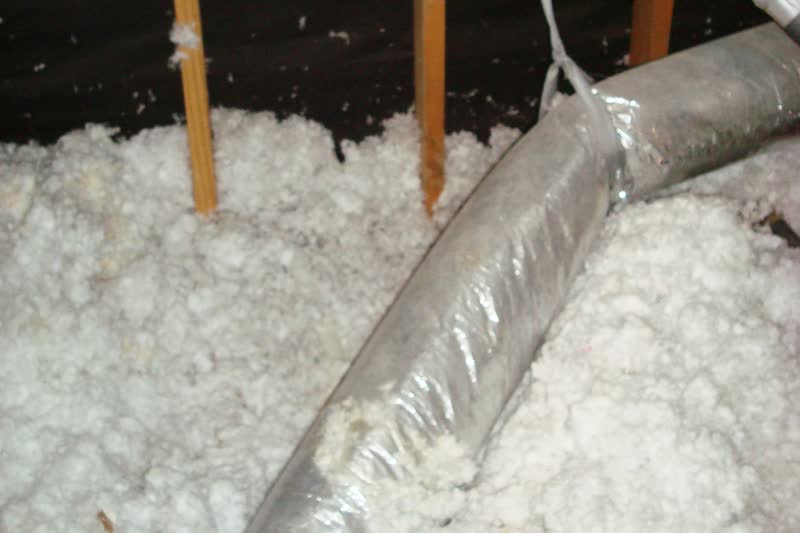
Blown-in fiberglass attic insulation, added to the depth your home needs, to even out hot and cold rooms and cut wasted heating and cooling.
If your Thomasville upstairs is still hot at bedtime, start with the attic. We blow in attic insulation, vacuum out old layers that are ruined, and seal air leaks and ducts. Most of the time, you'll know the price before anyone climbs a ladder.
Thomasville got its name in 1852, when a post office opened on the North Carolina Railroad line. Most of its houses came later, in three waves: chair factory and cotton mill cottages, postwar houses and ranches, and everything built from 1970 on. The Census Bureau's survey for 2020 to 2024 puts about 8 percent of the city's housing units before 1940, nearly a third in the 1940s through the 1960s, and about six in ten in 1970 or later. Each wave left a different attic. Some are half-story rooms under steep roofs. Others are shallow ranch attics.
We're Insulation Pros. The business is family owned and run, and it covers every part of Thomasville. Most calls here are about blown-in attic insulation, attic insulation removal when the old layer is ruined, and air sealing and duct sealing. We also add wall insulation to existing walls and do garage and crawl space insulation.
More for Thomasville homeowners: Attic insulation in Thomasville.

Monday to Friday 8:00 am to 5:00 pm. Saturday by appointment. Sunday closed.
Thomasville grew up on both sides of the North Carolina Railroad. Known as the Chairtown, it kept prominent houses beside a chair factory and the depot on Randolph Street, then filled early subdivisions with bungalows, period cottages and Minimal Traditional houses.
The Randolph Street Historic District, listed in 2012, was drawn around a mix the street once had. Its nomination places three houses beside the Standard Chair Company, organized in 1898 as the town's first major furniture factory, along with a depot first built in 1913 and a church. The three houses date from about 1900, 1908 and 1928. The nomination notes two interior chimneys rising through the roof of the oldest, a two-story frame house, and interior brick chimneys in the 1920s bungalow. Any chimney like that crosses the attic floor. ENERGY STAR wants that opening covered with aluminum flashing bedded in high-temperature caulk. A sheet-metal dam then holds insulation back, and codes usually ask 2 inches of clearance from masonry.
Most of Thomasville's subdivisions from the early and middle twentieth century hold modest bungalows, period cottages and Minimal Traditional houses on smaller lots. That is how the 2019 National Register nomination for the Finch House sums them up. Houses like these have had decades for air to work through their ceilings. Up in the attic, that can show as dark streaks in the old insulation. ENERGY STAR reads dirty insulation as air moving through it from a leak below, and says the insulation itself is still fine to use. So we pull it back, seal the crack or hole underneath, lay it back down, and then add new insulation over the top.
Attic insulation, removal, air sealing and more. Open one to see how the work goes.
Blown-in fiberglass attic insulation, added to the depth your home needs, to even out hot and cold rooms and cut wasted heating and cooling.
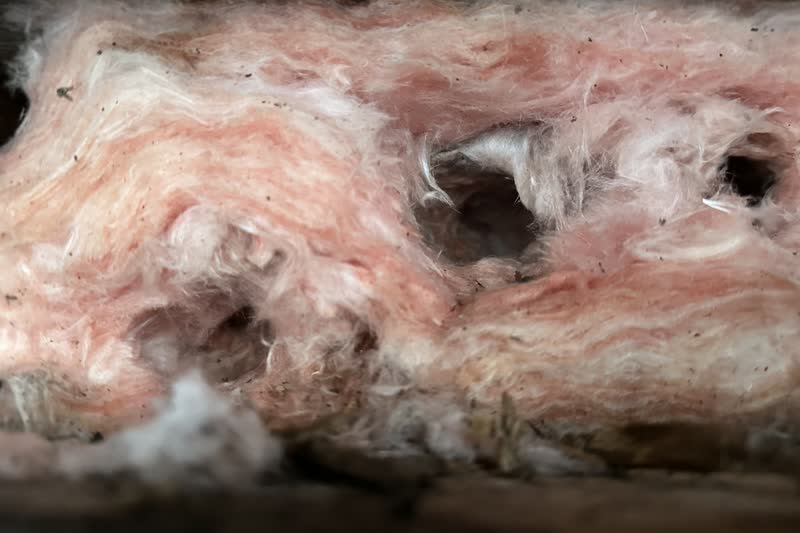
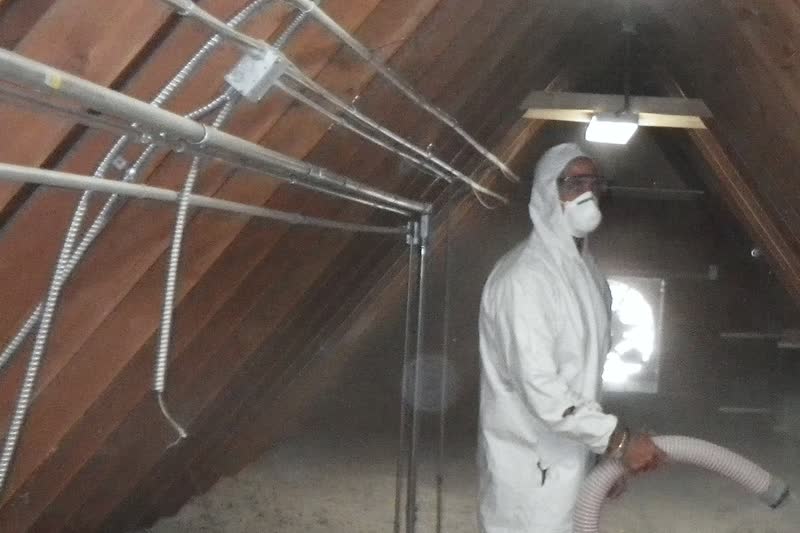
Old, wet, matted or animal-soiled attic insulation vacuumed out, so new insulation can go in on a clean, sealed attic floor.
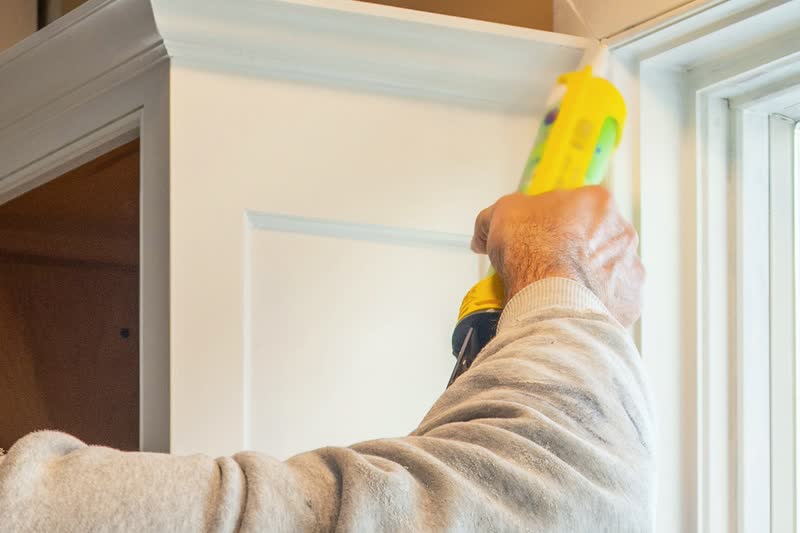
Sealing the gaps between your rooms and the attic, and leaky ductwork, so the air you pay to heat and cool stays inside.
Insulation blown into the closed walls of an existing house, batts in open walls for additions, remodels and new builds, and garage walls and ceilings.
Insulation for the garage ceiling under a bonus room, the wall shared with the house and the garage attic, with air leaks sealed first.
Floor insulation under the house: wet or fallen insulation pulled out, new batts between the floor joists, plastic over the dirt and the floor leaks sealed.
Most Thomasville attics need two things, and the order matters. The ceiling's air leaks get closed. Then loose-fill goes down over the whole attic floor at one even depth, right out to where the roof meets the walls.
Where the hard part sits changes from a mill cottage to a ranch to a house from the 1990s. We go through it house type by house type on our page about attic insulation in Thomasville.
Thomasville's center sits about 850 feet above sea level, 9 miles from NOAA's High Point station, the best match for Thomasville. The station's 1991 to 2020 normals average about 3,120 heating and 1,710 cooling degree days a year, so at Thomasville's station, heating needs outweigh cooling.
Readings change over short distances around Thomasville: NOAA's Lexington station, 10 miles away, averages about 3,500 heating degree days.
Some old insulation can't stay. A roof leak soaks it. Years of people walking on it press it flat. Mice or squirrels fill it with droppings and nests. To ENERGY STAR's attic air sealing guide, wet or damp insulation means the roof is leaking. So a roofer fixes the leak, and the animals are cleared out, before anything new goes in.
After that we vacuum the ruined layer off the attic floor. Most Thomasville attics get a fresh blown-in layer right behind it, once the floor is clear and the ceiling leaks are sealed, so every room ends up covered. Taking the old material out without putting new back is a job we do as well.
If the old layer is only thin, it stays. We won't sell you a removal job your attic doesn't need.
Chair factories multiplied here after 1898. The Amazon Cotton Mill opened in 1910, and the company built weatherboard mill houses on the streets south of the plant between 1909 and 1920, according to the 2004 architectural survey published by the State Historic Preservation Office. In the Salem Street National Register district, the busiest building decades were the 1910s and 1920s, and nearly three quarters of its main buildings are wood frame.
A house that old brings three questions into the attic. The first is getting in: a half story under a steep roof leaves short kneewalls with small doors, and some of the space behind them can only be reached on hands and knees, if at all. The second is wiring. Knob and tube wiring is a pre-1930 system by ENERGY STAR's dating, and the agency warns it can pose a fire hazard once insulation is in contact with it, so an electrician looks at any we find before we add a thing. The third is old fill. The EPA says loose, pebble-like vermiculite should be treated as if it contains asbestos and left alone. If your attic floor has it, that's a job for an asbestos contractor, and we don't touch it.
Frame houses this age were often built with nothing in the walls, either. If yours has hollow walls, blowing insulation into them may be possible. Ask about it when you call.
About a quarter of Thomasville's housing dates from the 1950s and 1960s. The 2004 survey describes what went up: small, plainly detailed cottages first, built to meet the demand for housing after the war, and then one-story ranch houses under low-pitched roofs. It finds ranches all through Erwin Heights and a mix of both in Wallcliff Park, which was begun in the mid-1950s.
A ranch attic is wide and low. You can usually cross the middle without trouble, but the roof drops toward the outside walls, and that edge is where the insulation tends to run thin. If recessed lights went into the kitchen or den over the years, each one gets checked from above before insulation goes near it. Our answer on recessed lights below says why.
Venting matters too. ENERGY STAR's attic air sealing guide lists little or no attic ventilation among the conditions that call for a professional. If your ranch attic looks short on vents when the crew goes up, you'll hear about it before any work starts.
About six in ten Thomasville homes were built in 1970 or later, and about one in three between 1990 and 2009, by the same Census survey. If you reach your attic by a pull-down stair, that panel is a hole in the ceiling until someone seals it. ENERGY STAR tells homeowners to treat an attic door like a door to the outside, with weatherstripping around the edges and insulation fixed to the back. We give a pull-down stair that same treatment when we air seal.
If your heat and air conditioning share one set of ducts in the attic, a loose joint leaks the air you paid for in January and July alike. So in a newer house we can price the insulation, the stair and the duct joints as one job.
In a Thomasville attic the big openings come first. ENERGY STAR says dropped soffits, the boxed-in parts of a lower ceiling, can be huge sources of air leaks, and the gap around a flue or chimney can let a lot of warm air into the attic. Next come the small holes where pipes and wires pass through the ceiling, and last the edges of the hatch or stair. All of it happens before new insulation goes down, while the attic floor is still open to work on.
Duct sealing follows wherever ducts run through the attic. ENERGY STAR figures a typical house loses between 20 and 30 percent of the air its duct system moves to leaks, holes and loose connections. Joints and boots within reach get mastic or metal tape. Crushed, disconnected or undersized ducts belong to a heating and cooling contractor, and you'll hear about it if yours need one.
Duke Energy Carolinas supplies Thomasville's electricity. For gas, Thomasville is in the Davidson County franchise of Piedmont Natural Gas, and 15 percent of Thomasville homes heat with piped gas. Duke's free House Call fits many Thomasville homes: 78 percent heat with electricity.
Rebate to check in Thomasville: Smart $aver Insulate and Seal (Duke Energy; Insulation Pros is an approved trade ally). Before a Thomasville job, check its current terms; the Davidson County page lists every program.
Most Thomasville attics get priced without anyone coming out. The number starts with square footage. Know it? Tell us. If not, a street address is enough, since the attic floor is about the size of the house's footprint seen from above. Then we add what your particular attic needs.
A few houses here are hard to price sight unseen, like a mill-era cottage with kneewall attics on both sides, or a ceiling where water stains keep spreading. Those get a special visit. Think there's vermiculite up there? Say so first, because an asbestos contractor has to deal with it before we do anything.
We don't upsell. A top-up is priced as a top-up, and if your attic doesn't need anything, we'll tell you. The crew won't start blowing until they've been up there with you, so you see what they see.
Want the whole house looked at, not only the attic? Ask about a home energy audit. That one is a paid service, separate from the free estimate, and what it covers is settled when you book.

Each page has local notes on the homes and attics in that town.
Randolph County, 7 miles east
Median home built 1986, 3 years newer than Thomasville's
Insulation contractor serving ArchdaleGuilford County, 9 miles northeast
Median home built 1989, 6 years newer than Thomasville's
Insulation contractor serving High PointDavidson County, 12 miles southwest
Median home built 1969, 14 years older than Thomasville's
Insulation contractor serving LexingtonRandolph County, 19 miles southeast
Median home built 1981, 2 years older than Thomasville's
Insulation contractor serving AsheboroAlso in Davidson County: Denton and Wallburg. Every town in Davidson County. See all service areas.
Local service pages: Attic Insulation in Asheville, Attic Insulation in Charlotte, Attic Insulation in Durham, Attic Insulation in Fayetteville, Attic Insulation in Greensboro, Attic Insulation in Greenville, Attic Insulation in High Point, Attic Insulation in Lexington, Attic Insulation in Raleigh, Attic Insulation in Thomasville, Attic Insulation in Wilmington, Attic Insulation in Winston-Salem.
Yes, on the Davidson County side and the Randolph County side alike. We cover homes all over North Carolina, so every Thomasville address is in. And since most attics are priced from square footage, you don't have to wait for someone to come look before you get a number.
The street address, plus the square footage if it's handy. If you don't have it, the address alone will do. It also helps to know how you get into the attic (a ceiling hatch, a pull-down stair or a kneewall door) and which kind of Thomasville house it is: mill-era cottage, postwar ranch, or 1970 and later. Then tell us what's bothering you, whether that's one hot bedroom or a bill that keeps climbing.
Yes, removal on its own is a job we take. In most Thomasville homes, though, the ruined layer comes out by vacuum and a new one goes in behind it, because a bare attic floor leaves the rooms below with nothing over them. Your price says what comes out and what goes back. If the old fill turns out to be vermiculite, it stays put for an asbestos contractor.
Usually, just not the way an open attic is. Those rooms have three spaces around them: a small attic above the flat ceiling, the slopes that follow the rafters, and the triangles behind the kneewalls. Each one is sealed and insulated differently, and some slopes can only be reached from above or behind. With a cottage like this we'd rather come see it before pricing, so you know up front which parts can be reached.
They can. ENERGY STAR's rule is to keep insulation at least 3 inches from a recessed can light unless the fixture is rated IC, which means it's made for insulation contact, and it warns that insulation against an unrated light can be a fire hazard. So the crew finds each fixture from the attic side and reads its label before any insulation goes near it. Recessed lights are also on ENERGY STAR's list of common attic air leaks, so they're part of the air sealing too.
Yes, fix the cause first. ENERGY STAR lists kitchen, bathroom or dryer vents that end in the attic instead of outdoors among the conditions to hand to a professional. The damp air they push out can wet the roof deck and the insulation. Mention the fan up front. Before work starts the crew traces where its duct ends, and you'll hear what we can do about it.
It depends on the kind of district. Thomasville has three National Register districts: Downtown, Salem Street and Randolph Street. By the state preservation office's account, that listing alone puts no restriction on privately funded work by an owner. The city's own program is separate. A 2009 bill in the General Assembly records two local historic districts, designated in 2002 and 2005, and six local landmarks. There, outside changes need the Historic Preservation Commission's certificate of appropriateness. The city's preservation ordinance tells the commission not to weigh interior work that leaves the outside unchanged, so insulating counts as inside work.
No law asked it of them. State law first tied moving into a new house to the insulation standards for houses begun on January 1, 1978 or later. The Randolph Street houses went up between about 1900 and 1928, and the city's early subdivisions are older than that rule too. Neither nomination says these houses were built with any, so the crew measures what is there across the whole attic before adding any.
Possibly, and that is worth settling before insulating. The Randolph Street nomination records louvered triangular vents in the gable ends of its turn-of-the-century house. ENERGY STAR describes attic airflow that comes in low at the soffits and leaves high at the ridge or gables, and it says insulation must never cover soffit vents. Tell us what you can see from outside when you call, and we will say what the attic likely needs. If the house is a local landmark or in a local district, new vents are outside work, so the commission's approval comes first.
Attic Insulation
Most old attic insulation can stay under a fresh top-up. Wet, moldy, animal-soiled or smoke-damaged material cannot. Learn how to tell the difference, what removal involves and what to do about vermiculite.
Attic Insulation
IC, non-IC and ICAT labels, the 3-inch rule, sheet metal dams at flues and chimneys, and the bath fans and junction boxes in between. How to check your own attic and what a careful job should leave in place.
Census Bureau figures for Thomasville, NOAA normals for the High Point station, Duke Energy Carolinas (October 2026). Compiled by Insulation Pros. How the town pages are made.
Sources for the Thomasville notes and questions (read October 2026):
Thomasville, NC
Open in Google Maps (opens in a new tab)Insulation Pros is an insulation contractor serving North Carolina. Thomasville prices are free and start from the attic's size.
Curious what your Thomasville attic would cost? Give us the house's size and you'll have a free number, with no one leaning on you to add anything.
What You Can Count On
We serve homes across North Carolina. These are the largest towns we work in.
Alamance County
Buncombe County
Cabarrus County
Cumberland County
Durham County
Forsyth County
Gaston County
Guilford County
Mecklenburg County
New Hanover County
Onslow County
Orange County
Pitt County
Wake County