Attic Insulation
Blown-in fiberglass attic insulation, added to the depth your home needs, to even out hot and cold rooms and cut wasted heating and cooling.
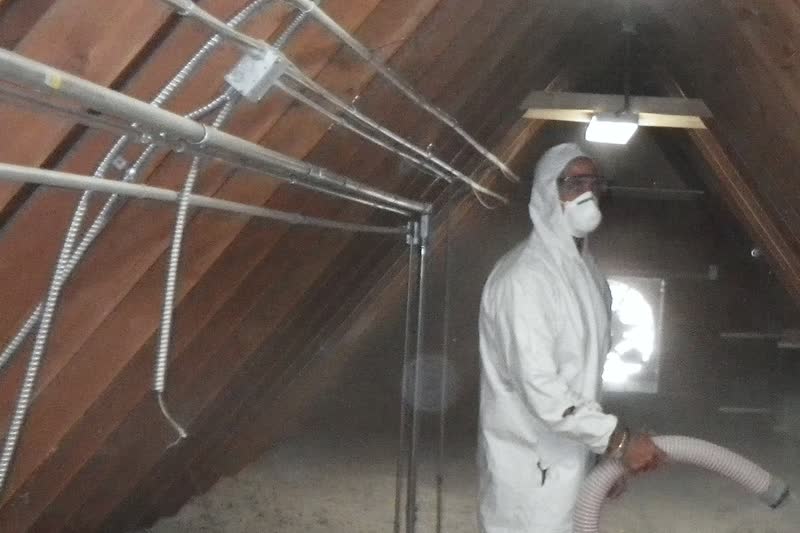
Old insulation that a roof leak soaked, that smells of smoke or that mice have fouled comes out of Greensboro attics by vacuum. Once the cause is fixed, we seal the bare attic floor and, in most homes, blow in new fiberglass. Most attics we price from the square footage and a few photos, and the estimate is free.
Most old insulation in a Greensboro attic can stay where it is. A layer that is dry and clean, only thin, gets topped up, and that's the work on our page for attic insulation in Greensboro. Removal is for the other attics: the ones where water, smoke, animals or years of crushing have spoiled the insulation, so a new layer would only sit on the damage and hide it.
In most homes, attic insulation removal is one job in two halves. First the spoiled material is vacuumed out and the attic floor is left clear. Then the bare floor is air sealed, baffles go in at the eaves, and new blown-in fiberglass goes on to the R-value written on the estimate. Below is when the old layer has to go, what Greensboro's older houses add to the job, and how the refill is done.
See all of our insulation services in Greensboro.

Monday to Sunday 8:00 am to 5:00 pm.
Attic insulation, removal, air sealing and more. Open one to see how the work goes.
Blown-in fiberglass attic insulation, added to the depth your home needs, to even out hot and cold rooms and cut wasted heating and cooling.
Old, wet, matted or animal-soiled attic insulation vacuumed out, so new insulation can go in on a clean, sealed attic floor.
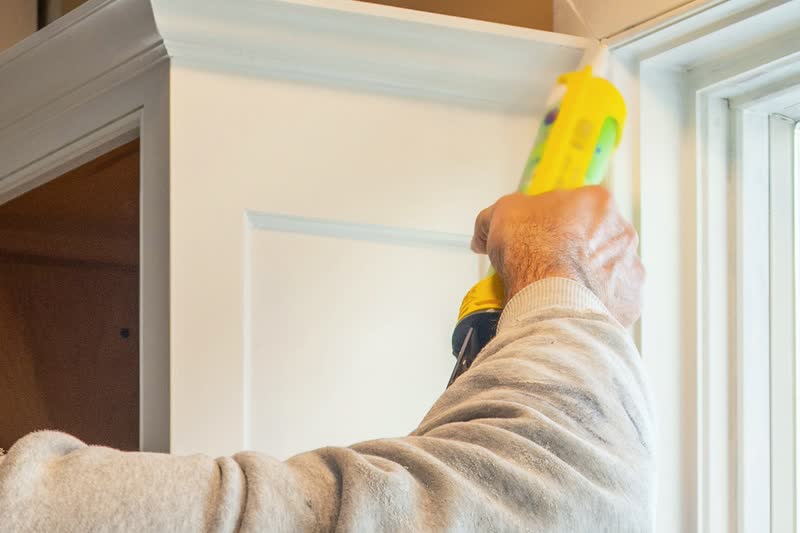
Sealing the gaps between your rooms and the attic, and leaky ductwork, so the air you pay to heat and cool stays inside.
Insulation blown into the closed walls of an existing house, batts in open walls for additions, remodels and new builds, and garage walls and ceilings.
Insulation for the garage ceiling under a bonus room, the wall shared with the house and the garage attic, with air leaks sealed first.
Floor insulation under the house: wet or fallen insulation pulled out, new batts between the floor joists, plastic over the dirt and the floor leaks sealed.
Savings vary. Find out why in the seller's fact sheet on R-values. Higher R-values mean greater insulating power. In blown-in fiberglass, the attic insulation we install, ENERGY STAR's estimating figure puts R-49 at about 20 inches and R-60 at about 24; the coverage chart of the product used gives the exact installed thickness for each R-value.
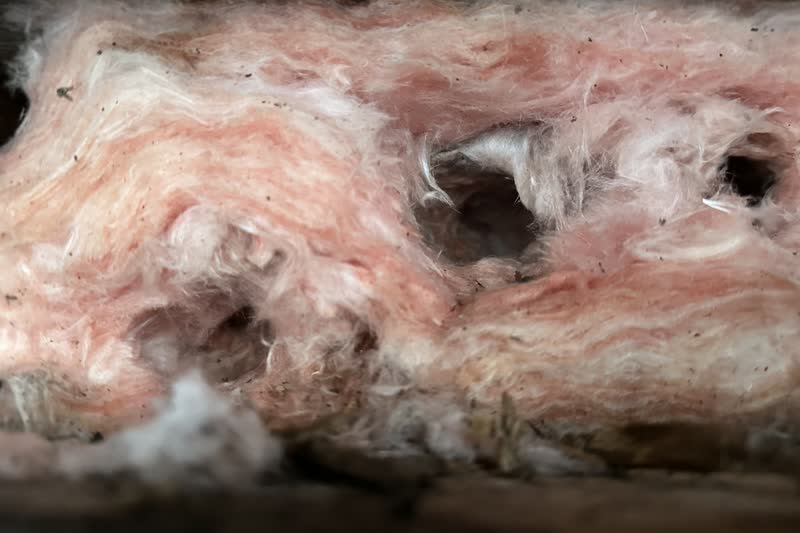
Water is the first reason. A slow leak at flashing, a vent pipe boot or a chimney can drip onto one spot through many storms before a stain shows on the ceiling below. Insulation that stayed wet, or dried matted and stained, is past saving, and the roofer fixes the leak before anything new goes in. Smoke is the second. After a fire, insulation can hold soot and odor long after the rooms below are clean.
Mice are the third. Trapping them and closing their way in is a wildlife control company's job, and it comes first. Once the mice are gone, we vacuum out the soiled insulation and sanitize and deodorize the attic before the new layer goes in.
The fourth is a judgment call: batts crushed flat under years of stored boxes, or loose-fill settled dense and gray. Dry, clean insulation that has only settled can usually stay under a top-up. It comes out when it is too flat or dirty to move aside and put back, because it is often lying right on the ceiling gaps that most need sealing.
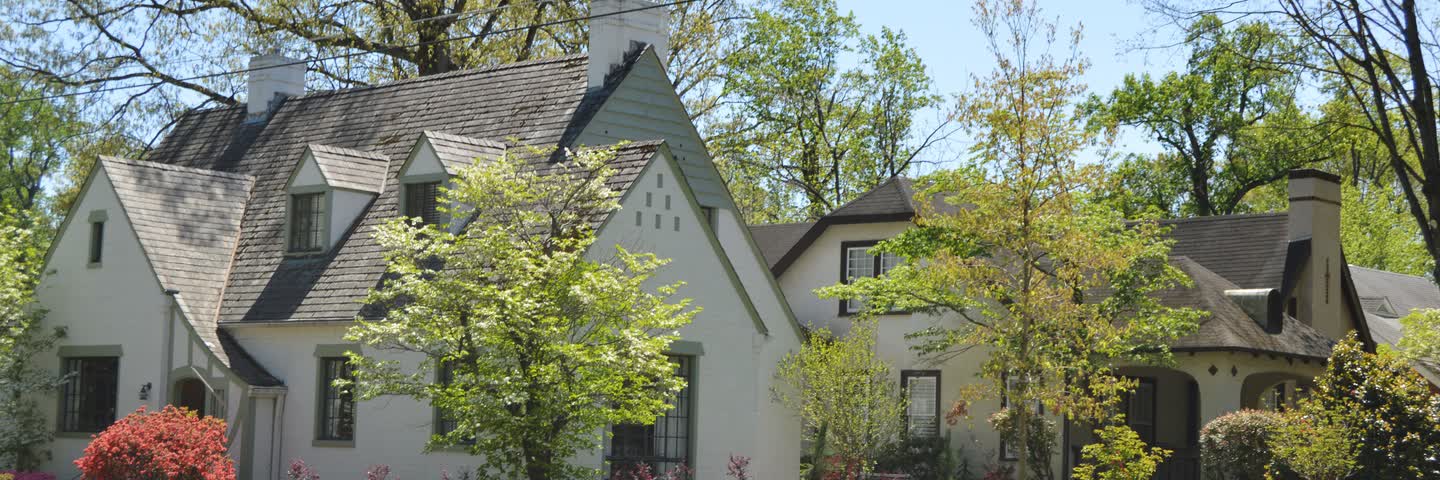
About 43 percent of Greensboro's housing units were built before 1980, by Census Bureau survey estimates for 2020 to 2024, and nearly all of those predate the state's 1978 insulation rule. Many of their attics have had decades for a roof leak, a fire or an animal to reach the insulation.
Some of the city's oldest houses add their own work. In White Oak New Town, the mill village the Proximity Manufacturing Company built around 1920, the one-story houses kept two interior brick chimney stacks, by the district's National Register nomination. A stack that no longer carries smoke still leaves a gap where it passes the attic floor. Once the old insulation is out, that gap is in plain view, and it is closed with metal flashing and high-temperature caulk before the refill.
In Sunset Hills, where its nomination says Cape Cods were especially popular in the 1930s and 1940s, the upstairs rooms sit under the slope of the roof. The old insulation may lie in narrow side attics behind short knee walls, and clearing a cramped space like that slows every step. Tell us about any upstairs rooms when you call.
One find stops the job in a house of any age before 1990. The EPA says a mine near Libby, Montana supplied over 70 percent of the vermiculite sold in the United States from 1919 to 1990, and it says to treat that pebble-like, gray-brown or silver-gold fill as if it contains asbestos. We don't vacuum it. If we see it, we stop, and an asbestos professional takes the next step.
Close to half of Greensboro's occupied homes are rented, by the same Census estimates. The attic is the owner's call, and so is the removal. A landlord who finds droppings or a ceiling stain while a unit sits empty can have the attic cleared, sealed and refilled before the next lease starts.
If a tenant will be home on install day, we set the time with both of you, so someone can let the crew in. In a duplex or a small apartment building, one attic can run over more than one unit. Tell us how the units sit under the roof when you call, so the estimate covers the whole space.

The cause is named first, along with who fixes it: a roofer for a leak, a wildlife control company for animals. Then the spoiled insulation is vacuumed out, all of it when the damage is everywhere, or only the ruined section when a leak soaked one corner. With the floor bare, the gaps around wires, pipes, fixtures and the tops of interior walls are sealed. Baffles keep the soffit vents open, and dams hold the new fill back from the hatch and from flues.
New blown-in fiberglass goes on last. A floor emptied of insulation counts as bare, and for a bare attic ENERGY STAR's table gives R-49 on its zone 3 line, where the 2021 national map puts Guilford County, and R-60 on the zone 4 line, where North Carolina's code lists it. Our R-value guide explains the two maps. The estimate names the R-value, and the Federal Trade Commission's R-value Rule entitles you to a receipt showing the area covered, the depth and the bag count.
Each page has local notes on the homes and attics in that town.
Guilford County, 8 miles northwest
Median home built 2000, 15 years newer than Greensboro's
Insulation contractor in SummerfieldGuilford County, 12 miles southwest
Median home built 1989, 4 years newer than Greensboro's
Insulation contractor in High PointForsyth County, 14 miles west
Median home built 1995, 10 years newer than Greensboro's
Insulation contractor in KernersvilleRandolph County, 15 miles southwest
Median home built 1986, 1 year newer than Greensboro's
Insulation contractor serving ArchdaleAlso in Guilford County: Jamestown, Oak Ridge, Gibsonville, Pleasant Garden, Sedalia, Stokesdale, and Whitsett. Every town in Guilford County. See all service areas.
Local service pages near Greensboro: Attic Insulation in Greensboro, Attic Insulation in High Point, Attic Insulation Removal in High Point, Attic Insulation in Kernersville, Attic Insulation in Archdale, Attic Insulation in Thomasville, Attic Insulation in Winston-Salem, Attic Insulation Removal in Winston-Salem, Attic Insulation in Asheboro.
There's no price on this page, because the attic sets it. Removal follows the amount of material, the floor area times the depth. Batts and loose-fill come out differently, a fouled layer takes more care, and a cramped hatch or a low roof slows every step. Then comes the second half: the air sealing, the baffles and the new insulation. Send the square footage and a few photos from the hatch, and the estimate is free.
No. Trapping them and closing the gaps they use is a wildlife control company's work, and it has to happen first, or the new insulation becomes the next nest. Once the mice are gone, our part starts. We vacuum out the soiled insulation, sanitize and deodorize the attic, seal the bare floor and blow in new insulation.
Not always. If a leak soaked one corner, or animals nested in a single bay by the eaves, the ruined section can be vacuumed out on its own once the cause is fixed. The sound insulation stays, and a top-up brings the whole floor back to one even depth. When the damage runs across the attic, such as droppings everywhere or smoke in every corner, all of it comes out.
Yes. Just say so when you call. It usually pays to put the new layer in on the same job, because an emptied attic floor lets heat through freely, and the bare floor is the easiest time there will ever be to seal the ceiling's air leaks. If you're planning other attic work first, the removal can stand on its own.
Call or text us, or use the contact page. Give us the square footage of the attic or the house and tell us what you've seen: droppings, a stain, a smell at the hatch. Photos help. Most attics we can price that way. If we can't tell what has to come out without seeing it, we make a special visit. On install day the crew goes over the attic with you before anything comes out.
Attic Insulation
Most old attic insulation can stay under a fresh top-up. Wet, moldy, animal-soiled or smoke-damaged material cannot. Learn how to tell the difference, what removal involves and what to do about vermiculite.
Attic Insulation
There is no price list here, on purpose. See the seven things that move attic insulation cost up or down, why a per-square-foot number misleads and how to compare two written estimates line by line.
Census Bureau figures for Greensboro, NOAA normals for the Greensboro Water Plant station, Duke Energy (October 2026). Compiled by Insulation Pros. How the town pages are made.
Greensboro, NC
Open in Google Maps (opens in a new tab)Insulation Pros is an insulation contractor serving North Carolina, and Greensboro prices come free, with no sales pitch.
Found a stain, droppings or a smell at the hatch in your Greensboro attic? Send the square footage and a few photos through the contact page, or call. We'll tell you what has to come out and what can stay, and the estimate is free.
What You Can Count On
We serve homes across North Carolina. These are the largest towns we work in.
Alamance County
Buncombe County
Cabarrus County
Cumberland County
Durham County
Forsyth County
Gaston County
Guilford County
Mecklenburg County
New Hanover County
Onslow County
Orange County
Pitt County
Wake County