Attic Insulation Cost: What Drives the Price
If you're pricing new attic insulation, the first thing you want is a number, and this page won't print one. Attic insulation cost depends on your attic: how big it is, what's up there now and what shape it's in, the material going in and the work that has to happen first. A price printed here would be a guess. The real figure comes from a free estimate, and for most attics we can give you one from the square footage, without a visit.
What this guide can do is show how that figure gets built: the seven things that push it up or down, from attic size to air sealing, why a published cost-per-square-foot number misleads, why removal and replacement is a bigger job than a top-up, and how to read two estimates line by line. It is written for homeowners across North Carolina.
What Goes Into Attic Insulation Installation Cost?
An attic estimate is three things added together: the material it takes to get from what you have to the target R-value, the labor and preparation around it, and anything that has to be fixed or taken out first. On the first of those, the U.S. Department of Energy's consumer guide to home insulation is plain: insulation costs depend on R-value and the type of material.
Most jobs come in one of three sizes, smallest first:
- A top-up: more blown-in insulation over material that is dry, clean and simply too thin, with the obvious air leaks sealed first.
- Full preparation plus a top-up: thorough sealing, baffles, hatch work and a deeper layer, typical where the joists are showing.
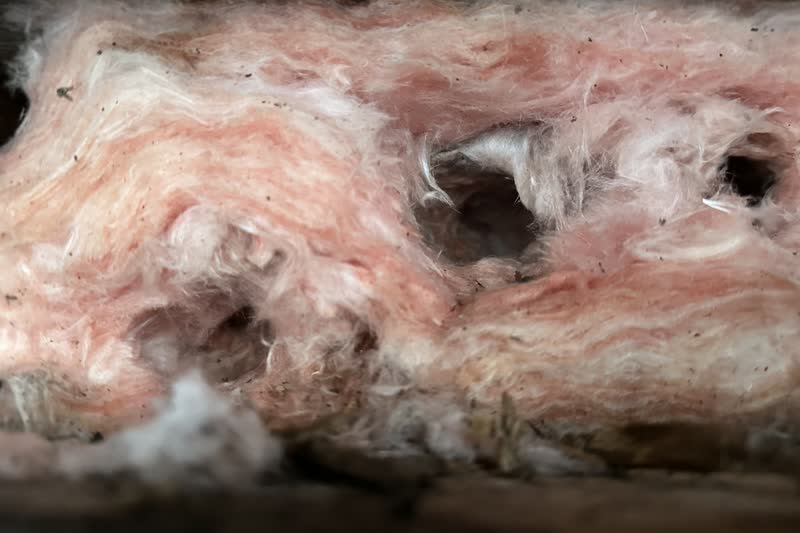
- Removal and replacement: damaged insulation comes out, its cause is dealt with, the bare floor is sealed and a full-depth layer goes in.
Seven Things That Move Blown-In Insulation Cost Up or Down
Every line on a written estimate traces back to one of these. We price most attics from the square footage, and you can give us that over the phone, or we'll work it out from your home's footprint. If something on this list needs a closer look, like a wet patch or an attic nobody can get into, we make a special visit. Either way, the crew checks the attic with you on install day before any work starts.
- Attic size. More floor area takes more material and more time.
- The depth already there. Insulation is added to reach a target R-value, so a sound existing layer means less to add. Bare or nearly bare joists mean more.
- The material. Blown-in fiberglass and cellulose are the usual choices for an open attic floor, and each delivers a different R-value per inch. Spray foam at the roofline is a different and larger job, and not one we do.
- Whether old insulation has to come out. Removal adds labor and disposal, and the new layer then has to supply the full depth.
- Air sealing first. Closing the gaps around wires, pipes, light fixtures and wall tops takes time, and an attic with more of them takes more.
- Baffles and hatch work. Baffles keep the soffit vents open at the eaves, and the hatch or pull-down stair needs weatherstripping and insulation of its own.
- Access and roof pitch. A small hatch in a closet, a low roof with little headroom at the eaves or ducts in the way all slow the work.
Rather Talk It Through Than Read?
Call (336) 870-3893Monday to Friday 8:00 am to 5:00 pm. Saturday by appointment. Sunday closed.
Why Attic Insulation Cost per Square Foot Misleads
A per-square-foot figure from a website sounds precise. Square footage is the right place to start, and it's where our price starts. But a number per square foot borrowed from somewhere else can't tell how deep your insulation has to go, what has to happen first or how hard your attic is to work in. Use a published figure to check that two estimates cover the same area, not to predict yours. Here's what it misses:
- Which square feet. A two-story home's attic covers only the top floor's ceiling, so the size on the listing overstates it.
- Depth. Filling a bare attic to the target takes far more material than topping up one that is half full, yet both cover the same area.
- Preparation. Air sealing follows the number of leaks, baffles follow the length of the eaves and a hatch is one hatch, so a small attic often works out higher per square foot than a large one.
- Averages. A published average blends regions, materials, top-ups and full replacements into one figure that describes no attic in particular.
Can an attic insulation cost calculator give you a real number?
Not on its own. A calculator multiplies the square footage you type in by somebody's average. It doesn't know how deep your insulation is now, whether that layer is dry, how many leaks there are to seal, how long the eaves are or how hard the attic is to reach. We start from the same square footage, then price your attic, not the average.
Use one for what it's good at: a feel for how much material a target R-value takes over your floor area. The coverage chart printed on every bag of loose-fill does that sum more exactly: federal labeling rules make it list the bags per 1,000 square feet for each R-value. ENERGY STAR's advice before you call a contractor is to have three things ready: how many inches of insulation you have, the rough dimensions of the attic floor and how the attic is reached. That's most of what we need to price your attic over the phone, and the estimate is free.
What is the average cost of attic insulation?
There is a different one on every website that publishes it, and none of them is about your attic. A published average rolls together top-ups and full replacements, blown-in and spray foam, attics that were sealed first and attics that were not, and labor rates from across the country. Change the mix and the average moves.
An average also hides the question that matters, which is what the money buys. Before you set any figure beside a quote, pin down three things: the R-value the attic ends at, the preparation that is included, and whether old insulation is coming out. Two quotes for one attic can sit far apart and both be fair if one of those differs. The next sections show how to line two estimates up.
Why Attic Insulation Removal and Replacement Costs More
Because it is two jobs. The first is getting the old material out of the attic and hauling it away. The second is the new layer, which now has to supply all the R-value where a top-up would add only the missing part. In between, the cause has to be fixed, whether that is a roof leak, a bath fan venting into the attic or a gap that let animals in, and some of those repairs belong to another trade.
Most attics do not need removal at all. ENERGY STAR's guidance is that unless the old insulation is wet, moldy, smelly or contains animal waste, new insulation can go right on top. So when an estimate includes removal, the first question is why.
Two requests keep that part of the estimate clear. Ask whether removing only the damaged section would do, and ask to see removal as its own line so you can tell what the tear-out adds. Our guide to attic insulation removal and replacement covers when old insulation has to go, how the work is done and what vermiculite changes.
Does homeowners insurance cover attic insulation?
Not as an upgrade. The North Carolina Department of Insurance says a homeowners policy can protect against specified events it calls perils, such as fire, windstorm, hail and theft, and that it covers direct physical damage. Insulation that is thin because the house is old is not damage from an event, so adding more is your cost.
Damaged insulation is a different conversation. If a covered event ruined it, say a fire or a storm that opened the roof, ask your insurer to include the insulation in that claim. Whether a slow leak or animals count depends on the wording of your policy, so read it and ask your agent, as the department advises.
After a loss, the department says to contact your insurer immediately, photograph the damage and make the reasonable emergency repairs your policy requires to prevent more damage. It also says not to make extensive repairs before the adjuster arrives. So call your insurer before soaked or smoke-damaged insulation is taken out.
How to Compare Two Written Estimates Line by Line
ENERGY STAR's advice is to get estimates from several contractors and compare the scopes of work as well as the costs. Two totals mean nothing until they describe the same job. Any insulation contractor, including us, should be able to explain every line. Look for these:
- Area: the square footage of attic floor covered, and whether spaces such as the one over a garage are in or out.
- R-value and material: the R-value the attic will end up with, the material and the installed depth. Inches alone do not compare across materials.
- Air sealing: which leaks will be sealed before the insulation goes in, or a plain statement that sealing is not included.
- Baffles: whether they are included and where, so added insulation cannot block the soffit vents.
- Hatch: weatherstripping and insulation for the hatch or pull-down stairs.
- Removal and cleanup: what comes out, where it goes and how the house is protected.
- Paperwork: ENERGY STAR says the contractor is required to give you documentation at the end of the job showing how much insulation was added and the attic's new R-value.
What a low number usually leaves out
When one estimate comes in well under another, the gap is usually a difference in scope, and what goes missing is what you cannot see once the job is done: the air sealing, the baffles, the hatch, the last few inches of depth and the coverage out at the eaves.
That does not make the lower number wrong. Sometimes the attic needs a smaller job, and a contractor who says so is doing you a favor. We'll tell you when yours does. A higher number is not automatically better either: it may include removal the attic does not need, or spray foam where blown-in would do. Ask each company to price the same list, then compare.
Attic Insulation Tax Credits and Rebates in 2026
For work done in 2026, the federal tax credit is gone and the rebates are not. The credit that covered insulation was the Energy Efficient Home Improvement Credit. The IRS page for it says you can claim the credit for improvements made through December 31, 2025. An IRS fact sheet on the tax law passed in July 2025 adds that the credit will not be allowed for any property placed in service after that date. ENERGY STAR's insulation tax credit page gives the same window: products purchased and installed between January 1, 2023, and December 31, 2025.
So by the IRS's dates, attic insulation installed in 2026 does not qualify, and neither does air sealing.
If your insulation went in before the deadline, the IRS says the credit is claimed for the tax year the material was installed, on Form 5695. The same IRS page says the credit covered insulation and air sealing materials but not the labor to install them. We install insulation and do not give tax advice, so confirm anything tax related with a tax professional.
Is attic insulation tax deductible?
Not for the home you live in. A credit and a deduction are different things, and insulation installed in 2026 gets neither. IRS Publication 530 says you cannot deduct the cost of improvements to your home. You add the cost to the home's basis, and IRS Publication 523 lists attic, wall and floor insulation among the improvements that count.
Basis is what the IRS measures your gain against when you sell, so keep the invoice with your house records. A rebate changes the sum a little: Publication 530 says a utility's subsidy for an energy conservation measure is not income, and that you reduce the home's basis by that amount. A rental house follows other rules. IRS Publication 527 has a landlord recover the cost of improvements, insulation included, through depreciation.
Are there rebates for attic insulation in North Carolina?
Yes. Two programs were open when we read their own pages in October 2026, and both come with conditions.
Duke Energy's Smart Saver program has an Insulate and Seal rebate for attic insulation and air sealing, and a separate one for duct sealing. Duke's page says you must be a residential electric customer in a single-family home, condominium, townhome or duplex, and the attic must sit over at least 1,000 square feet of conditioned living space. The attic has to start at R-19 or below and finish at R-30 or more, and the home's air leakage has to improve by at least 5 percent. That R-30 is the rebate's minimum, not a target: ENERGY STAR's recommendations for North Carolina start at R-38. The work has to be done by one of Duke's participating contractors, who files the application. Insulation Pros is an approved Duke Energy trade ally.
Energy Saver North Carolina is the state's home energy rebate program, paid for with federal funds and open in all 100 counties. Its site lists insulation and air sealing among the upgrades it covers, limits eligibility to households under 150 percent of area median income and requires a contractor registered with the program. It also says the money is handed out first come, first served until it runs out.
Both programs pay only for work done by a contractor on their own list, and both publish that list: Duke through its Find It Duke tool, Energy Saver North Carolina through the contractor finder on its site. Look up any contractor you are considering there before work starts. If your power comes from another company, a city utility or an electric cooperative, ask that utility directly. ENERGY STAR's Rebate Finder searches by ZIP code, and ENERGY STAR notes that some households can get help with air sealing and insulation through their state's Weatherization Assistance Program.
Is Attic Insulation Worth It?
It depends on what you have now. A U.S. Department of Energy insulation guide puts it plainly: if your insulation is already adequate, adding more may not be the best investment, and if the house is poorly insulated or the heating and cooling bills are high, added insulation is likely to pay for itself over time. An honest estimate tells you which house you have.
The bill is only part of it. Most people notice comfort first: upstairs rooms that track the thermostat and a system that gets a rest on ordinary days. When you weigh an estimate, ask how much of your comfort problem the attic accounts for and whether a smaller job would get you most of the way.
Attic insulation energy savings: how much does it save?
For a benchmark, ENERGY STAR, the EPA's program, estimates that homeowners can save an average of about 15 percent on heating and cooling costs by air sealing their homes and adding insulation, with the attic as one of the places it goes. That is a national average from modeling typical older homes, it counts more of the house than the attic alone, and the EPA notes that estimated savings run higher in the North than in the South. Nobody can promise what your bills will do.
Savings vary. Find out why in the seller's fact sheet on R-values. Higher R-values mean greater insulating power.
The EPA's own table shows the spread by climate. For the sealing and insulating package it modeled, the estimate is 14 percent of heating and cooling costs in climate zone 3, 17 percent in zone 4 and 16 percent in zone 5, the three zones North Carolina's counties fall in. Measured against the whole energy bill, those come to 8 percent in zone 3 and 12 percent in zones 4 and 5.
How much of that an attic alone delivers depends on where it starts. An attic with bare joists has the most to gain. One that already sits near R-38, even and air sealed, has little left to give. Beyond that, what shows up on a bill depends on the house, the weather and the thermostat.
Get a Free Estimate
Want a price for your attic? Tell us its square footage, or let us work it out from your home's footprint. Most attics don't need a visit, and we only price what yours needs.

Prefer to talk? Call (336) 870-3893.