
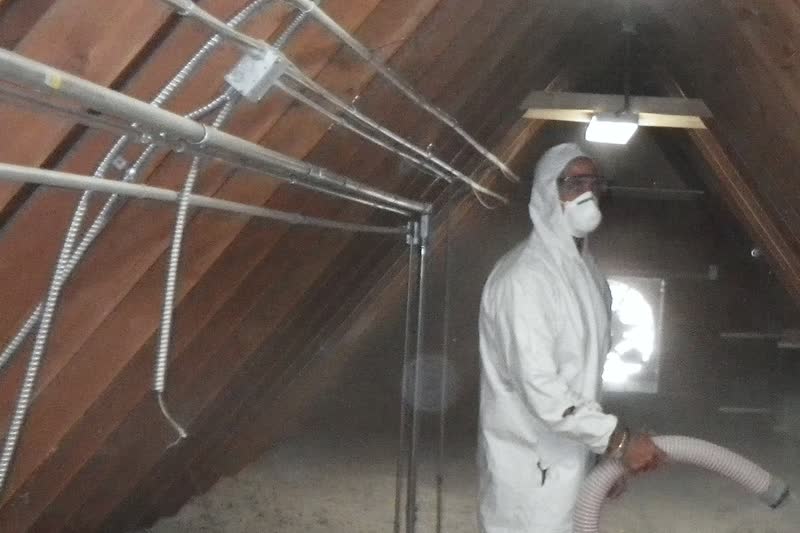
Attic Insulation
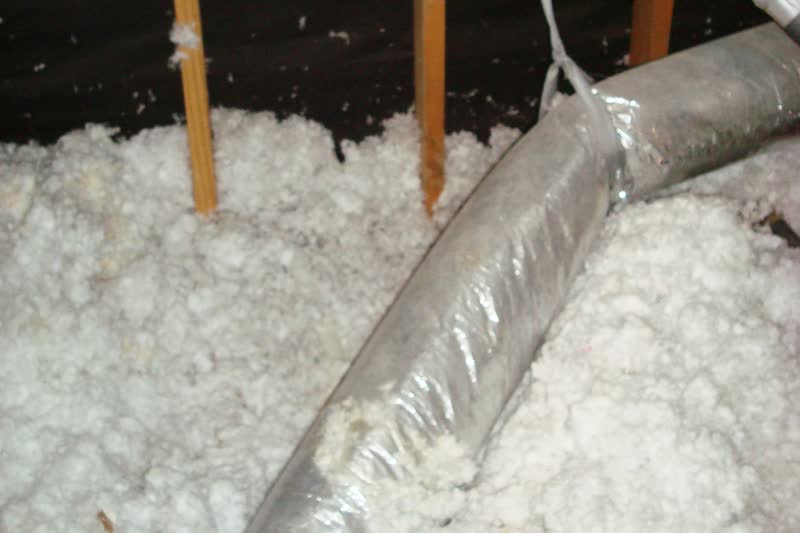
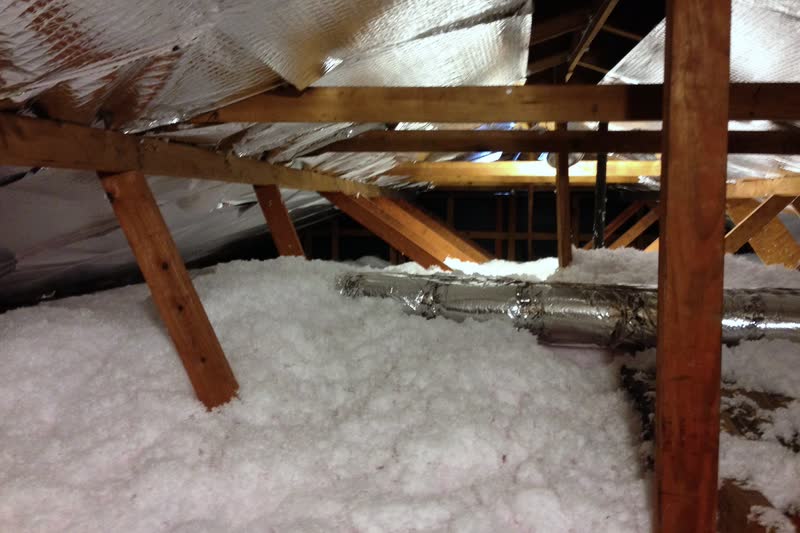
Blown-in fiberglass attic insulation, added to the depth your home needs, to even out hot and cold rooms and cut wasted heating and cooling.
About a fifth of Lewisville's homes come from each of the 1970s, 1980s and 1990s, so your attic may hold a thin first layer or a settled one. We close the ceiling's air leaks, then add blown-in fiberglass to an even depth.
Attic insulation in Lewisville depends a good deal on when the house went up. The Census Bureau's estimates for 2020 to 2024 put 19 percent of the town's homes in the 1970s, 21 percent in the 1980s and 20 percent in the 1990s, and the median home dates from 1987. Another 24 percent date from 2000 on, and 16 percent from before 1970. Houses from each of those periods can start out with different insulation on the attic floor.
Whatever the decade, the job runs in the same order. Air leaks through the ceiling get closed before anything else, since fiberglass slows heat but can't stop a draft. Loose-fill fiberglass then goes on top of any old insulation still dry and clean, blown out to the eaves until the whole floor is level. As an insulation company working across the state, Insulation Pros prices a Lewisville attic the way it prices any other: in most cases from the square footage, or from the address, which gives us the footprint.
See all of our insulation services in Lewisville.
Monday to Sunday 8:00 am to 5:00 pm.
Attic insulation, removal, air sealing and more. Open one to see how the work goes.
Blown-in fiberglass attic insulation, added to the depth your home needs, to even out hot and cold rooms and cut wasted heating and cooling.
Old, wet, matted or animal-soiled attic insulation vacuumed out, so new insulation can go in on a clean, sealed attic floor.
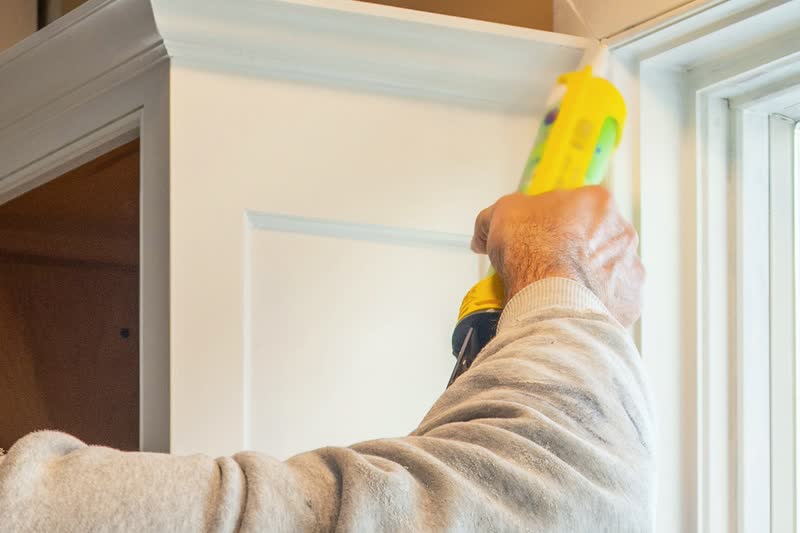
Sealing the gaps between your rooms and the attic, and leaky ductwork, so the air you pay to heat and cool stays inside.
Insulation blown into the closed walls of an existing house, batts in open walls for additions, remodels and new builds, and garage walls and ceilings.
Insulation for the garage ceiling under a bonus room, the wall shared with the house and the garage attic, with air leaks sealed first.
Floor insulation under the house: wet or fallen insulation pulled out, new batts between the floor joists, plastic over the dirt and the floor leaks sealed.
Savings vary. Find out why in the seller's fact sheet on R-values. Higher R-values mean greater insulating power. In blown-in fiberglass, the attic insulation we install, ENERGY STAR's estimating figure puts R-38 at about 15 inches, R-49 at about 20 and R-60 at about 24; the coverage chart of the product used gives the exact installed thickness for each R-value.
The Census figures place 27 percent of Lewisville's homes in the 1960s or 1970s. One subdivision of that period, Reynodale Estates, is described in Forsyth County's 2019 architectural survey: platted in 1961 and built out from the mid-1960s through the mid-1970s with ranches, split-levels and Minimal Traditional houses. Most are frame, side-gabled and one or two stories tall, the survey found, and most have interior chimneys.
Part of that housing predates the 1978 insulation rule, North Carolina's law tying insulation inspections to homes started on or after January 1, 1978. Because the Census counts the 1970s as one decade, through 1979, it can't tell how many Lewisville houses came before the rule. In any of them the first layer may have been only a few inches, and decades of settling and of feet crossing the joists can leave less than the view from the hatch suggests.
Before any fiberglass goes into an attic of that age, two things get a look. Loose fill that looks like little gray-brown or silver-gold pebbles may be vermiculite, and the EPA's guidance is that homeowners should presume it contains asbestos and not disturb it; an asbestos professional tests and handles it, and we don't remove vermiculite. Recessed ceiling lights without an insulation-contact rating need the 3 inches of clearance that ENERGY STAR calls for.
An interior chimney like the ones in that survey rises through the attic floor, and the space around the brick can rank among the largest air leaks an attic has. That space is never packed with insulation. ENERGY STAR notes that codes usually want 2 inches between a masonry chimney and combustible materials, insulation among them, so the opening is capped with metal flashing and sealed with high-temperature sealant, with a dam set up to hold the blown fiberglass off the brick.
Gas furnaces and water heaters vent through a metal flue, which ENERGY STAR says codes usually keep 1 inch from combustibles, and its gap is closed the same way. Piped gas heats 22 percent of Lewisville's occupied homes, according to the Census estimates, so look for a flue when you open the hatch. Sealing around each chimney and flue is part of the air sealing on your estimate.
About 40 percent of Lewisville's homes were built from 1980 through 1999, after the 1978 rule took effect. Whatever the builder left in those attics has had a quarter century or more to change. Loose-fill settles under its own weight, batts lose loft under boxes and footsteps, and electricians, cable installers and HVAC technicians push insulation aside to reach their work and don't always put it back.
A dry layer like that is kept and counted toward the target. After the ceiling is sealed and baffles are fitted at the eaves, fresh blown-in insulation goes on until the depth reads the same at the hatch and at the far edges. If the joists already sit well under an even layer, you'll hear that the attic has enough.
The way into the attic matters too. A scuttle hatch, or the panel of a pull-down stair, is an opening in the ceiling covered by a thin lid. We weatherstrip and insulate a hatch on the same job, and at pull-down stairs we seal around the frame and build a dam so the loose fill stays back from the opening.
Electricity is the heat source in about 70 percent of Lewisville's occupied homes, according to the Census estimates. At the Pfafftown station, roughly 5 miles from the town center, NOAA's 30-year normals (1991 to 2020) show about 100 nights a year at 32 degrees or colder and about 40 days reaching 90 degrees. Part of that station's record was estimated from nearby stations, so take the counts as approximate.
The attic floor stands between that weather and your rooms. On a freezing night it holds back the heat rising out of the house; on a 90-degree day it holds back the heat pressing down from an attic that runs well over 100 degrees. How much a deeper layer changes a power bill depends on where the attic starts, and no one can honestly put a number on your house in advance.
Insulation slows heat; it doesn't stop air. House air carried up through the gaps in a ceiling takes its heat and moisture along and passes right through a new layer, so the gaps are closed first: around wires and plumbing vent pipes, along the tops of interior walls, over dropped soffits and open chases, and around the hatch.
Two more things are settled before the fiberglass goes down. If a bath fan's duct ends in the attic or has come off its roof cap, every shower puts steam into the insulation, so we extend that duct to the outdoors as part of the job. Baffles are fitted at the eaves to keep air flowing in from the soffit vents after the fiberglass is in, and ducts that run through the attic have the joints within reach sealed with duct mastic or foil tape before they disappear under the new layer.
Which climate zone Forsyth County is in depends on the map. North Carolina's energy code says zone 4; the national map drawn up for the 2021 model energy code, which ENERGY STAR's insulation chart is built on, says zone 3. With 3 to 4 inches already down, the chart's target is R-49 for zone 4 and R-38 for zone 3. With nothing down, it's R-60 and R-49.
Your estimate chooses one target, explains it, and gives the settled depth of fiberglass that reaches it. Sound insulation that's already in place counts, so a top-up covers only the difference. The full chart and every county's zone are in our R-value guide.
Some attics need more than a top-up. ENERGY STAR's advice is to leave old insulation in place and add to it, unless it is wet, has mold, smells or holds animal waste. Before we start on one of those, a roofer repairs any leak, and a wildlife control company takes out the mice or squirrels and closes the holes they used. With that work finished, once the mice are gone, our vacuum takes the fouled layer out; the attic is sanitized and deodorized, and the empty ceiling is air sealed before new fiberglass goes down. The full process is on our attic insulation removal in Lewisville page.
Phone or text any day of the week from 8 to 5, or fill in the contact form. With the details in the list here, most Lewisville homes can be priced with no appointment. An attic split into several spaces may call for a special visit first.
The written estimate states the R-value and the settled depth, then lists the air sealing, any work around chimneys and flues, and any removal separately. You won't find prices on this page, since every attic is different; the cost guide below covers what drives the total. On Duke Energy power? Duke's Smart $aver Insulate and Seal rebate is paid only on work by a contractor in Duke's network, and Duke sets its terms, so check them before the job. The FTC's R-value Rule also means you get a receipt afterward with the square footage covered, how thick the insulation went in, its R-value and how many bags it took.

Each page has local notes on the homes and attics in that town.
About 5 miles southeast, Forsyth County
64 percent of homes heat with electricity; Lewisville: about 70 percent
Insulation contractor in ClemmonsAbout 9 miles east, Forsyth County
61 percent of homes heat with electricity; Lewisville: about 70 percent
Insulation contractor in Winston-SalemAbout 12 miles north, Stokes County
About 85 percent of homes heat with electricity; Lewisville: about 70 percent
Insulation contractor serving KingAlso in Forsyth County: Kernersville, Bethania, Rural Hall, Tobaccoville, and Walkertown. Every town in Forsyth County. See all service areas.
Local service pages near Lewisville: Attic Insulation in Clemmons, Attic Insulation in Winston-Salem, Attic Insulation in King, Attic Insulation in Midway, Attic Insulation in Mocksville, Attic Insulation in Kernersville, Attic Insulation in Lexington, Attic Insulation in Thomasville, Attic Insulation in High Point, Attic Insulation in Trinity, Attic Insulation in Jamestown, Attic Insulation in Archdale, Attic Insulation in Summerfield, Attic Insulation in Salisbury, Attic Insulation in Statesville, Attic Insulation in Greensboro.
For an open attic floor, we install blown-in fiberglass, for a practical reason. It flows around joists, wires and pipes and out to the eaves, so the floor ends up under one layer without seams, where pre-cut batts can leave gaps around anything in their way. It can also go right over old batts once the ceiling is sealed; ENERGY STAR says the old and new layers don't need to match. To compare quotes, compare the R-value written on each, not the inches.
It can help, though it may not be the whole answer. NOAA's Pfafftown station counts about 40 days a year that reach 90 degrees, and on days like that the attic over a Lewisville bedroom gets far hotter than the room below it; a thin layer with gaps lets more of that heat down. Upstairs rooms also take on heat through windows, from leaky attic ducts and through air leaks, and a room can stay hot simply because the system sends it too little air. If the attic is only a small part of it, we'll tell you.
It could. According to the EPA, more than 70 percent of all vermiculite sold in the U.S. between 1919 and 1990 came from one mine near Libby, Montana, and that vermiculite was contaminated with asbestos. It looks like small pebbles, gray-brown or silver-gold. If you spot fill like that, don't disturb it; the EPA says to treat it as asbestos-containing. Testing and handling it is a job for an asbestos professional. We don't remove vermiculite, and our part of the job waits until that work is done.
Clear a way to the hatch or the attic stairs, move anything stored by the opening, and plan to be home at the start of the day. On install day the crew goes over the attic with you first; anything up there that changes the job comes up before work begins. Then the sealing is done, baffles and dams are fitted, and the fiberglass is blown in to the depth on your estimate.
Attic Insulation
Blown-in insulation is loose-fill fiberglass or cellulose blown across an attic floor. See how the job is done, how it compares with batts, what R-value and depth mean, and where another material fits better.
Attic Insulation
There is no price list here, on purpose. See the seven things that move attic insulation cost up or down, why a per-square-foot number misleads and how to compare two written estimates line by line.
Census survey for Lewisville, 2020 to 2024, NOAA 1991 to 2020 normals, Pfafftown station, Forsyth County architectural survey update, 2019 (NC HPO), The 1978 insulation statute, G.S. 143-139.2, ENERGY STAR recommended insulation R-values, North Carolina energy code (NC Office of State Fire Marshal), Guide to Determining Climate Zones by County, PNNL for the U.S. Department of Energy (2022), ENERGY STAR on sealing furnace flues and chimneys, ENERGY STAR attic air sealing project, ENERGY STAR attic insulation project, ENERGY STAR on hiring an attic insulation contractor, EPA on vermiculite insulation, Duke Energy Smart $aver Insulate and Seal, FTC R-value Rule, 16 CFR 460.17 (October and November 2026). Compiled by Insulation Pros. How the town pages are made.
Lewisville, NC
Open in Google Maps (opens in a new tab)The square footage or just the street address is enough for us to price most attics without a visit. For a free estimate, ask Insulation Pros, an insulation contractor serving North Carolina.
Not sure what's on your Lewisville attic floor, or how old it is? Send the square footage or the street address, and the free written estimate you get back will cover only what your attic needs.
What You Can Count On
Insulation Pros just finished sealing and insulating the attic in our 4,500-square-foot home, and they did a really solid job. They were here for two full days and were careful about every detail—installing the insulation properly and sealing everything up tight. They also gave us the best price by a long shot. Nobody else came close. The whole time they made us feel like we were their only customer, which was nice. When they wrapped up, they cleaned everything so thoroughly it looked like they had never even been here. I could tell right away that the new insulation is helping keep the house cooler. … I'd recommend them 100% to anyone in the Lexington, NC area.
Jeremy S.
Attic Air Sealing & InsulationLexington area
… Needed insulation added and received Quick service, a friendly demeanor, and great prices! … They did great work and left things clean after work was done. Would recommend to anyone needing insulation services.
Ellen N.
Insulation Added
For some time I had issues with my home staying cool/heated. Insulation Pros came out and insulated my attic and crawl space. The guys were so polite and worked in a timely manner. Satisfied customer!
Daisy D.
Attic & Floor Insulation
Very impressed with the work they did. They came out to quote the job, and had the job completed within the week! Great turn around time and we did not have to wait. Very professional. Would recommend them to anyone!
Landon R.
Great job, very fast follow up, and scheduling. Good pricing…. Totally recommend this company for your insulation needs.
Bobby W.
Great job for a great price!
Dale B.
We serve homes across North Carolina. Listed here: the Triad area first, then the big cities.
Davidson County
Guilford County
Forsyth County
Rowan County
Across the State