


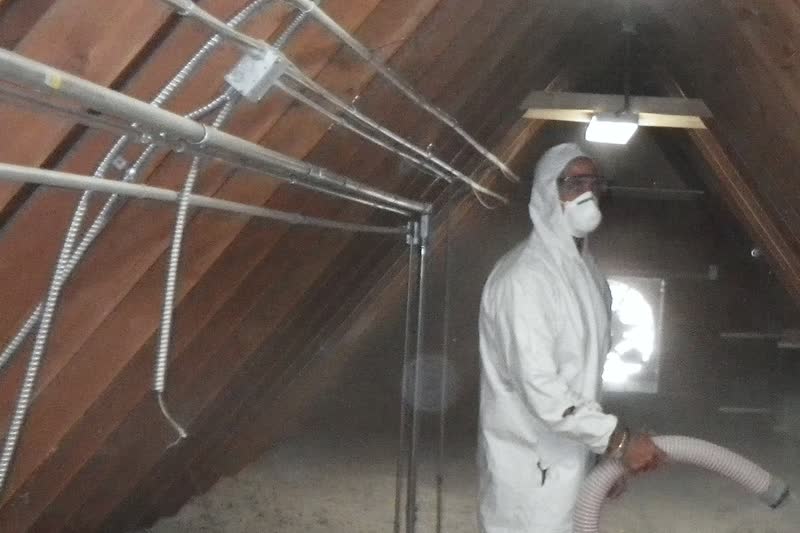
Attic Insulation
Blown-in fiberglass attic insulation, added to the depth your home needs, to even out hot and cold rooms and cut wasted heating and cooling.
Attic insulation in Lexington, NC, blown in over the layer you have or laid fresh once a damaged one comes out. We serve Davidson County and the rest of North Carolina. Most attics we price from the square footage, with no visit, and the estimate costs nothing.
Attic insulation in Lexington, NC is nearly always blown in: loose fibers sent across the attic floor until the layer is even, settling around joists, wiring and the uneven framing of an older house. The Census Bureau's 2020 to 2024 estimates date roughly two in three Lexington homes to before 1980, so most attics here still hold what went in decades ago, and it's often thin, packed down or patchy. Usually the job is a top-up once the air leaks are sealed.
Tell us the square footage of your Lexington attic, or give us the address and we'll work it out from the footprint. We'll tell you whether adding insulation is worth it. Sometimes it isn't, and you'll hear that too. If your attic needs a closer look first, we make a special visit, and on install day the crew checks the depth at the center and out at the edges with you before any work starts.
See all of our insulation services in Lexington.

Monday to Friday 8:00 am to 5:00 pm. Saturday by appointment. Sunday closed.
Attic insulation, removal, air sealing and more. Open one to see how the work goes.
Blown-in fiberglass attic insulation, added to the depth your home needs, to even out hot and cold rooms and cut wasted heating and cooling.
Old, wet, matted or animal-soiled attic insulation vacuumed out, so new insulation can go in on a clean, sealed attic floor.
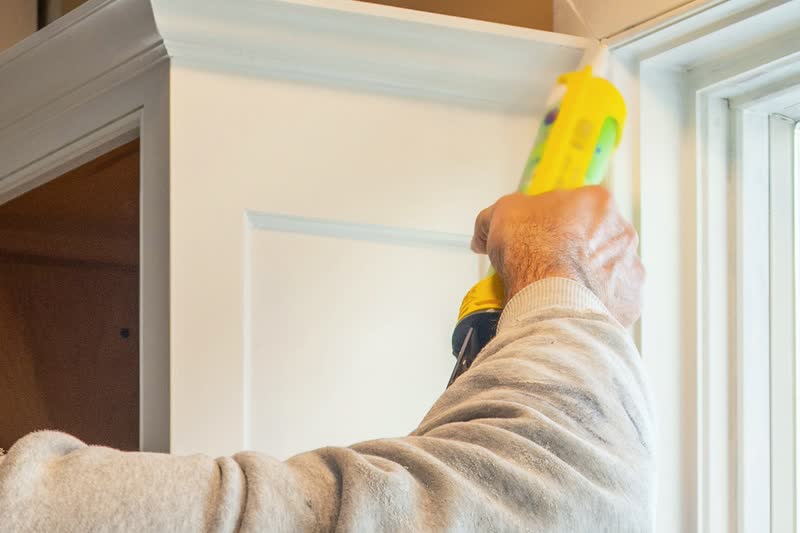
Sealing the gaps between your rooms and the attic, and leaky ductwork, so the air you pay to heat and cool stays inside.
Insulation blown into the closed walls of an existing house, batts in open walls for additions, remodels and new builds, and garage walls and ceilings.
Insulation for the garage ceiling under a bonus room, the wall shared with the house and the garage attic, with air leaks sealed first.
Floor insulation under the house: wet or fallen insulation pulled out, new batts between the floor joists, plastic over the dirt and the floor leaks sealed.
About one Lexington housing unit in seven predates 1940. That count takes in the 1920s bungalows of the residential historic district by downtown and the Erlanger mill houses, which their National Register nomination describes with brick chimneys inside the house and gable vents. Both shape the job. By ENERGY STAR's account, codes usually want a masonry chimney kept 2 inches clear of anything combustible, insulation included, and ENERGY STAR's fix for the opening around one is aluminum flashing with high-temperature caulk, done before any insulating starts.
Gable vents are how many of these attics breathe, so the new layer stops short of them. A rear wing under its own lower roof means a second, smaller attic to measure and fill.
The 1950s, 1960s and 1970s account for close to half of Lexington's housing, and the residential district's nomination says ranch houses were in fashion here through the first two of those decades. A ranch roof has a shallow pitch, so the attic is roomy at the ridge and pinched at the eaves. ENERGY STAR points out that an attic deep in the middle can be nearly bare at the edges, which is why the eaves get the most attention.
If there are soffit vents along the eaves, baffles are fitted there first. ENERGY STAR's attic insulation steps warn against covering soffit vents, and a baffle holds the loose-fill back so outside air keeps moving. The ceiling leaks are sealed next, and then the new loose-fill goes over the old in an even blanket, carried right out so the eaves end up as deep as the center.
Both maps people quote place Davidson County in zone 3: the one in North Carolina's 2018 energy code and the 2021 national map that ENERGY STAR's chart follows. For existing zone 3 homes, the chart reads R-49 when nothing is up there and R-38 for an attic that holds 3 or 4 inches now, and R-38 matches the state's minimum for ceilings in new construction.
How many inches that takes depends on the material, since each type has its own R-value per inch, so the estimate gives the R-value and the depth side by side. The R-value guide linked further down turns each target into inches.
Old insulation usually stays and gets covered. The exceptions are insulation that is soaked, matted into a crust, moldy or fouled by animals, because burying it would hide the problem without fixing it. The cause is dealt with first, and roof leaks are a roofer's job and animals a wildlife company's. Then the spoiled layer is vacuumed out, the bare ceiling gets its air sealing and fresh loose-fill is blown in.
Growth on the roof deck is a different case. Its cause, such as a bath fan ducted into the attic instead of outside, air leaks or weak ventilation, has to be fixed, and the estimate spells out which part of that we can do.
Roughly a third of Lexington's housing dates from 1980 on, and some of those attics need nothing. When a deep, even layer hides the joists completely, ENERGY STAR judges that more insulation may not be cost-effective, and we'll tell you so. We don't sell insulation an attic doesn't need.
Newer houses bring their own snags. Recessed can lights need a 3-inch gap around them in ENERGY STAR's guidance unless the fixture is IC-rated, short for insulated ceiling. Where ductwork runs through the attic, a radiant barrier can help: the Department of Energy's Building America Solution Center says one keeps attic ducts cooler in summer, though the advantage shrinks where an attic gains little summer heat.
Call or text us, or use the contact form, and give us the square footage of the attic or the house. Most Lexington attics we can price from that and what you tell us, with no visit. If yours needs a closer look first, we make a special visit. On install day the crew goes over the attic with you before anything starts.
The estimate names the target R-value, the depth and the material, lists any removal and the air sealing as separate lines, and gives the total. We leave prices off this page because Lexington attics differ too much: the square footage, how deep the current layer is, how many leaks need closing and whether spoiled insulation has to come out all move the number. The cost guide linked further down explains each one.

Each page has local notes on the homes and attics in that town.
Davidson County, 12 miles northeast
Median home built 1983, 14 years newer than Lexington's
Insulation contractor serving ThomasvilleRowan County, 15 miles southwest
Median home built 1976, 7 years newer than Lexington's
Insulation company serving SalisburyAlso in Davidson County: Denton and Wallburg. Every town in Davidson County. See all service areas.
Local service pages: Attic Insulation in Asheville, Attic Insulation in Charlotte, Attic Insulation in Durham, Attic Insulation in Fayetteville, Attic Insulation in Greensboro, Attic Insulation in Greenville, Attic Insulation in High Point, Attic Insulation in Raleigh, Attic Insulation in Thomasville, Attic Insulation in Wilmington, Attic Insulation in Winston-Salem.
If it sits in a rear wing, it may have its own lower attic, insulated apart from the main one or hardly at all. NOAA's normals put Lexington's July high near 89 degrees, and a thin attic passes the roof's heat down to the ceiling under it. Tell us about it when you call. If that small attic can be reached, it gets sealed and filled to the same target as the rest.
It puts the job on hold. In ENERGY STAR's guidance, knob-and-tube wiring belongs to houses wired before 1930 and can become a fire hazard where insulation covers it, and most Erlanger mill houses date from 1913 to 1929. If we find any, it's left for an electrician to handle before we go further. After that, the air sealing and the blown-in layer can go ahead.
Yes. It is sealed along with the other ceiling leaks before any insulation is added. ENERGY STAR names the attic hatch among the usual places a house leaks air, and an unsealed panel lets heated air straight up into the attic. The estimate says how the hatch will be sealed and insulated, and a pull-down attic stair, a bigger opening, gets the same attention.
Both, with winter the larger share. NOAA's normals for 1991 to 2020 at the Lexington station count about 3,500 heating degree days a year against about 1,450 cooling degree days, so the house needs heat for more of the year than it needs cooling. One layer does both jobs: it holds heat in during January and keeps a sun-baked roof's heat out of the rooms in July.
Only after testing. Vermiculite is a loose, pebbly fill that can contain asbestos, and ENERGY STAR's advice is to leave it alone until an approved lab has checked it, with the local health department as the place to find one. If we see it in your attic, we stop work there and explain your options. We don't handle asbestos.
Call or text us on a weekday, ask about a Saturday, or use the contact form any time. Give us the square footage of the attic or the house, or the street address in Lexington or elsewhere in Davidson County, plus the house's rough age and why you're calling. Most attics we price from that, with no visit. The estimate is free, and the decision is yours to make in your own time.
Attic Insulation
North Carolina's energy code requires R-38 in a new ceiling, and ENERGY STAR recommends more for existing attics. See both numbers, which climate zone your county is in and how many inches each R-value takes.
Attic Insulation
There is no price list here, on purpose. See the seven things that move attic insulation cost up or down, why a per-square-foot number misleads and how to compare two written estimates line by line.
Census Bureau figures for Lexington, NOAA normals for the Lexington station, Lexington's municipal electric system (October 2026). Compiled by Insulation Pros. How the town pages are made.
Lexington, NC
Open in Google Maps (opens in a new tab)Insulation Pros is an insulation contractor serving North Carolina, and a Lexington price needs no appointment.
Wondering whether your Lexington attic is doing its job? Send its square footage online, or call. You'll get a straight answer on what the attic needs, if anything, and a free estimate.
What You Can Count On
We serve homes across North Carolina. These are the largest towns we work in.
Alamance County
Buncombe County
Cabarrus County
Cumberland County
Durham County
Forsyth County
Gaston County
Guilford County
Mecklenburg County
New Hanover County
Onslow County
Orange County
Pitt County
Wake County