Attic Insulation
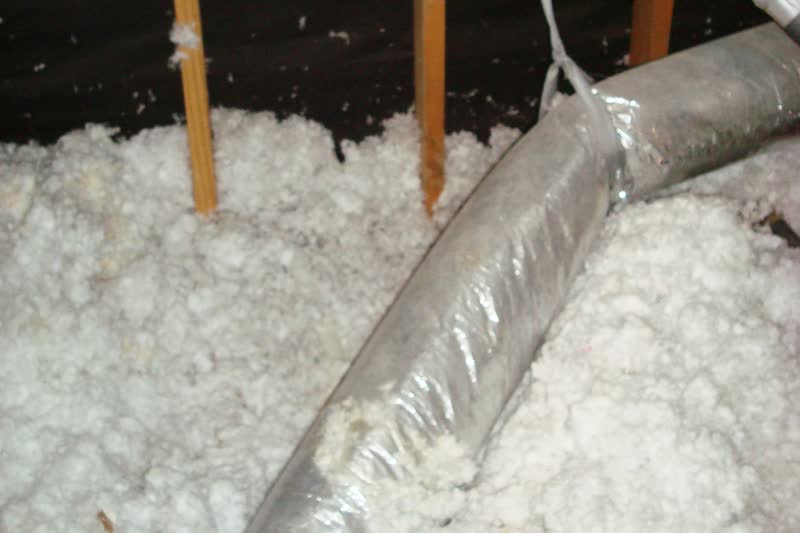
Blown-in fiberglass attic insulation, added to the depth your home needs, to even out hot and cold rooms and cut wasted heating and cooling.
If your furnace runs half the night in January, the attic is a good place to look. We blow insulation into Asheville attics, built up to the deeper targets of a zone 4 winter, with the hatch, the flues and the kneewalls sealed on the way. A layer that's wet or fouled comes out first. We can usually quote the job from the attic's square footage, and the written estimate costs you nothing.
An Asheville attic gets the same material we blow onto any open attic floor: loose-fill fiberglass. It just gets more of it. Once the leaks in the ceiling are closed, the fill goes over any dry, clean layer already there and gets leveled from the middle of the attic out to the eaves.
The city's housing has a median year built of 1982, give or take two years, by the Census Bureau's 2020 to 2024 figures, and about 39 percent of it predates 1970. Nearly every attic here already holds something. The question is how much, how evenly it lies and how far short of the mountain target it falls. A ruler pushed down at the center and at the eaves tells you, and with that and your square footage we can price the top-up.
See all of our insulation services in Asheville.

Monday to Friday 8:00 am to 5:00 pm. Saturday by appointment. Sunday closed.
Attic insulation, removal, air sealing and more. Open one to see how the work goes.
Blown-in fiberglass attic insulation, added to the depth your home needs, to even out hot and cold rooms and cut wasted heating and cooling.
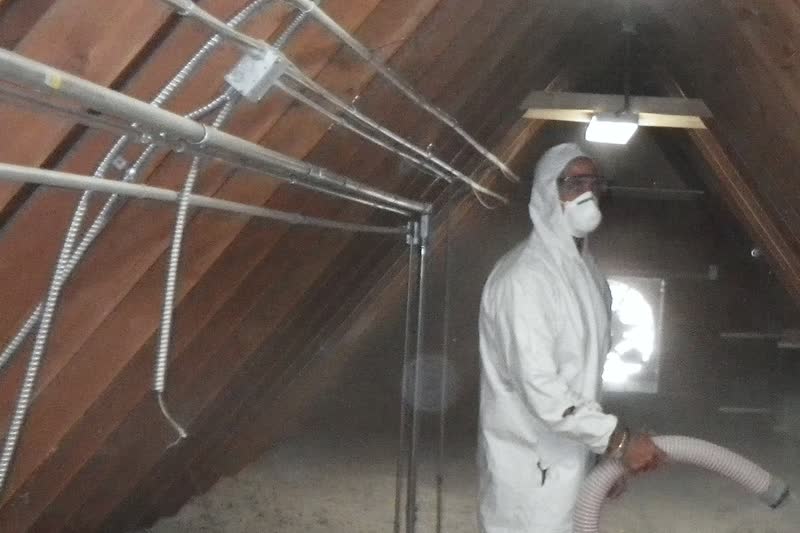
Old, wet, matted or animal-soiled attic insulation vacuumed out, so new insulation can go in on a clean, sealed attic floor.
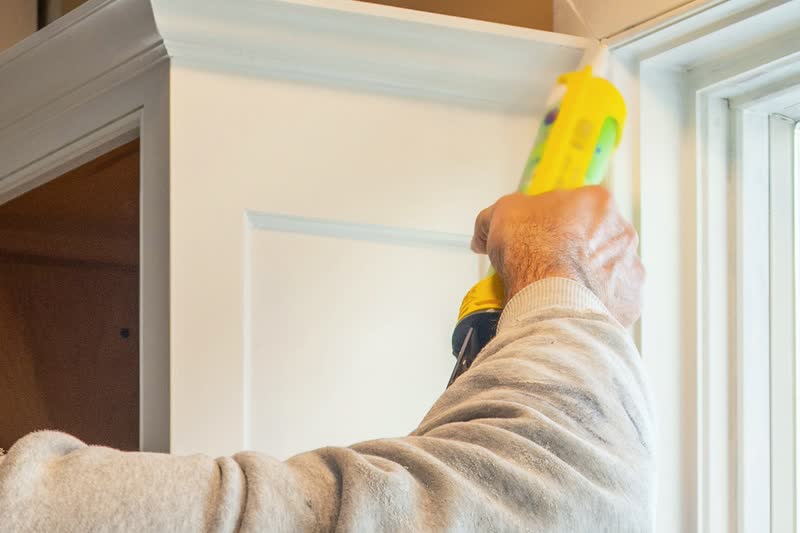
Sealing the gaps between your rooms and the attic, and leaky ductwork, so the air you pay to heat and cool stays inside.
Insulation blown into the closed walls of an existing house, batts in open walls for additions, remodels and new builds, and garage walls and ceilings.
Insulation for the garage ceiling under a bonus room, the wall shared with the house and the garage attic, with air leaks sealed first.
Floor insulation under the house: wet or fallen insulation pulled out, new batts between the floor joists, plastic over the dirt and the floor leaks sealed.
Loose fill is the usual material for an attic floor. ENERGY STAR's hiring guide says it goes in quickly with the right equipment, which is why most contractors use it there. Both kinds contain some recycled material: paper in cellulose, glass in fiberglass.
R-60 is a deep layer. ENERGY STAR puts the common insulation types at about R-3 to R-3.5 per inch, so R-60 means roughly 17 to 20 inches of fill, where R-49 means about 16 to 18. That much depth needs room at the edges. Baffles at the eaves hold it off the soffit vents, which ENERGY STAR says insulation should never cover. Where a low roof leaves little height over the outside walls, the state code asks for the insulation to run out to the baffle.
Buncombe County is in climate zone 4 on both maps, North Carolina's own and the 2021 national one. For zone 4, ENERGY STAR recommends R-60 in an attic that starts with nothing and R-49 added to one that already holds 3 to 4 inches, the same as it gives the state's colder zone 5 mountain counties. Sound insulation already in the attic counts toward that, so you only pay for the difference.
New houses are built to less. The state's 2018 energy code, which the fire marshal's office lists as the one in force, sets R-38 for a new ceiling, so even a recent Asheville house may be well short of ENERGY STAR's figures. ENERGY STAR's own test for whether to bother: if the layer is more than 4 to 6 inches below the recommended level, or you can still see the joists, more insulation is worth considering. If yours passes that test, we'll tell you.
About 18 percent of Asheville's housing units date from before 1940, the Census estimates show, a larger share than the city has from any decade since. The 1940s through the 1960s add about 21 percent, the 1970s and 1980s about 19 percent, and 1990 or later about 42 percent.
For the prewar houses, the wiring and the chimneys come first. ENERGY STAR treats knob-and-tube wiring from before 1930 as a fire hazard where insulation touches it, and a masonry chimney needs a gap and a metal dam around it. Under a roof with many gables there may be several attic spaces, and every one has to be counted, so an old house like that may get a special visit before we price it. In the postwar and 1980s houses the first question is depth, with the flues of gas and oil equipment close behind. In the newest, it's whether the layer goes past the code minimum, plus the hatch and the ducts.
NOAA's 1991 to 2020 normals for its Asheville station average about 3,880 heating degree days a year and about 1,090 cooling degree days, so heating need runs more than three times cooling need. The station logs about 77 freezing nights a year and only about 16 days that reach 90 degrees, and the Building America guide to climate by county files Buncombe as mixed-humid.
That shapes the work. The attic floor spends most of the year holding heat in, so depth and air sealing do most of the good. A radiant barrier mostly cuts summer heat coming off the roof, so it rarely comes first here. The Building America Solution Center says its benefits shrink in places where summer heat gain from the attic is small.
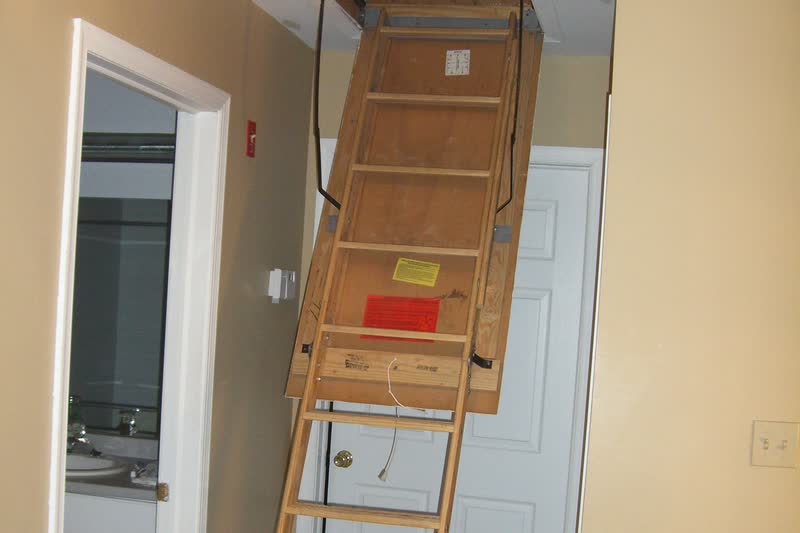
In a deep attic, the way in is often the weakest spot left. A bare hatch or stair door is a gap in an R-60 ceiling, and ENERGY STAR's hiring guide wants it weatherstripped and insulated. Ready-made covers fit standard openings.
Story-and-a-half houses add kneewall doors and the low spaces behind them. ENERGY STAR's attic air sealing guide counts the areas behind and under kneewalls among the common leaks, and it points out that the floor framing under those walls is often open. Those cavities get plugged and the kneewall spaces insulated along with the main attic. If you have kneewall doors, mention them when you ask for a price.
Each page has local notes on the homes and attics in that town.
Henderson County, 13 miles south
Median home built 1997, 15 years newer than Asheville's
Attic insulation in Mills RiverMadison County, 18 miles north
Median home built 1982, the same as Asheville's
Attic insulation in Mars HillHenderson County, 18 miles south
Median home built 1987, 5 years newer than Asheville's
Insulation contractor serving HendersonvilleAlso in Buncombe County: Biltmore Forest, Black Mountain, Weaverville, and Woodfin. Every town in Buncombe County. See all service areas.
Local service pages: Attic Insulation in Charlotte, Attic Insulation in Durham, Attic Insulation in Fayetteville, Attic Insulation in Greensboro, Attic Insulation in Greenville, Attic Insulation in High Point, Attic Insulation in Lexington, Attic Insulation in Raleigh, Attic Insulation in Thomasville, Attic Insulation in Wilmington, Attic Insulation in Winston-Salem.
There's no figure on this page, because no two attics take the same work. The size of the attic floor is the biggest part of the price, so your square footage, or your home's footprint, gets you most of the way to a number. The distance between today's layer and R-60 or R-49, the sealing needed first around flues, chimneys and the hatch, and any old insulation that has to be vacuumed out make up the rest. The written price is free.
No. It's ENERGY STAR's figure for an empty attic in zone 4, and R-49 is its figure for topping up an attic that holds 3 to 4 inches. Whether reaching it pays off in your house depends on where you start. If your layer is already deep and even, we'll say so, and we won't sell you more.
Yes, if the batts are dry and clean. ENERGY STAR says the new insulation doesn't have to match the old: loose fill can go on top of fiberglass batts, and batts laid over loose fill should be unfaced. Batts that got wet, went moldy, smell or are full of droppings come out first.
Often. ENERGY STAR asks owners of houses from the 1930s or earlier to tell the contractor, because the attic may hold knob-and-tube wiring, which needs an electrician before any insulation goes near it. Chimneys need clearance and a metal dam, and a roof with many gables can hide several attic spaces. Tell us about any of these when you ask for a price, and the crew checks each one with you on install day.
Any time the attic is safe to work in. The job itself doesn't depend on the season, but a cool day is easier on everyone up there, and work done in the fall is in place before the long heating season starts. ENERGY STAR's project guide suggests starting early on hot days, because attics heat up as the day goes on.
Air Sealing
A quarter-inch gap around an attic opening can leak about as much air as a bedroom heating duct supplies. Here is the whole fix in order: seal, latch, insulate the door, dam the opening and cover the stairs.
Attic Insulation
The vent-area rule in North Carolina's residential code, worked through for a real attic size, plus how intake and exhaust share the job and why baffles keep new insulation from choking the soffit vents.
Census Bureau figures for Asheville, NOAA normals for the Asheville station, Duke Energy (October 2026). Compiled by Insulation Pros. How the town pages are made.
Asheville, NC
Open in Google Maps (opens in a new tab)Insulation Pros is an insulation contractor serving North Carolina, including Asheville and Buncombe County. Send the size of your attic and we'll send back a free price.
Is your Asheville attic ready for another mountain winter? Send us the square footage, mention any kneewall doors or extra attic spaces, and we'll quote the work in writing for free.
What You Can Count On
We serve homes across North Carolina. These are the largest towns we work in.
Alamance County
Buncombe County
Cabarrus County
Cumberland County
Durham County
Forsyth County
Gaston County
Guilford County
Mecklenburg County
New Hanover County
Onslow County
Orange County
Pitt County
Wake County