


Attic Insulation
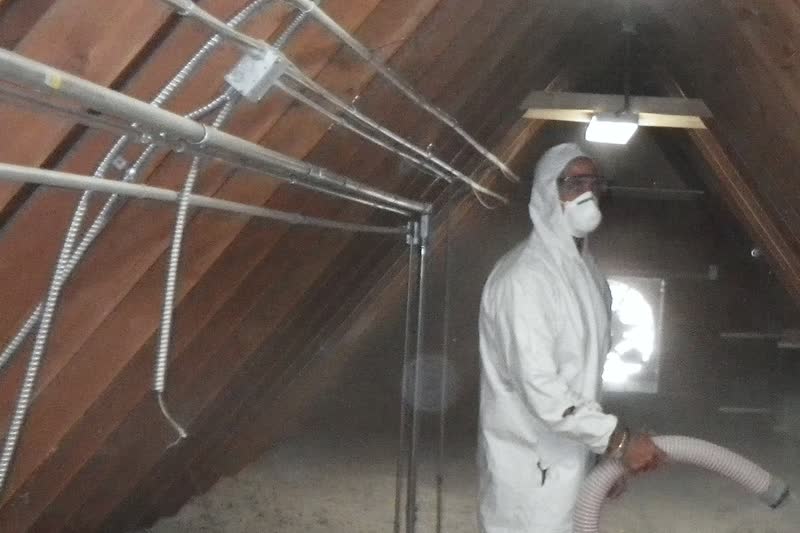
Blown-in fiberglass attic insulation, added to the depth your home needs, to even out hot and cold rooms and cut wasted heating and cooling.
When the AC runs all afternoon and the bedrooms still feel warm, a Fayetteville attic is often short on insulation. We close the air leaks first, then bring blown-in insulation to one even depth, and a layer that's failed gets vacuumed out before the new one goes in. Most of the time the attic's square footage is all we need to quote it, and the written estimate is free.
In a Fayetteville attic, the new insulation is almost always a blown-in layer of fiberglass laid over the old one. Before it goes in, the ceiling's gaps get sealed and baffles get set at the eaves. Then the fill is spread from the center of the attic out to the edges at one depth.
Fayetteville's housing has a median year built of 1984, give or take a year, in the Census Bureau's survey for 2020 to 2024, and about 44 percent of it is older than 1980. So the typical attic holds a layer that's been settling for decades, with holes cut or pushed through it since. Tell us the square footage and roughly how deep it is, and we'll say plainly whether a top-up is worth it.
See all of our insulation services in Fayetteville.

Monday to Friday 8:00 am to 5:00 pm. Saturday by appointment. Sunday closed.
Attic insulation, removal, air sealing and more. Open one to see how the work goes.
Blown-in fiberglass attic insulation, added to the depth your home needs, to even out hot and cold rooms and cut wasted heating and cooling.
Old, wet, matted or animal-soiled attic insulation vacuumed out, so new insulation can go in on a clean, sealed attic floor.
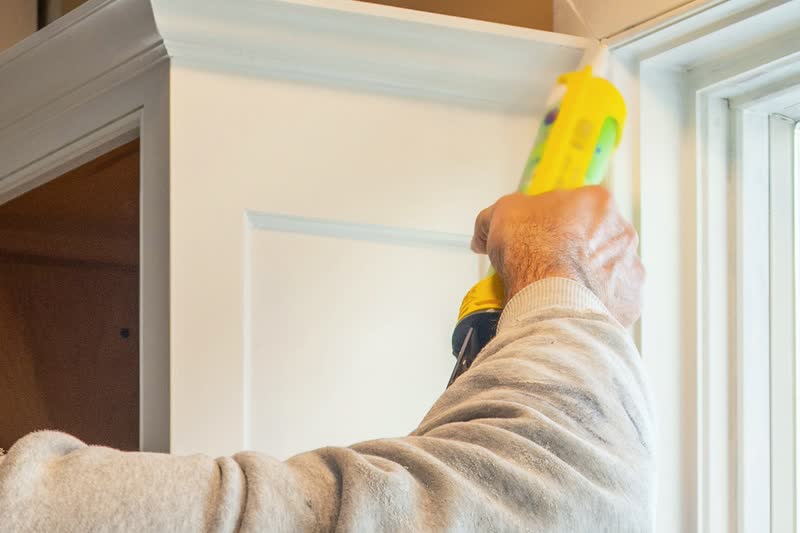
Sealing the gaps between your rooms and the attic, and leaky ductwork, so the air you pay to heat and cool stays inside.
Insulation blown into the closed walls of an existing house, batts in open walls for additions, remodels and new builds, and garage walls and ceilings.
Insulation for the garage ceiling under a bonus room, the wall shared with the house and the garage attic, with air leaks sealed first.
Floor insulation under the house: wet or fallen insulation pulled out, new batts between the floor joists, plastic over the dirt and the floor leaks sealed.
Fiberglass and cellulose both suit an open attic floor, and fiberglass is what we blow in. By ENERGY STAR's account, loose fill of either kind is what most contractors blow in there, because it goes in fast with the right machine. It can also go over an older layer of a different type: ENERGY STAR says loose fill can go on top of fiberglass batts.
Every job ends with paperwork you can check. Under the FTC's R-value Rule, the installer of loose-fill insulation owes you a dated, signed receipt showing the area covered, the thickness as installed, the minimum settled thickness, the R-value and the number of bags. Those figures should match the price you agreed to.
Cumberland County is in climate zone 3 under the state code and under the 2021 national map. ENERGY STAR's zone 3 figures are R-49 for an attic with no insulation and R-38 added to one with 3 to 4 inches already in it. Insulation that's already up there and still dry counts toward the total, so you only pay for the difference.
Builders work to a lower number. For a new house, North Carolina's energy code, the 2018 edition the fire marshal's office still lists, calls for R-38 at the ceiling and allows R-30 where that full depth runs out over the outside walls. And where the joists already sit under a deep, even layer, ENERGY STAR says adding more may not be cost-effective. If that's your attic, we'll tell you, and you won't pay for insulation you don't need.
Most of the city went up in the second half of the 1900s, the Census figures show. About 25 percent of its housing units are older than 1970, with the 1960s alone at about 14 percent. The 1970s and 1980s add about 35 percent, the 1990s and 2000s about 29 percent and 2010 or later about 10 percent.
The few oldest houses get a wiring check before anything else, since ENERGY STAR calls knob-and-tube wiring from before 1930 a fire hazard where insulation touches it. Across the big middle of the city's housing, the 1960s through the 1980s, the first question is depth, above all out at the eaves. In the newest houses the air handler, the ducts and any recessed lights matter most.
July at the Fayetteville PWC station averages a high of about 91 degrees, and the station logs 90 degrees or more on about 53 days a year, by NOAA's 1991 to 2020 normals, with about 48 inches of rain. Winter still counts: about 63 nights a year reach freezing, and heating degree days, about 2,970, run ahead of cooling degree days, about 1,890. Cumberland is in the mixed-humid region of the Department of Energy's Building America county guide.
So the attic floor works both ways, holding heat in through the winter and slowing the heat that pours down from the roof in summer. A radiant barrier can help where ducts run through a hot attic, by the Building America Solution Center's account, but once an attic reaches R-30 or better there's little heat flow left for it to stop. Sealing and depth come first.
Piped gas heats about 23 percent of Fayetteville's occupied homes, the Census estimates show, and a gas furnace or water heater vents through a flue that often rises through the attic. ENERGY STAR notes that codes usually want 1 inch of clearance between a metal flue and nearby insulation or other combustibles, and 2 inches from a masonry chimney. The opening around the pipe gets closed with aluminum flashing and heat-rated caulk, and a sheet-metal dam holds the loose fill back.
Gas equipment that sits in the attic itself needs one more step after the sealing. ENERGY STAR's hiring guide passes on the EPA's advice to have a professional HVAC contractor test it for combustion safety. We'll point out when that applies to your house.
Each page has local notes on the homes and attics in that town.
Robeson County, 19 miles south
Median home built 1969, 15 years older than Fayetteville's
Attic insulation in St. PaulsRobeson County, 22 miles southwest
Median home built 1968, 16 years older than Fayetteville's
Attic insulation in Red SpringsAlso in Cumberland County: Eastover, Hope Mills, Spring Lake, Stedman, and Wade. Every town in Cumberland County. See all service areas.
Local service pages: Attic Insulation in Asheville, Attic Insulation in Charlotte, Attic Insulation in Durham, Attic Insulation in Greensboro, Attic Insulation in Greenville, Attic Insulation in High Point, Attic Insulation in Lexington, Attic Insulation in Raleigh, Attic Insulation in Thomasville, Attic Insulation in Wilmington, Attic Insulation in Winston-Salem.
Every attic gets its own price, and most of them we can work out without a visit. The biggest factor is how many square feet the attic floor covers, which you can tell us or we can figure from your home's footprint. The others are how many inches stand between today's layer and the target, how much sealing the flues, chases and hatch need, and whether a fouled layer has to be vacuumed out first. The written price is free.
Usually not. ENERGY STAR's hiring guide says existing insulation can stay unless it's wet or moldy, has a smell, or contains animal waste, and dry insulation of any age counts toward the target. We won't charge you to pull out insulation that can stay. When it does fail that test, we vacuum it out, seal the bare ceiling and blow in a fresh layer.
Maybe. A house that age was insulated when it was built, so the questions are whether the layer has settled, whether it reaches the eaves and whether it was disturbed when ducts or lights went in. ENERGY STAR's rule of thumb helps: if you can see the tops of the joists, the attic probably needs more, and if they're buried under an even layer, it probably has enough.
One or two for the insulation, by ENERGY STAR's project guide for contractors, and one or two for air sealing the attic floor. Taking out a spoiled layer, working through a tight hatch or around equipment in the attic adds to that, and we'll give you a time for your house along with the price.
Attic Insulation
A working guide to blowing insulation into your own attic: the safety checks, how machine rental works, counting bags from the chart, baffles and depth markers, the steps, and when hiring is the better call.
Attic Insulation
Read the bill the right way first, then work through the weather, the price per kilowatt-hour, the attic, the ducts and the air conditioner. Each step says what you can check yourself and who to call.
Census Bureau figures for Fayetteville, NOAA normals for the Fayetteville PWC station, Fayetteville Public Works Commission (PWC) (October 2026). Compiled by Insulation Pros. How the town pages are made.
Fayetteville, NC
Open in Google Maps (opens in a new tab)Insulation Pros is an insulation contractor serving North Carolina, Fayetteville too. Send the size of the attic and we'll quote it at no cost.
Is the attic over your Fayetteville ceilings doing its job? Call or text, or use the contact form, and we'll put a free price on paper for just what it needs.
What You Can Count On
We serve homes across North Carolina. These are the largest towns we work in.
Alamance County
Buncombe County
Cabarrus County
Cumberland County
Durham County
Forsyth County
Gaston County
Guilford County
Mecklenburg County
New Hanover County
Onslow County
Orange County
Pitt County
Wake County