


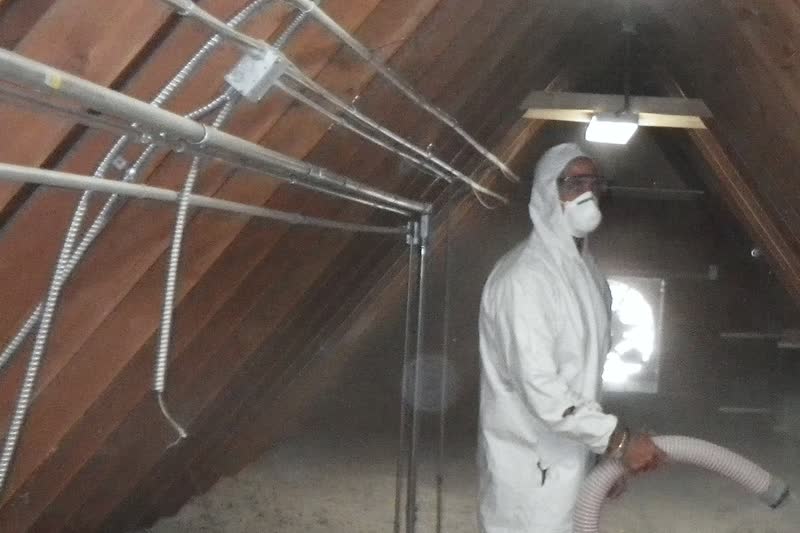
Attic Insulation
Blown-in fiberglass attic insulation, added to the depth your home needs, to even out hot and cold rooms and cut wasted heating and cooling.
Upstairs bedrooms that stay warm long after sunset are the classic sign of a thin Raleigh attic. We blow insulation in over a sealed ceiling, in everything from 1920s brick Colonials to townhouses finished last decade, to an R-value your price spells out. Our family owned company quotes most attics from their floor area, and the estimate is free.
Most Raleigh attics already have some insulation. The Census Bureau's 2020 to 2024 survey puts the median year built for the city's housing at 1997, so a typical attic was insulated when the house went up and has been settling, and getting walked through, ever since. The usual job is to seal the ceiling and blow in enough loose-fill to bring the whole floor up to its target.
If the old layer has been soaked by a leak, gone moldy, started to smell or been used by animals, it comes out first. Either way, the price starts with the size of your attic. Give us the square feet, or an address so we can size the footprint, and the target, the work and the price come back in writing. If your attic needs nothing, you'll hear that from us too.
See all of our insulation services in Raleigh.

Monday to Friday 8:00 am to 5:00 pm. Saturday by appointment. Sunday closed.
Attic insulation, removal, air sealing and more. Open one to see how the work goes.
Blown-in fiberglass attic insulation, added to the depth your home needs, to even out hot and cold rooms and cut wasted heating and cooling.
Old, wet, matted or animal-soiled attic insulation vacuumed out, so new insulation can go in on a clean, sealed attic floor.
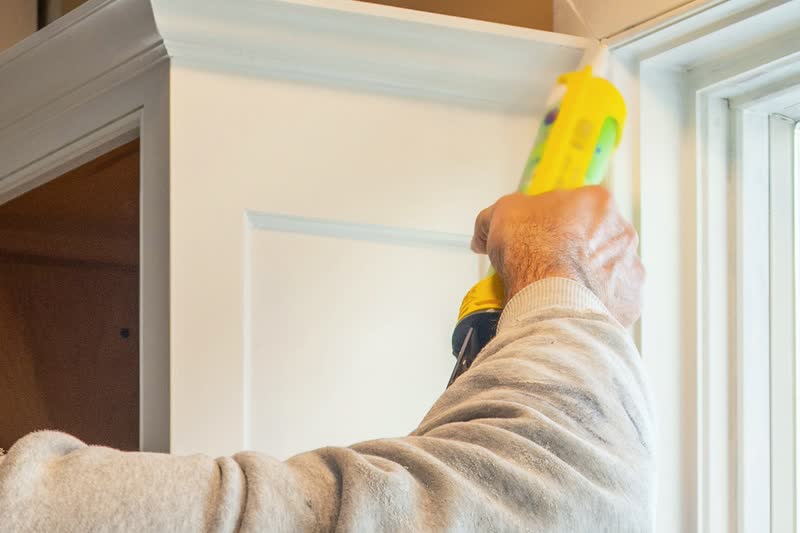
Sealing the gaps between your rooms and the attic, and leaky ductwork, so the air you pay to heat and cool stays inside.
Insulation blown into the closed walls of an existing house, batts in open walls for additions, remodels and new builds, and garage walls and ceilings.
Insulation for the garage ceiling under a bonus room, the wall shared with the house and the garage attic, with air leaks sealed first.
Floor insulation under the house: wet or fallen insulation pulled out, new batts between the floor joists, plastic over the dirt and the floor leaks sealed.
It depends on which climate map you go by. North Carolina's energy code puts Wake County in zone 4. The map drawn for the 2021 national model code, which ENERGY STAR's insulation table follows, puts it in zone 3. For an attic with no insulation at all, ENERGY STAR recommends R-60 in zone 4 and R-49 in zone 3. For one that already has 3 to 4 inches, it recommends R-49 and R-38.
So the honest target for a Raleigh attic is a range. R-38 is the state's minimum for a new ceiling, R-60 is the top of ENERGY STAR's figures, and R-49 shows up on both zones' rows. Every sound inch you already have counts toward the target, and your price names the R-value we'd aim for and why. The R-value guide gives the inches each target takes.
The insulation we blow in is loose-fill fiberglass, sent through a hose and spread to an even depth. It flows around wiring, pipes and framing, which makes it the practical pick for an attic floor that's already partly covered. It can go over old batts or an old blown layer that's dry and clean, and ENERGY STAR notes the new layer doesn't have to be the same type as the old one.
Cellulose reaches a given R-value in fewer inches than loose-fill fiberglass, and either one does the job once it hits the target. The bag's coverage chart sets the installed and settled depth for each R-value. After the job, the receipt the Federal Trade Commission's R-value Rule requires records both depths, along with the R-value and the number of bags used.
A second floor that won't cool down in July usually traces back to the attic. The roof heats the attic on a sunny afternoon, the heat works down through a thin or uneven layer, and gaps in the ceiling let attic air in. Ducts running through that attic make it worse, because they carry cooled air through the hottest part of the house before it gets to the rooms.
The fixes go in order. The ceiling gets sealed, the duct joints within reach get sealed with mastic, and the insulation comes up to depth, out to the eaves. A bonus room adds knee walls and a sloped ceiling, and the knee walls get sealed and insulated from the attic side. Our guide to a hot upstairs goes through the checks in more detail.
In most attics it can, and we won't sell you a removal you don't need. ENERGY STAR says taking out existing insulation usually isn't necessary, and that contractors can add new insulation on top unless the old is wet or moldy, has a smell to it or contains animal waste. Age alone isn't on that list. A thin, dusty layer from the 1980s can stay and be covered.
When it does fail that test, the cause is fixed first. Then the ruined material is vacuumed out, the bare ceiling sealed and a new layer blown in. Seen any of the signs below? Tell us up front, because they can mean a special visit before we put a number on it. The last one is the exception to everything here: that fill stays put until an asbestos professional deals with it.
Each page has local notes on the homes and attics in that town.
Wake County, 10 miles south
Median home built 2001 (Raleigh: 1997)
Attic insulation in GarnerWake County, 9 miles east
Median home built 2008 (Raleigh: 1997)
Attic insulation in KnightdaleWake County, 12 miles northeast
Median home built 2009 (Raleigh: 1997)
Attic insulation in Wake ForestDurham County, 18 miles northwest
Median home built 1995 (Raleigh: 1997)
Insulation contractor serving DurhamAlso in Wake County: Apex, Fuquay-Varina, Holly Springs, Morrisville, Rolesville, Wendell, and Zebulon. Every town in Wake County. See all service areas.
Local service pages: Attic Insulation in Asheville, Attic Insulation in Charlotte, Attic Insulation in Durham, Attic Insulation in Fayetteville, Attic Insulation in Greensboro, Attic Insulation in Greenville, Attic Insulation in High Point, Attic Insulation in Lexington, Attic Insulation in Thomasville, Attic Insulation in Wilmington, Attic Insulation in Winston-Salem.
We don't post a price, because no two attics are the same job. The attic's square footage sets most of the number, which is why we can usually quote it without a visit. The rest depends on how far today's insulation is from the R-value we agree on, how much sealing the ceiling and ducts need, and whether ruined insulation has to come out first. You get the figure in writing, free.
ENERGY STAR's project guide puts a contractor's time at one to two days for adding attic insulation. A clear townhouse attic with a few leaks to seal goes quickly. A big two-story house with ducts across the attic floor, or an attic where a ruined layer has to be vacuumed out first, takes longer, and we'll tell you how long when we give you the price.
It often helps, but it works as part of the whole job. Sealing the ceiling stops attic air from leaking into the rooms, sealing the ducts keeps cooled air where it belongs, and a deep, even layer slows the heat coming down. We won't promise you a temperature, because windows, the cooling system and the house itself all play a part. We'll tell you which step should help most.
Yes. The flat ceiling of a bonus room is insulated from the attic beside or above it, and its knee walls get sealed and insulated on the attic side. Garage insulation is a service of its own, including the ceiling under a bonus room. On install day the crew shows you which parts they can reach from the attic.
Call or text, or send the contact form any time. Give us the square footage, or the street address and we'll figure the size. Add roughly when the house was built and what made you call, like a hot upstairs, a high summer bill or insulation that looks flat or stained. Most of the time that's all we need to write up your price.
Attic Insulation
Start with the free checks, then work up through the attic: insulation depth, air leaks, ducts and roof heat. Each step says plainly whether it is a job for an HVAC technician or an insulation contractor.
Attic Insulation
There is no price list here, on purpose. See the seven things that move attic insulation cost up or down, why a per-square-foot number misleads and how to compare two written estimates line by line.
Census Bureau figures for Raleigh, ENERGY STAR recommended insulation R-values, ENERGY STAR attic insulation project, ENERGY STAR Well-Insulated and Sealed Attic page, FTC R-value Rule (16 CFR 460.17), EPA on vermiculite insulation (October 2026). Compiled by Insulation Pros. How the town pages are made.
Raleigh, NC
Open in Google Maps (opens in a new tab)Insulation Pros is an insulation contractor serving North Carolina, Raleigh included. Tell us how big your attic is and we'll send a free price.
Ready to find out what your Raleigh attic needs? Call or text, or use the contact form with your square footage, and we'll put the work and the price in writing at no charge. No pressure, and no extras you don't need.
What You Can Count On
We serve homes across North Carolina. These are the largest towns we work in.
Alamance County
Buncombe County
Cabarrus County
Cumberland County
Durham County
Forsyth County
Gaston County
Guilford County
Mecklenburg County
New Hanover County
Onslow County
Orange County
Pitt County
Wake County