


Attic Insulation
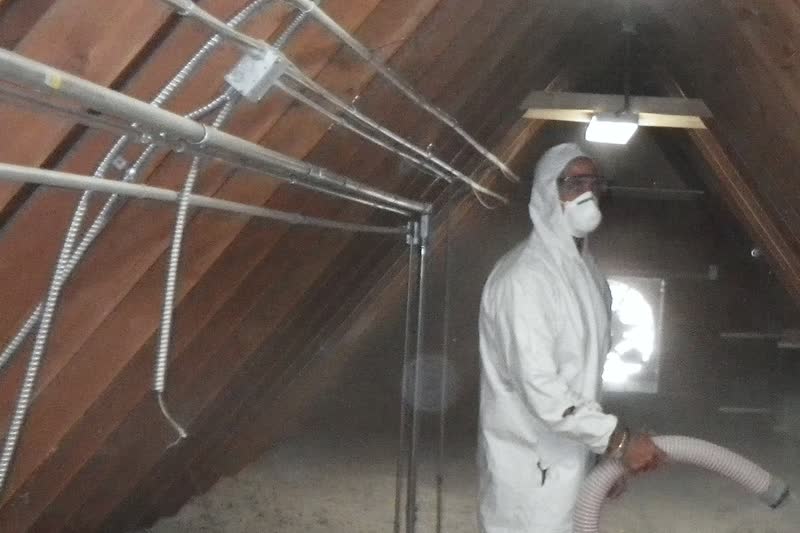
Blown-in fiberglass attic insulation, added to the depth your home needs, to even out hot and cold rooms and cut wasted heating and cooling.
If your upstairs stays muggy and warm into the night all summer, the attic is often letting the heat through. We blow insulation into Wilmington attics, from 1920s bungalows to 2010s townhouses, once the ceiling's leaks are sealed, and we vacuum out spoiled insulation where it has to go. Your attic's size is usually all we need for a written estimate, and it's free.
For Wilmington attics we use blown-in loose fill, and the material we blow is fiberglass. ENERGY STAR's hiring guide names fiberglass and cellulose as the usual materials for an attic floor and notes that both have recycled content, glass in one and ground-up paper in the other. Once the gaps in the ceiling are closed, the fill gets spread to a level depth across the whole floor.
Half of Wilmington's housing is older than 1989 and half is newer, going by the median year built in the Census Bureau's 2020 to 2024 estimates. So the typical attic here already holds a layer from a generation ago, and the job is usually to seal beneath it and build it up. Give us the square footage and roughly how deep the old layer is, and we'll tell you straight whether more insulation would pay its way. The crew checks the ducts and fan pipes with you on install day.
See all of our insulation services in Wilmington.

Monday to Friday 8:00 am to 5:00 pm. Saturday by appointment. Sunday closed.
Attic insulation, removal, air sealing and more. Open one to see how the work goes.
Blown-in fiberglass attic insulation, added to the depth your home needs, to even out hot and cold rooms and cut wasted heating and cooling.
Old, wet, matted or animal-soiled attic insulation vacuumed out, so new insulation can go in on a clean, sealed attic floor.
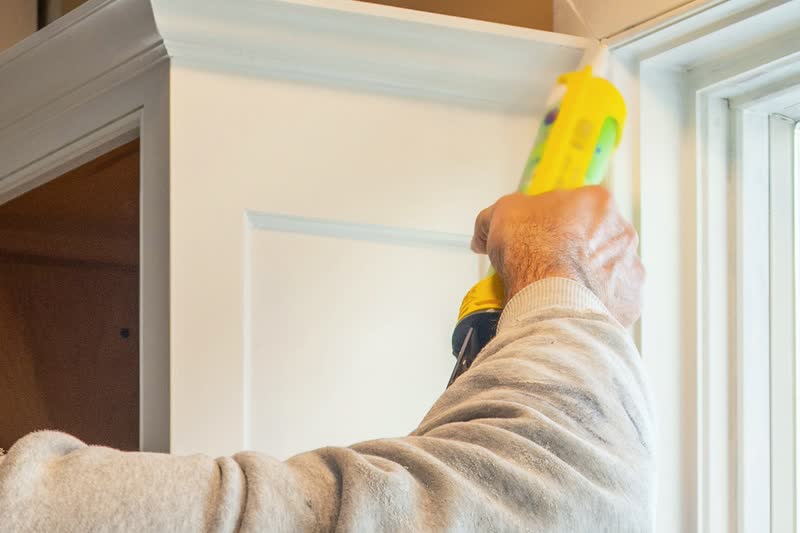
Sealing the gaps between your rooms and the attic, and leaky ductwork, so the air you pay to heat and cool stays inside.
Insulation blown into the closed walls of an existing house, batts in open walls for additions, remodels and new builds, and garage walls and ceilings.
Insulation for the garage ceiling under a bonus room, the wall shared with the house and the garage attic, with air leaks sealed first.
Floor insulation under the house: wet or fallen insulation pulled out, new batts between the floor joists, plastic over the dirt and the floor leaks sealed.
Fiberglass and cellulose both do the job on an open attic floor, and fiberglass is what we blow in. The new layer doesn't have to match the old one. ENERGY STAR says loose fill can be blown over fiberglass batts, and that batts added over loose fill should be unfaced, without a paper or foil facing.
Depth is what changes from one product to the next. At roughly R-3 to R-3.5 an inch, ENERGY STAR's estimating figure, R-38 comes to about 13 to 14 inches and R-49 to about 16 to 18. When the work's done, the FTC's R-value Rule requires a receipt listing the installed thickness, the minimum settled thickness and the R-value, so you can hold the finished attic up against what you were quoted.
New Hanover County falls in climate zone 3 on both the state code's map and the 2021 national map. ENERGY STAR's chart for that zone recommends R-49 when the attic starts out empty, and R-38 on top when it already holds 3 to 4 inches. Dry, sound insulation that's already there counts toward the goal, so a top-up only covers the difference, and the difference is all you pay for.
The code minimum is lower. North Carolina's energy code, in the 2018 edition the state fire marshal's office lists as current, requires R-38 in a new house's ceiling and accepts R-30 where that full, uncompressed depth carries over the wall tops at the eaves. So a house built right to code can still be one top-up away from R-49. Your price tells you the R-value we'd aim for and the depth it takes.
Wilmington has kept building for a hundred years, the Census estimates show. Roughly 9 percent of its housing units predate 1940, about 18 percent come from the 1940s through the 1960s, and 25 percent from the 1970s and 1980s. The other 48 percent or so went up in 1990 or later.
That spread decides what gets checked first. Wiring from before 1930 may run on knobs and tubes, which ENERGY STAR treats as a fire hazard under insulation, so an electrician looks before anything gets covered. In the 1970s and 1980s houses the question is how deep the layer still is and whether it reaches the edges. In the newest it's the eaves, the ducts and the fans, and sometimes the honest answer is to leave the attic as it is.
Summer is the hard season for a Wilmington attic. The airport's July high averages 90 degrees in NOAA's 1991 to 2020 normals, and it sees about 45 days a year at 90 or warmer, against about 37 nights at freezing or colder. August and September are the wettest months, each with more than 8 inches of rain.
New Hanover is one of the counties the Department of Energy's Building America guide files as hot-humid, a class it sets by long hours of humid air through the warm half of the year. Insulation on the attic floor slows the heat coming off a sun-baked roof. Humid air still moves through any gap in the ceiling below it, though. ENERGY STAR's answer is to seal the attic floor before a single bag goes in.
Where ducts cross the attic, ENERGY STAR's hiring guide asks the crew to keep from stepping on or damaging them, and to make sure ducts lying on the floor are sealed before insulation covers them. An air handler or gas water heater up there adds one more step. On the EPA's advice, a professional HVAC contractor should test fuel-burning equipment in the attic for combustion safety once the air sealing is done, and we'll tell you when that applies.
Fan pipes matter just as much near the coast. A bath, kitchen or dryer vent that ends in the attic sends moist air into the space where the insulation sits, and ENERGY STAR lists it among the conditions to correct before insulating. On install day the crew follows each pipe to its end with you, and any that stop short of the outdoors get pointed out before work starts.
Each page has local notes on the homes and attics in that town.
New Hanover County, 15 miles south
Median home built 1996, 7 years newer than Wilmington's
Attic insulation in Kure BeachBrunswick County, 16 miles southwest
Median home built 1998, 9 years newer than Wilmington's
Attic insulation in Boiling Spring LakesPender County, 17 miles northeast
Median home built 1985, 4 years older than Wilmington's
Attic insulation in Topsail BeachBrunswick County, 20 miles south
Median home built 2003, 14 years newer than Wilmington's
Attic insulation in SouthportBrunswick County, 22 miles southwest
Median home built 2011, 22 years newer than Wilmington's
Attic insulation in St. JamesAlso in New Hanover County: Carolina Beach and Wrightsville Beach. Every town in New Hanover County. See all service areas.
Local service pages: Attic Insulation in Asheville, Attic Insulation in Charlotte, Attic Insulation in Durham, Attic Insulation in Fayetteville, Attic Insulation in Greensboro, Attic Insulation in Greenville, Attic Insulation in High Point, Attic Insulation in Lexington, Attic Insulation in Raleigh, Attic Insulation in Thomasville, Attic Insulation in Winston-Salem.
We don't post a figure here, but you don't need a visit to get one. Most of it follows the attic floor's square footage, which you can send us or we can work out from your address. The rest depends on the gap between the depth you have and the R-value we settle on, the air sealing and fan-pipe fixes that come first, and any spoiled insulation that has to be vacuumed out. You'll get the number in writing, free.
For a whole attic floor, blown-in is what we use. ENERGY STAR's hiring guide says loose fill is what most contractors put on attic floors, since it goes in fast with the right machine, while its project guide calls fiberglass rolls the easiest material for a homeowner working alone. Either way the goal is the same R-value.
ENERGY STAR's project guides give a contractor one to two days for attic insulation and one to two days for attic air sealing. Vacuuming out a spoiled layer adds time, and so does a small hatch or a floor crossed by ducts. Your price comes with a time estimate for your house.
Usually. ENERGY STAR's hiring guide says removal is usually not necessary unless the old insulation is wet or moldy, gives off an odor, or contains animal waste. Dry, clean insulation of any age stays and counts toward the total, and we won't charge you to take it out. If yours fails that test, we vacuum it out, seal the bare ceiling and blow in a new layer.
Yes, the ones we can reach. Joints, seams and the boots behind the ceiling registers get mastic or metal tape, the materials ENERGY STAR recommends over duct tape, and that work has its own line on your price. A duct that's crushed, kinked or has come apart needs an HVAC contractor, and we'll point it out instead of covering it up.
Attic Insulation
Foil under the roof can cut the summer heat coming off a hot roof deck, but it is not the right buy for every house. See which homes gain the most, which gain little, and the one installation mistake to avoid.
Air Sealing
Ducts that run through the attic lose air where it hurts most. Learn how much leaks, the signs to check, how a duct test works, mastic versus tape versus sealing from inside, and why attic ducts sweat in July.
Census Bureau figures for Wilmington, NOAA normals for the Wilmington International Airport station, Duke Energy Progress (October 2026). Compiled by Insulation Pros. How the town pages are made.
Wilmington, NC
Open in Google Maps (opens in a new tab)Insulation Pros is an insulation contractor serving North Carolina, and Wilmington is part of it. Coastal attics get the same free pricing: send the size and we'll quote it.
Wondering whether your Wilmington attic is deep enough? Put the attic's size in the contact form, and a free price comes back, plus a note on any fan pipe or duct that needs attention.
What You Can Count On
We serve homes across North Carolina. These are the largest towns we work in.
Alamance County
Buncombe County
Cabarrus County
Cumberland County
Durham County
Forsyth County
Gaston County
Guilford County
Mecklenburg County
New Hanover County
Onslow County
Orange County
Pitt County
Wake County