Mice or Rats in Attic Insulation: Cleanup, Removal and What Comes Next
Mice or rats in attic insulation mean three jobs, done in a set order. First the animals are trapped and the holes they use are closed. Then the droppings and nests are cleaned up the way the CDC describes: soaked with disinfectant, never swept or vacuumed dry. Last, insulation soiled with droppings or urine comes out, the attic is sanitized and deodorized, the bare ceiling is sealed, and new attic insulation goes in. ENERGY STAR's advice is that new insulation can go over old unless the old layer is wet, moldy, smelly or contains animal waste, so a layer that rodents have lived in is the usual exception.
This guide covers the signs, the health risk, who does each step in North Carolina and what to ask before anyone starts. We are an insulation company, not a pest control or wildlife company. Our part comes at the end: attic insulation removal, sanitizing and deodorizing the attic, air sealing the bare ceiling and the new layer. The trapping and the closing of entry holes belong to other trades, and we say so plainly below.
Signs Mice or Rats Are Living in Your Attic Insulation
Droppings are the clearest sign, on top of the insulation or mixed into it. A University of Arizona extension bulletin puts house mouse droppings at an eighth to a quarter of an inch long and pointed at both ends, and rat droppings at half an inch to an inch. NC State Extension adds that a single rat can leave 30 to 50 droppings a day, and that fresh ones are dark. You can usually see them from the hatch with a flashlight, without stepping in.
The other signs, from the hatch or from the rooms below, look like this:
- Trails and tunnels. Runways pressed or dug through loose-fill, and dirty paths along the tops of the joists.
- Nests. Balls of shredded insulation, paper or fabric in a warm, sheltered spot. NC State Extension notes that rats build nests from shredded paper and insulation.
- Gnawing. Chewed wood, wiring, duct jackets or the edges of vents and openings.
- Rub marks. Dark, greasy smudges along joists, pipes and the edges of holes, left by oily fur.
- Smell. A strong, musty urine odor at the hatch or in a closet below the attic.
- Sounds. Scratching or rustling in the ceiling, mostly at night.
Mice or rats: which one is up there?
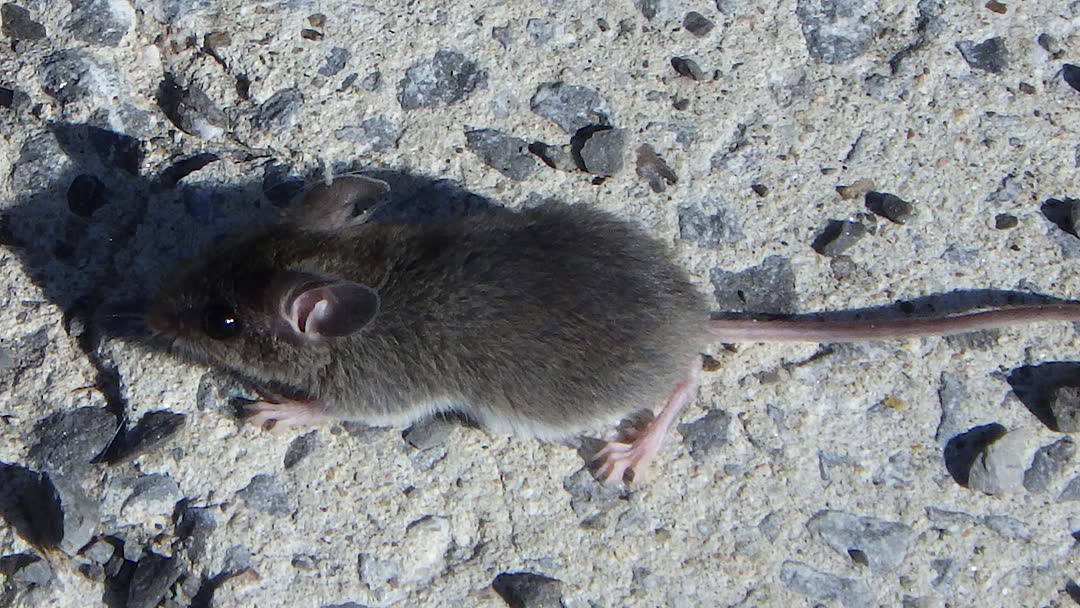
The size of the droppings is the quickest clue. NC State Extension describes the roof rat as the one that favors attics, with a slender body, large eyes and ears and a tail longer than its body. House mice are far smaller: the CDC says one can fit through a hole the width of a pencil. It matters for trapping, because rat traps must be made for rats, and rats can take up to a week to approach anything new.
Can mice live in attic insulation?
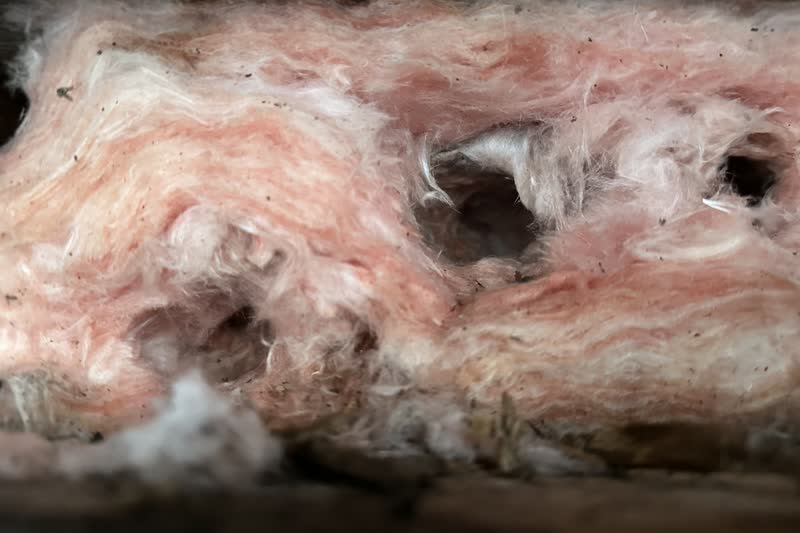
Yes. Insulation is soft, warm and out of sight, so mice and rats tunnel through it, nest in it and soil it. Neither batts nor blown-in insulation does anything to stop an animal, so the holes they use have to be closed before new material goes in.
Are Mouse Droppings in Insulation Dangerous? What the CDC Says
They can be, and the risk comes from stirring them up. The CDC says rodents spread disease through their droppings, urine and saliva, through bites, and through contaminated material that people breathe in or swallow. For hantavirus, the CDC explains that the virus gets into the air when fresh urine, droppings or nesting material are disturbed, and people breathe it in. An attic is a closed, dusty space, and walking through loose-fill stirs it.
Which rodents carry it? The CDC's 2002 hantavirus report names the deer mouse, the white-footed mouse, the cotton rat and the rice rat, the last two found in the Southeast. The common house mouse is not on that list. But the CDC's list of diseases spread by rodents also includes leptospirosis, rat-bite fever and salmonellosis, and nobody can tell from a hatch which animal left the droppings. So the same cleanup rules apply to all of it.
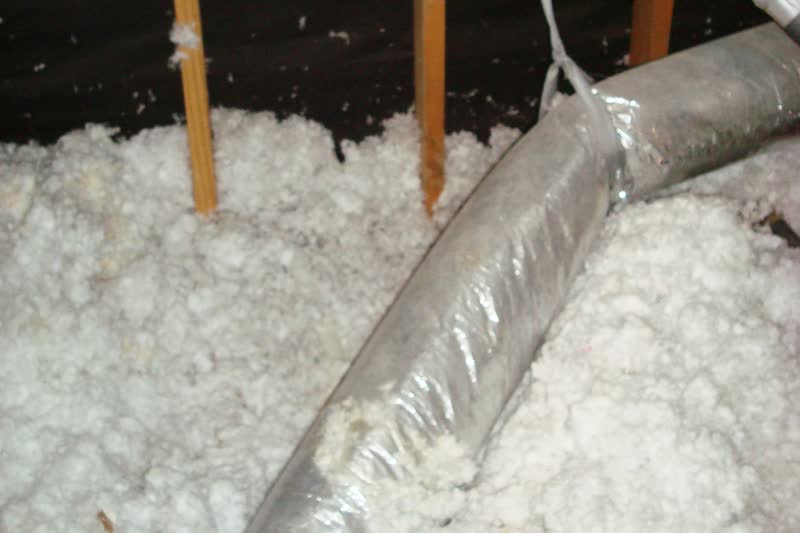
Two more CDC points. Fleas are common on rodents, so put insect repellent on clothing and shoes before handling nests. And if rodents have got into the heating and cooling system, call a professional rodent exterminator. If your ducts run through the attic, look for chewed duct jackets from the hatch.
What if someone already cleaned up and feels sick afterward?
The CDC's hantavirus report tells cleanup workers who develop a fever or breathing illness within 45 days of their last possible exposure to see a doctor and to mention the possible hantavirus exposure. The same advice makes sense for a homeowner who swept up droppings or worked in a soiled attic. We are not medical advisers, so take the question to a doctor, and tell them about the attic.
Rather Talk It Through Than Read?
Call (336) 870-3893Monday to Friday 8:00 am to 5:00 pm. Saturday by appointment. Sunday closed.
Step 1: Stop Them Getting In, and Who Does That in North Carolina
Nothing in the attic should be cleaned or replaced until the animals are gone and their way in is closed. New insulation laid over an active infestation is just fresh nesting material. The CDC sums up the order in three words: seal up, trap up, clean up.
Sealing up means finding the gaps. Outside, the CDC lists rafters, gables, eaves, soffits, attic vents and the holes where electrical, plumbing, cable and gas lines enter. NC State Extension says young rats get through gaps about a quarter of an inch wide and adults through about half an inch. For small holes, the CDC suggests steel wool held in place with caulk; for larger ones, lath screen, metal, cement, hardware cloth or metal sheeting. NC State Extension warns that rats chew through expanding foam used on its own, and recommends quarter-inch hardware cloth over attic vents.
Trapping up comes next. The CDC recommends snap traps and advises against glue traps and live traps, because they can frighten rodents into urinating, which raises the risk to you. Traps go against the wall with the bait end touching it, in the places with signs of activity, attics included. Check them every day. The CDC's test for the end of the job is plain: if no rodents are caught for a week and there are no new signs, they are gone.
Who removes mice, rats and wildlife in North Carolina?
For mice and rats, that is a pest control company. NC State Extension recommends a pest management professional whenever poison bait is needed, because the baits can harm pets, children and wildlife, and it notes that some companies also offer exclusion, the sealing of entry points, for a fee.
Squirrels, bats, raccoons and other wild animals fall under the NC Wildlife Resources Commission. Paid wildlife removal, bat eviction included, is done by a Wildlife Control Agent (called a Wildlife Damage Control Agent in some older material) working with the Commission's authorization. Agents are trained by the Commission and may charge for their work, though not for the depredation permits they issue. The Commission lists agents by county on its website and suggests finding out which animal is involved before you call.
Where do we fit? After all of that. If the crew sees fresh signs of activity when they open the hatch, they tell you, and the insulation work waits until the animals are dealt with.
Step 2: Cleanup Safety Before Anyone Touches the Insulation
Once the trapping is over, the droppings, urine and nests are cleaned up in the order the CDC sets out. The aim is to wet and disinfect everything before it is moved, so nothing becomes dust in the air. The CDC's steps, in short:
- Air it out. Ventilate the space for 30 minutes before cleanup, and stay out while it airs.
- Gloves on. Rubber, latex, vinyl or plastic gloves at the least.
- Soak it first. Saturate droppings, urine and nests with a product labeled as a disinfectant, or a bleach solution of 1.5 cups of household bleach in a gallon of water, mixed fresh. Let it soak for 5 minutes or as the label directs.
- Never dry. Do not sweep or vacuum urine, droppings or nesting material, and do not use a vacuum on a contaminated surface until it has been disinfected.
- Bag it twice. Nests and dead rodents go in a plastic bag that is knotted, then into a second knotted bag. Exposed insulation soiled with urine or droppings is bagged in plastic for removal.
- Work upwind. Carry soiled material outdoors and stand upwind so the dust blows away from you.
- Wash in order. Wash gloved hands, take the gloves off, then wash bare hands with soap and warm water.
When does the cleanup need heavy protective gear?
When the infestation is heavy. The CDC sets special precautions for heavily infested homes and buildings, and an attic floor with droppings and trails across it is close to what it has in mind. The gear it lists is disposable coveralls, rubber boots or shoe covers, gloves, goggles and a respirator: a half-mask with HEPA filters, or a powered air-purifying respirator with HEPA filters. The CDC asks for local and state fit-testing rules to be followed, and its older hantavirus report adds that a tight-seal mask does not protect if facial hair breaks the seal.
Can you vacuum mouse droppings out of attic insulation?
Not dry. The CDC is direct on this: sweeping or vacuuming droppings, urine or nests can put virus-carrying particles into the air, and a vacuum should not be used on a contaminated surface until it has been disinfected. A household or shop vacuum on dry droppings is exactly what it warns against.
Insulation removal machines are vacuums too. So ask any contractor, us included, how the job follows the CDC's order: how droppings and nests are treated before anything moves, what gear the crew wears, how soiled material is bagged and carried out, and how the rooms below are protected. Get the answers on the written estimate.
Step 3: Remove the Insulation Rodents Have Soiled
Insulation with droppings or urine in it usually comes out. ENERGY STAR's advice for hiring an attic insulation contractor is that new insulation can go on top of the old unless the old is wet, moldy, smelly or contains animal waste. Age is not on that list; animal waste is. Covering soiled material leaves the waste and the odor in the attic, only harder to reach.
How much comes out depends on how far the animals got. If the droppings and tunnels stay in one corner near the hole they used, removing that area and topping up the rest can be enough. If they run from end to end, the whole layer goes. A careful contractor shows you where the damage starts and stops before pricing anything. These are the things that decide it:
- How far the droppings, trails and nests spread across the attic floor.
- Whether there is a urine smell, and whether the material is stained or matted.
- Whether the old layer is loose-fill, which goes up a hose, or batts, which are rolled and bagged by hand.
- Whether the material looks like small pebbles. If it does, stop: it may be vermiculite, which the EPA says to leave undisturbed because it can contain asbestos.
Can you put new insulation over mouse droppings?
Not if you want the problem gone. ENERGY STAR's exception for animal waste exists because the waste stays where it is, under the new material, along with its smell. Our guide to attic insulation removal covers the other reasons old insulation comes out, such as roof leaks, and what to do about vermiculite. Where the animals never reached, the old layer can usually stay and be topped up.
Step 4: Air Seal the Bare Ceiling, Then Reinsulate
Once the soiled layer is out, the attic floor is bare, and that is the best moment to seal it. ENERGY STAR tells homeowners that contractors should seal air leaks in the attic floor before adding insulation, and to make sure the contractor understands that before work starts. The gaps around wires, pipes, light fixtures and wall tops are never easier to reach. Air sealing stops air, not animals, so the outside holes still belong to the pest or wildlife company. Why air sealing comes before insulation has its own guide.
ENERGY STAR's list for the same job also includes baffles at the eaves so the new layer does not block the soffit vents, sealing ducts before they are buried, covering and sealing older recessed lights, and weatherstripping and insulating the hatch.
Then the new layer goes in over an empty floor. ENERGY STAR's chart, based on the 2021 national climate map, recommends R-49 for an uninsulated attic in climate zone 3 and R-60 in zones 4 and 5, and North Carolina has all three. Once the soiled insulation is out, we sanitize and deodorize the attic, and in most homes we put back a new layer of blown-in fiberglass. Afterward, ENERGY STAR says to expect a record of what was added and the attic's new R-value.
How do you keep mice out of the attic after new insulation goes in?
Keep up the outside work, because the insulation will not stop them. The CDC suggests keeping woodpiles at least 100 feet from the house and a foot off the ground, trimming brush and weeds near the house and keeping bird feeders away from it. For squirrels, the NC Wildlife Resources Commission recommends trimming tree limbs back at least 6 feet from the roof. Check the roof line and vents now and then for new chewing, and take a look from the attic hatch once or twice a year. Fresh droppings on clean new insulation are easy to spot, which is one small benefit of starting over.
Squirrels, Bats and Other Attic Animals in North Carolina
Not every noise in the ceiling is a mouse. The NC Wildlife Resources Commission says the Eastern Gray Squirrel and the Southern Flying Squirrel cause most squirrel problems in the state, and that flying squirrels are rarely seen because they come out at night. Squirrels nest in attics in place of tree hollows, getting in through unscreened vents, gaps in siding and shingles or chimneys. The Commission's advice: if a squirrel is nesting, wait until the young have left, use one-way devices that let squirrels out but not back in, then seal the openings with metal sheeting or wire mesh of half an inch or less.
Bats come with a rule worth knowing. The Commission says 9 of the state's 17 bat species are listed as endangered, threatened or of special concern, so bats are evicted, not killed: one-way devices stay up for several nights until every bat has left, then the openings are sealed. Paid bat evictions must be done by a Wildlife Control Agent, and from May 1 to July 31, the pup-rearing season, agents may not evict or exclude bats without the Commission's approval, because the young cannot fly out before August 1. Trapped pups may wander into the house or die in the walls, so in those months the advice is to close the openings between the roost and your living space.
Two CDC points apply here too. If a bat is in the living space, do not touch it, and call animal control or the health department before letting it go, since it may need rabies testing. And large amounts of bat or bird droppings, the CDC's histoplasmosis guidance says, should be cleaned up by companies that specialize in hazardous waste removal. After that, the insulation work is ours. Raccoons and other larger animals are Wildlife Control Agent work too, and the order never changes: animal out, way in closed, mess cleaned up, then insulation.
Who to Call for Rodents in the Attic, and in What Order
Call for help when you see droppings across the attic floor, hear animals in the ceiling at night, smell urine at the hatch or find a bat in the house. Each problem belongs to a different trade, and doing the work out of order wastes money. The most common mistake is laying new insulation before the animals are gone.
We come in at the end. Tell us how big the attic is and how much of it the animals used, and we'll price the removal, the air sealing and the new insulation as separate lines, so you can see what each part covers. If the mess needs a closer look, we make a special visit. If the attic only needs the soiled corner cleared, that's all we'll price. Here's who usually handles each part of the job:
| Job | Who usually does it | Note |
|---|---|---|
| Trapping mice and rats | Pest control company | Snap traps; baits in locked stations |
| Squirrels, bats, raccoons | Wildlife Control Agent | No bat eviction May 1 to July 31 |
| Closing entry holes | Pest or wildlife company, or a roofer | Metal, mesh and caulk, not foam alone |
| Heavy droppings or guano | Specialist cleanup company | CDC heavy-infestation precautions |
| Removing soiled insulation | Insulation contractor | After the animals are gone; we then sanitize and deodorize the attic |
| Air sealing and new insulation | Insulation contractor | Same job as the removal |
Get a Free Estimate
Droppings in the insulation, or a smell at the hatch? Once the animals are gone, tell us the attic's size and we'll price the removal, the sealing and the new layer. If only one corner is soiled, that's the corner we'll price.

Prefer to talk? Call (336) 870-3893.