
Attic Insulation
Blown-in fiberglass attic insulation, added to the depth your home needs, to even out hot and cold rooms and cut wasted heating and cooling.
Statesville homes need far more heating than cooling, so the attic's main job is keeping winter heat indoors. We close its air leaks first, then add blown-in insulation over sound old insulation or a cleared floor. Free estimates.
At the Statesville 2 NNE weather station, about 2 miles from the city center, NOAA's 30-year normals for 1991 to 2020 average close to 4,000 heating degree days a year and about 1,260 cooling degree days. That's a little over three to one. The thermometer there drops to 32 or lower on about 99 nights a year. Electricity heats about 55 percent of the city's occupied homes and piped gas about 42 percent, the Census Bureau's 2020 to 2024 estimates show. Either way, heat that slips up through a thin or leaky ceiling on those nights is heat the household paid for.
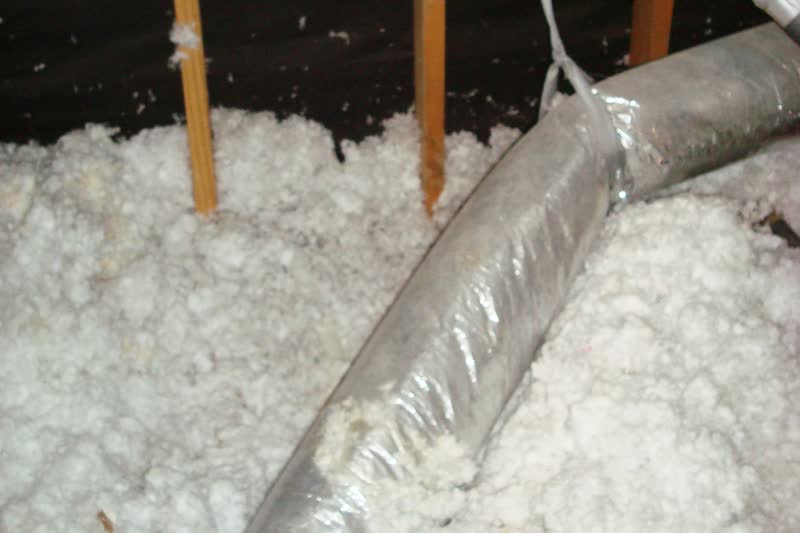
Blown-in attic insulation starts with the ceiling under it. Gaps in the ceiling are closed first, baffles hold the soffit vents open, and loose-fill fiberglass is blown across the floor to one level depth, over any dry, clean insulation that's already there. Insulation Pros works on homes across North Carolina, and a Statesville attic is priced the way we price one anywhere in the state: from the square footage, or from the footprint when you send the address.
See all of our insulation services in Statesville.
Monday to Sunday 8:00 am to 5:00 pm.
Attic insulation, removal, air sealing and more. Open one to see how the work goes.
Blown-in fiberglass attic insulation, added to the depth your home needs, to even out hot and cold rooms and cut wasted heating and cooling.
Old, wet, matted or animal-soiled attic insulation vacuumed out, so new insulation can go in on a clean, sealed attic floor.
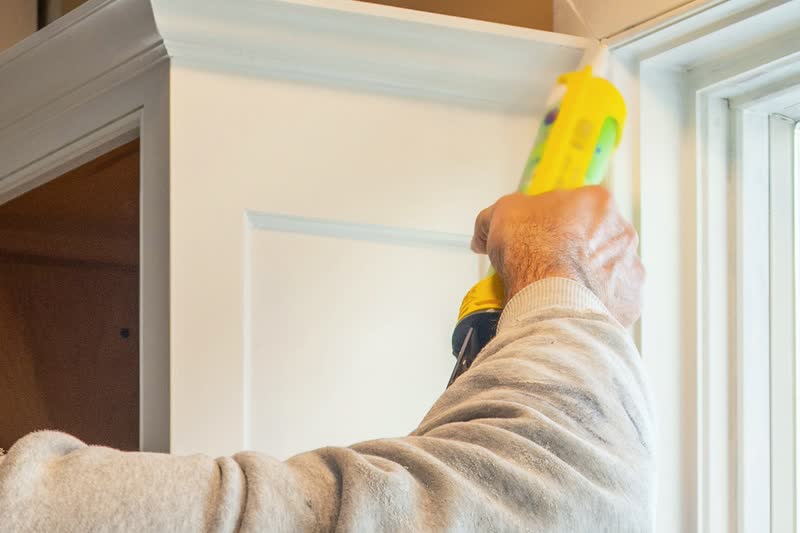
Sealing the gaps between your rooms and the attic, and leaky ductwork, so the air you pay to heat and cool stays inside.
Insulation blown into the closed walls of an existing house, batts in open walls for additions, remodels and new builds, and garage walls and ceilings.
Insulation for the garage ceiling under a bonus room, the wall shared with the house and the garage attic, with air leaks sealed first.
Floor insulation under the house: wet or fallen insulation pulled out, new batts between the floor joists, plastic over the dirt and the floor leaks sealed.
Savings vary. Find out why in the seller's fact sheet on R-values. Higher R-values mean greater insulating power. In blown-in fiberglass, the attic insulation we install, ENERGY STAR's estimating figure puts R-38 at about 15 inches, R-49 at about 20 and R-60 at about 24; the coverage chart of the product used gives the exact installed thickness for each R-value.
North Carolina's 2018 energy code puts Iredell County in climate zone 4. On the 2021 national map it moved to zone 3, as the county tables in a 2022 Department of Energy climate-zone guide show, and ENERGY STAR's insulation chart is drawn from that newer map. For a house that already stands, the zone 3 row reads R-49 for an attic floor with nothing on it and R-38 to add where 3 to 4 inches are already down. The zone 4 row reads R-60 and R-49.
With winter the longer season here, both rows are worth weighing before you settle on a number. The state code's minimum for a new ceiling is R-38, or R-30 if the full R-30 thickness reaches over the wall plates at the eaves without being squeezed. Your estimate picks one target, explains it and says how many settled inches of fiberglass that means. The complete chart is in our R-value guide.
Just under half of the city's housing, about 48 percent, predates 1980, and about one unit in eight predates 1940. Most of them went up before the 1978 insulation rule, the state law that tied moving into a new home to meeting insulation standards. Before then, insulation rules were new, thinly inspected or absent, so the depth in one of those attics can be anything from a few inches of old batts to almost nothing.
Two things put an older attic on hold. ENERGY STAR flags knob-and-tube wiring, the kind used until about 1930, as a possible fire hazard when insulation covers it, so an electrician looks at it first. Granular fill in gray-brown or silver-gold that could be vermiculite is left undisturbed, which is the EPA's advice; our work stops there, and an asbestos professional takes over.
No decade added more of Statesville's current housing than the 2000s, about one unit in six, and roughly 42 percent of all of it dates from 1990 or later. Those houses got their insulation from the builder. Twenty or thirty years on, it may have settled, been shoved aside for a cable or HVAC job, or run short over the outside walls, where ENERGY STAR notes an attic can come up thin even when the middle looks deep.
A dry builder's layer stays where it is and is figured into the total. The ceiling under it is sealed, rafter baffles keep the vent openings at the eaves clear, and new fiberglass goes over the top until the depth is the same from the hatch out to the edges. If the joists are already well buried and the depth holds all the way out, the estimate will say the attic is fine.
Fiberglass slows heat, but air moves through it, so the leaks are closed before anything else. The openings that count are in the attic floor: around wires and pipes, where interior walls meet the attic, over dropped soffits and chases, and at the hatch, which is weatherstripped and insulated. Around a metal flue or a chimney, the gap is closed with metal flashing and high-temperature sealant, and a dam keeps the loose fill back.
If ducts run through the attic, their reachable connections and the boots behind each ceiling register are sealed with duct mastic or foil tape made for the job, while they're still uncovered. A crushed or separated duct needs an HVAC company's repair, not tape, and we'll flag it for you.
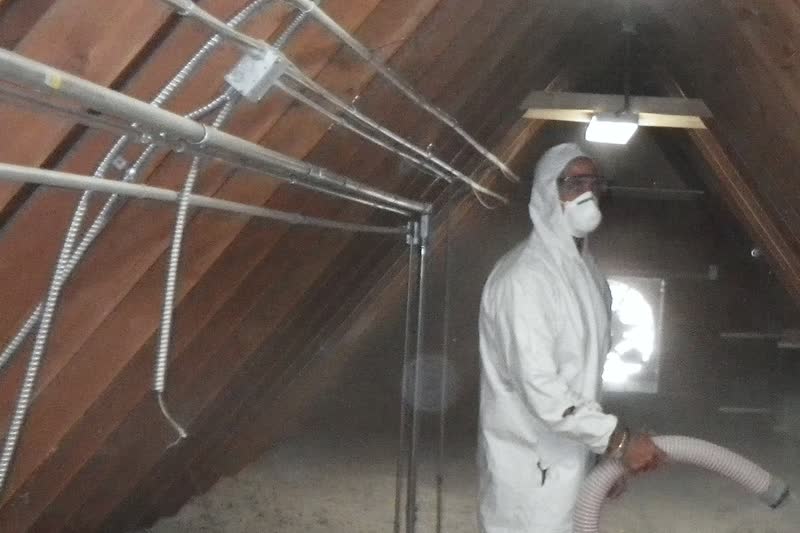
ENERGY STAR's rule of thumb is that old insulation can stay under new unless it's wet, moldy, smelly or holding animal waste. That short list decides when attic insulation removal is worth doing. A roofer stops the leak, or a wildlife control company gets the animals out and closes their way in, before we start. Once the mice are gone, we vacuum out the fouled insulation; the attic is then sanitized and deodorized, its bare ceiling sealed, and new fiberglass blown in. The causes, the order of the work and the refill are covered in more detail under attic insulation removal in Statesville.
Call or text from 8 to 5, seven days a week, or send the contact form. We price from square footage, the house's or the attic's; if you only have an address, we work out the size from the footprint. Add the year the house went up, as near as you know it, and what's bothering you, whether it's a cold floor over the garage, a high winter bill or a stain on a ceiling. Most Statesville homes can be priced from that with no appointment. An attic with old wiring or what might be vermiculite can call for a special visit before pricing.
Your written estimate names the R-value target and settled depth, then the air sealing, any duct sealing and any removal on lines of their own, and the total. If you're weighing quotes from more than one insulation company, ask each for those same lines. This page lists no prices because the attic sets them; our cost guide explains what moves the number. When the job is done, the FTC's R-value Rule gives you a receipt showing the area covered, the installed thickness, the R-value and the number of bags.
Each page has local notes on the homes and attics in that town.
14 miles south, in Iredell County
About 47 percent of homes heat with electricity; Statesville: about 55 percent
Insulation company serving Mooresville19 miles northeast, in Davie County
About 71 percent of homes heat with electricity; Statesville: about 55 percent
Insulation contractor in Mocksville23 miles east, in Rowan County
About 58 percent of homes heat with electricity; Statesville: about 55 percent
Insulation company serving Salisbury25 miles southeast, in Cabarrus County
About 56 percent of homes heat with electricity; Statesville: about 55 percent
Insulation contractor in KannapolisAlso in Iredell County: Harmony, Love Valley, and Troutman. Every town in Iredell County. See all service areas.
Local service pages near Statesville: Attic Insulation in Mooresville, Attic Insulation in Mocksville, Attic Insulation in Salisbury, Attic Insulation in Kannapolis, Attic Insulation in Concord, Attic Insulation in Clemmons, Attic Insulation in Lewisville, Attic Insulation in Lexington, Attic Insulation in Charlotte, Attic Insulation Removal in Mooresville, Attic Insulation Removal in Mocksville, Attic Insulation Removal in Salisbury, Attic Insulation Removal in Kannapolis, Attic Insulation Removal in Concord, Attic Insulation Removal in Clemmons, Attic Insulation Removal in Lewisville.
Inside the city, power comes from Statesville's own electric system, and through the ElectriCities network of public power towns its customers can get a home energy audit; the city's utility office can tell you how to ask. Some Iredell County homes are on Duke Energy or EnergyUnited instead, so check your bill. If it says Duke Energy, its rebate for attic insulation with air sealing has to go through a contractor in Duke's network. Households that qualify by income can also apply to the state's Weatherization Assistance Program, run through local agencies. Terms differ from program to program.
Check before the job is scheduled. The Iredell County Building Standards Division is the county's building office, and either it or the City of Statesville can say which office covers your address and whether adding insulation on its own calls for a permit there. If wiring, ductwork or the roof is part of the same project, mention that, since it can change the answer.
The crew goes over the attic with you first: the depth, the air leaks, any moisture or signs of pests, and the ducts. If something up there changes the job, you hear about it before work starts. Then the ceiling leaks are sealed, baffles and dams go in, and the fiberglass is blown to the agreed depth. Our guide to what happens on attic insulation install day goes through each step.
Attic Insulation
There is no price list here, on purpose. See the seven things that move attic insulation cost up or down, why a per-square-foot number misleads and how to compare two written estimates line by line.
Attic Insulation
Houses built before the state's 1978 insulation inspection law can have little in the attic and nothing in the walls. See how old the homes in your county are, the safety checks to make first, the leaks old framing hides and the order to do the work in.
Census survey for Statesville, 2020 to 2024, NOAA 1991 to 2020 normals, Statesville 2 NNE, Guide to Determining Climate Zones by County, PNNL for the U.S. Department of Energy (2022), ENERGY STAR recommended insulation R-values, North Carolina energy code (NC Office of State Fire Marshal), The 1978 insulation statute, G.S. 143-139.2, ENERGY STAR attic insulation project, ENERGY STAR on adding attic insulation, ENERGY STAR on hiring an attic insulation contractor, EPA on vermiculite insulation, ElectriCities residential services, Iredell County Building Standards Division (October 2026). Compiled by Insulation Pros. How the town pages are made.
Statesville, NC
Open in Google Maps (opens in a new tab)Insulation Pros is an insulation contractor serving North Carolina, and Statesville homes are part of that. Most attics in the city can be priced from the size of the house.
Heating season is the long one in Statesville. Send the square footage of your house and get a free written estimate for only the attic work it needs.
What You Can Count On
We serve homes across North Carolina. Listed here: the Triad area first, then the big cities.
Davidson County
Guilford County
Forsyth County
Rowan County
Across the State