Vermiculite Attic Insulation: What to Know
Old attic insulation can be judged by one question: is it dry, clean and deep enough? Vermiculite is judged by a different one. It is a loose, pebbly fill that went into attics and walls for much of the last century, and a large share of it came from a mine that was contaminated with asbestos. So before anyone talks about R-values, it needs to be identified and left alone.
This guide covers how to recognize it from the hatch, where it came from, what the EPA tells homeowners to do and not do, what it says about testing, who handles asbestos work in North Carolina, and what all of it means if you want a better-insulated attic. Insulation Pros does not remove vermiculite. We blow in new insulation once an asbestos professional has cleared it out. If it was flagged on a home inspection report, our guide to attic insulation on a home inspection report covers the report's other attic notes too.

How to Recognize Vermiculite in the Attic
Look without touching. From the hatch or the top of the pull-down stairs, shine a light across the attic floor. The EPA describes vermiculite insulation as a pebble-like, pour-in product, usually gray-brown or silver-gold in color. It sits loose between the joists, more like a layer of small stones or flakes than the fluffy or papery stuff you may picture as insulation.

The EPA's vermiculite page has photographs to hold up against what you see. Compare from where you stand, and leave the material exactly as it is. Do not scoop up a handful to look closer, and do not walk out across it for a better view.
What it is not
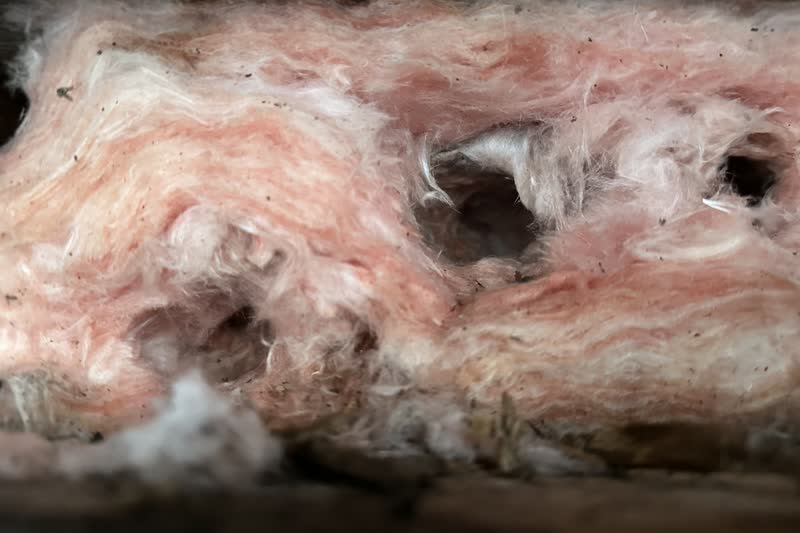
Fiberglass is fibers, yellow, pink or white, whether it lies as batts or as loose fill. Cellulose is small gray flecks that look like shredded newspaper. If pebbles show anywhere, even under a newer fluffy layer, follow the EPA advice below for the whole attic. You are not expected to make the call with certainty, and the EPA does not ask you to.
In the walls, too
Vermiculite was also poured into some wall cavities. The EPA's advice covers it there as well: leave it undisturbed in the attic or in the walls. It also says it does not recommend opening your walls to check for it. That matters before any wall work, because drilling a wall to blow insulation in disturbs whatever the cavity holds. If the attic has vermiculite, ask an asbestos professional about the walls before anyone drills them.
Where Most Vermiculite Came From: the Libby Mine
Vermiculite itself is a mineral. The trouble is where most of it was mined. According to the EPA, a mine near Libby, Montana supplied over 70 percent of all the vermiculite sold in the United States from 1919 to 1990, and the vermiculite from Libby was contaminated with asbestos. The EPA adds that Libby vermiculite went into the majority of vermiculite insulation, often sold under the brand name Zonolite. About a third of North Carolina's housing was built before 1980, and our guide on how old homes in North Carolina are has the Census figures by county.

That history is why the EPA does not ask you to work out where your attic's vermiculite came from. Its advice is to assume it may contain asbestos and act on that. If it does prove to be Zonolite, a trust set up under a court settlement may pay back part of the cost of having it removed. The Zonolite section of our guide on whether to remove old attic insulation or top it up explains who can claim and how.
Rather Talk It Through Than Read?
Call (336) 780-7227Monday to Sunday 8:00 am to 5:00 pm.
What the EPA Tells Homeowners to Do
The EPA states that asbestos causes cancer and other diseases, and that there is no known safe level of asbestos exposure. Its advice for a home with vermiculite insulation is practical, and most of it comes down to not stirring the material up:
- Leave the vermiculite undisturbed, in the attic and in the walls.
- Do not store boxes or anything else in an attic that has it.
- Do not let children play up there.
- Do not try to remove it yourself.
- If you have to go into the attic, make fewer trips and keep each one short.
- If you plan a remodel or renovation that would disturb it, hire a professional asbestos contractor to make sure it is handled or removed properly.

Should vermiculite be tested?
Not just to keep yourself safe around it. The EPA says further testing is not necessary to take the right precautions, because so much vermiculite came from Libby and you should already be treating it as if it contains asbestos. It also warns that professional testing of an attic may be expensive and, depending on the methods used, might give wrong results.
What you should never do is take a sample yourself. The EPA's general asbestos guidance says sampling is not recommended for homeowners, and that a sample taken the wrong way can be more hazardous than leaving the material alone. ENERGY STAR's attic insulation page puts the other half of the rule plainly: do not disturb vermiculite insulation unless it has been tested by an approved lab.
So the two fit together. Leaving it alone needs no test. Any work that would disturb it starts with a trained asbestos professional, who decides what sampling is needed and takes it.
Who Handles Asbestos Work in North Carolina
In North Carolina, asbestos work is overseen by the Health Hazards Control Unit, part of the NC Department of Health and Human Services' Division of Public Health. Its Asbestos Hazard Management Program works to reduce asbestos contamination and exposure from demolition and renovation projects. The unit accredits the people who do asbestos management work in the state, issues permits for asbestos removal projects and inspects removal jobs to check the work practices.

The state's page for homeowners says that if you hire an asbestos contractor, you should make sure they have earned North Carolina accreditation, and it links a database where you can look up people by county or by discipline, such as inspector or supervisor. The database itself says to confirm that an accreditation is current before any work begins. The same homeowner page notes that, depending on how much asbestos material is involved, the contractor may have to notify the state or get a permit.
Forsyth County has a local program
Three counties run local programs that enforce the federal asbestos rules for demolition and renovation: Forsyth, Buncombe and Mecklenburg. The state says these local programs should be contacted about requirements for projects in their areas. Forsyth County's is run by its Environmental Assistance and Protection office, so if your home is in Winston-Salem or elsewhere in Forsyth County, the contractor may answer to that office as well as to the state.
One firm to look, another to remove
The EPA separates two kinds of asbestos professional. Inspectors inspect a home, assess its condition, take samples for testing and advise on what needs correcting. Contractors repair or remove the material. The EPA says it is better to use two different firms, so there is no conflict of interest, and that state agencies keep the most up-to-date lists of asbestos professionals who hold accreditation in your area. Questions worth asking each firm:
- Does each person on the job hold current North Carolina accreditation, and in which discipline? Check the names in the state's database.
- Will you assess the attic, or remove the vermiculite? If both, why?
- Does the job need a state notification or permit, and who files it?
- What will the attic look like when you leave: is the floor bare and clear between the joists?
- Is there any vermiculite in the walls, and what do you recommend for it?
What Vermiculite Means for Your Attic Insulation
Vermiculite puts the insulation work on hold, but it does not rule it out. We don't vacuum out vermiculite, and we don't work around it. If we find it, whether before the job or on install day, we stop, tell you what we saw and leave the next step to an asbestos professional.

Once that professional has cleared the vermiculite out, the attic can be air sealed and insulated like any other. The air leaks in the ceiling get sealed first: around pipes and wires, along the tops of interior walls and at open chases. Baffles go in at the eaves so the soffit vents stay clear, and then new blown fiberglass goes down to an even depth across the whole floor. Our guide on why air sealing comes before insulation explains the order.
Getting a price
If you think you have vermiculite, say so when you call. We will point you to a qualified professional first, and we can price the insulation for after. Like most attics, it can usually be priced from the home's square footage, with a special visit only when an attic needs a closer look. The estimate is free and in writing, and it names the R-value the finished attic will reach.
Get a Free Estimate
Found pebble-like fill in the attic, or not sure what's up there? Tell us when you call. We'll point you to an asbestos professional first, and price the new insulation for when the attic is clear.

Prefer to talk? Call (336) 780-7227.