Attic Insulation
Blown-in fiberglass attic insulation, added to the depth your home needs, to even out hot and cold rooms and cut wasted heating and cooling.
Mill cottage or 2010s build: when a leak, mice or smoke ruins a Kannapolis attic's insulation, a roofer or a wildlife control company tackles the cause, then we vacuum it out, seal and refill. Free estimates.
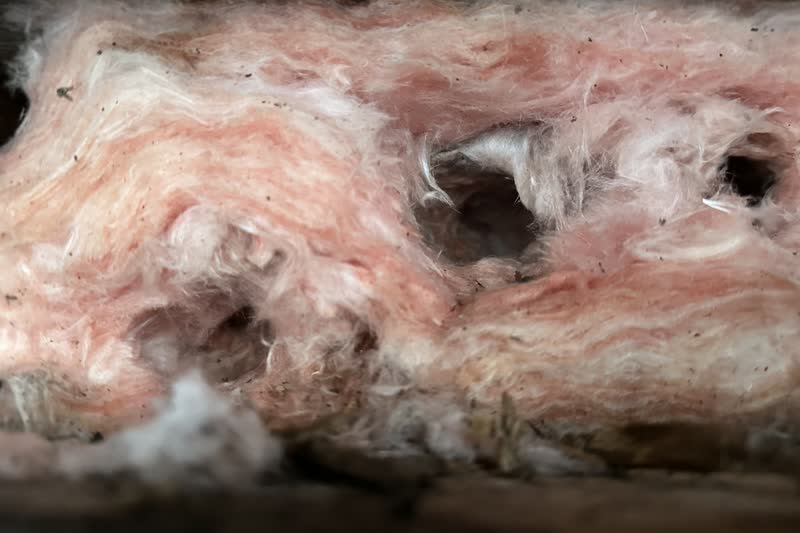
ENERGY STAR's advice for anyone hiring an attic insulation contractor is that old insulation may stay under new unless it's damp, moldy, smelly or fouled with animal waste. Age alone doesn't decide it. A 1920s mill cottage with a dry, clean layer can keep that layer, while a house built in the 2010s may need its insulation out after one roof leak. If yours is sound and only thin, a top-up is the job, described in full under attic insulation in Kannapolis.
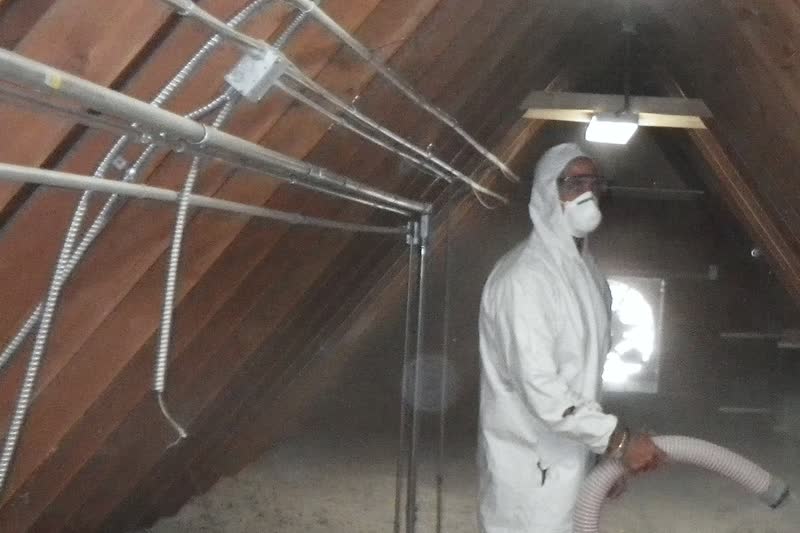
When it's spoiled, attic insulation removal comes first. With the old insulation vacuumed out, the attic is sanitized and deodorized if mice have been in it; then the floor's air leaks are sealed and baffles are fitted at the eaves. Fresh fiberglass then goes back in at the R-value written on your estimate. If you'd like the old layer gone and nothing added for now, we'll do that as well.
See all of our insulation services in Kannapolis.

Monday to Sunday 8:00 am to 5:00 pm.
Attic insulation, removal, air sealing and more. Open one to see how the work goes.
Blown-in fiberglass attic insulation, added to the depth your home needs, to even out hot and cold rooms and cut wasted heating and cooling.
Old, wet, matted or animal-soiled attic insulation vacuumed out, so new insulation can go in on a clean, sealed attic floor.
Sealing the gaps between your rooms and the attic, and leaky ductwork, so the air you pay to heat and cool stays inside.
Insulation blown into the closed walls of an existing house, batts in open walls for additions, remodels and new builds, and garage walls and ceilings.
Insulation for the garage ceiling under a bonus room, the wall shared with the house and the garage attic, with air leaks sealed first.
Floor insulation under the house: wet or fallen insulation pulled out, new batts between the floor joists, plastic over the dirt and the floor leaks sealed.
Savings vary. Find out why in the seller's fact sheet on R-values. Higher R-values mean greater insulating power. In blown-in fiberglass, the attic insulation we install, ENERGY STAR's estimating figure puts R-49 at about 20 inches; the coverage chart of the product used gives the exact installed thickness for each R-value.
Water gets in from above or below. Rain finding its way past flashing, a vent pipe or a chimney can soak one spot in the insulation for many storms before a stain ever marks the ceiling under it. To ENERGY STAR, damp insulation points to a roof leak, which has to be repaired before any insulation work; the repair is a roofer's. Below the insulation, a bath fan that empties into the attic instead of outdoors adds warm, wet air with every shower. The Peeler House's National Register nomination notes that Cannon Mills began selling the mill village homes in the 1980s and that many have been remodeled, so in a remodeled house it's worth tracing where each bath fan ends. When a bath fan's duct stops in the attic, carrying it through to the outdoors is our job, done alongside the insulation.
Mice and squirrels make nests in insulation and foul it as they go. Getting them out and shutting the holes they use belongs to a wildlife control company, not to us, and that has to be done before new insulation goes in, or the fresh layer just gives them somewhere new to nest. Once the mice are gone, we take out what they soiled by vacuum, and the attic is sanitized and deodorized. Smoke from a house fire is another reason: insulation holding soot or a smoky smell is vacuumed out, not buried under new material.
The same nomination describes the typical Cannon mill home as a one-story side-gable cottage with a rear ell and shed wings, a plain front-gable bungalow, or a double-pile cottage under a pyramidal or high-hipped roof. In a cottage with an ell and shed wings, the main roof, the ell and each wing can each cover an attic space of its own.
That layout helps when something has gone wrong. Water from a leak in the ell's roof, or mice that got in through a shed wing, may have ruined one of those spaces while the main attic stayed dry and clean. In that case the ruined space alone is emptied, and the rest is topped up or left as it is. Under a pyramidal or high-hipped roof the headroom drops along all four walls, so the edges take the longest to clear. A photo from every hatch the house has helps us price it; if a section has no hatch at all, say so, because pricing it fairly may take a special visit.
One kind of old fill is never ours to vacuum. In an attic, vermiculite is loose, pebble-like fill, gray-brown or silver-gold, lying between the joists. By the EPA's count, a single mine near Libby, Montana, whose deposit included asbestos, was the source of more than 70 percent of U.S. vermiculite sales between 1919 and 1990, and about half of Kannapolis housing was built before 1990, by Census Bureau estimates. The EPA's guidance is to treat vermiculite as if it contains asbestos and leave it undisturbed, and ENERGY STAR says not to touch it before a sample has been tested by an approved lab.
If we find it, whether in your photos or on install day, the work stops and you hear what we saw. An asbestos professional with North Carolina accreditation tests it and handles it from there; our vermiculite guide explains how to look one up in the state's database. Once that work is done and the attic is clear, we can seal the bare floor and insulate it, and that estimate is free.
With the floor bare, each gap shows plainly, and ENERGY STAR expects the leaks there closed before insulation goes back in: each pipe and wire hole, every light fixture box, the top plates of the inside walls and the hatch. ENERGY STAR also cites the usual code clearances, 1 inch of clearance at a metal flue and 2 inches at a masonry chimney, so the gap at each is covered with metal flashing and sealed with heat-rated caulk instead of being stuffed with insulation, and a sheet-metal dam keeps the new fiberglass back. Baffles set at the eaves hold a channel open from each soffit vent above the refill.
Cabarrus and Rowan counties both sit in climate zone 3, and once the floor is bare, ENERGY STAR's chart for that zone calls for R-49. The estimate shows the removal and the refill as two separate prices, so you can weigh each one. Afterward, the FTC's R-value Rule gives you a right to paperwork recording how many square feet were covered, how thick the new layer went in, the R-value reached and the bags used.
Each page has local notes on the homes and attics in that town.
Cabarrus County, about 6 miles south
About 46 percent of homes heat with gas; Kannapolis: about 41 percent
Insulation company serving ConcordIredell County, about 12 miles northwest
About 51 percent of homes heat with gas; Kannapolis: about 41 percent
Insulation company serving MooresvilleRowan County, about 16 miles northeast
About 37 percent of homes heat with gas; Kannapolis: about 41 percent
Insulation company serving SalisburyIredell County, about 25 miles northwest
About 42 percent of homes heat with gas; Kannapolis: about 41 percent
Insulation contractor in StatesvilleAlso in Cabarrus County: Harrisburg, Midland, and Mount Pleasant. Every town in Cabarrus County. See all service areas.
Local service pages near Kannapolis: Attic Insulation Removal in Concord, Attic Insulation Removal in Mooresville, Attic Insulation Removal in Salisbury, Attic Insulation in Charlotte, Attic Insulation Removal in Statesville, Attic Insulation in Albemarle, Attic Insulation Removal in Mocksville, Attic Insulation Removal in Lexington, Attic Insulation in Concord, Attic Insulation in Mooresville, Attic Insulation in Salisbury, Attic Insulation in Statesville, Attic Insulation in Mocksville, Attic Insulation in Lexington.
Your attic, which is why no figure is printed here. The removal depends on how much old material there is (the area of the floor times its depth), whether it's batts or loose-fill, and how soiled it is. A mill cottage with an ell and shed wings, a low hipped edge or a tight hatch adds time, and when only one section is spoiled, only that section is priced for removal. The sealing, the baffles and the refill make up a second part of the estimate, and you can leave that part off if removal alone is what you want. The estimate is free.
The mice have to go first, and that's a wildlife control company's job: catching them and sealing the gaps they come through isn't work we do. Until it's finished, leave the soiled insulation where it lies. Once the mice are gone, the fouled layer is vacuumed up, the attic is sanitized and deodorized, and only after that is the ceiling sealed and the attic refilled.
Yes. If it's dry and clean, only thin or flattened, the estimate says so, and the job becomes sealing and a top-up over it. Pulling out sound insulation only to put new in its place gains you little, and we don't sell removals an attic doesn't need.
In most cases, yes. Between 8 and 5, call or text us on whichever day suits you, or send the contact form at any hour. Include the square footage, or the street address, from which we work out the footprint, and describe what you've found, such as a stain on a ceiling, droppings near the hatch or a musty or smoky smell. For a mill cottage, mention a rear ell, shed wings and how many hatches there are. Photos help. When a removal can't be priced fairly that way, we arrange a special visit first.
Attic Insulation
Sound old attic insulation can stay under a fresh top-up. Wet, moldy, animal-soiled or smoke-damaged material cannot. Learn how to tell the difference, what removal involves and what to do about vermiculite.
Attic Insulation
Gray-brown or silver-gold pebbles between the joists change the plan for an attic. How to recognize vermiculite, what the EPA tells homeowners to do, who handles asbestos work in North Carolina, and when new insulation can go in.
Census survey for Kannapolis, 2020 to 2024, Harvey Jeremiah Peeler House, National Register nomination (NC HPO), ENERGY STAR on hiring an attic insulation contractor, ENERGY STAR attic insulation project, ENERGY STAR attic air sealing project, ENERGY STAR on sealing furnace flues and chimneys, ENERGY STAR recommended insulation R-values, Guide to Determining Climate Zones by County, PNNL for the U.S. Department of Energy (2022), North Carolina energy code (NC Office of State Fire Marshal), EPA on vermiculite insulation, FTC R-value Rule, 16 CFR 460.17 (October and November 2026). Compiled by Insulation Pros. How the town pages are made.
Kannapolis, NC
Open in Google Maps (opens in a new tab)Insulation Pros is an insulation contractor serving North Carolina, Kannapolis homes in Cabarrus and Rowan alike. Send the square footage and what you've seen, and most removals get a price with no visit.
One wet corner over the back ell, or droppings from the hatch to the eaves? Tell us what you've found in your Kannapolis attic and we'll price only the insulation that must come out, with a free estimate.
What You Can Count On
We serve homes across North Carolina. Listed here: the Triad area first, then the big cities.
Davidson County
Guilford County
Forsyth County
Rowan County
Across the State