
Attic Insulation
Blown-in fiberglass attic insulation, added to the depth your home needs, to even out hot and cold rooms and cut wasted heating and cooling.
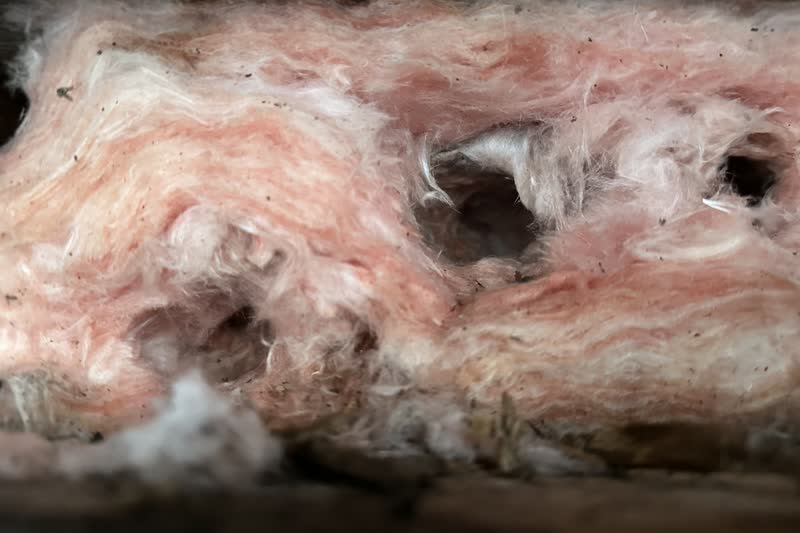
Roof leaks, mice and smoke ruin attic insulation in Statesville. Once the cause is stopped (a roofer for leaks, a wildlife control company for mice), we vacuum out the spoiled layer, seal the ceiling and refill. Free estimates.
One in four of Statesville's housing units dates from before 1960, and half from before about 1982, by Census Bureau estimates for 2020 to 2024. But age alone won't tell you whether a house's insulation has to go. ENERGY STAR's guidance lets existing insulation stay beneath a new layer except in four cases: it's wet, it has mold on it, it has picked up a smell, or animals have left waste in it. Thin but clean insulation calls for a top-up, which our attic insulation in Statesville page explains.
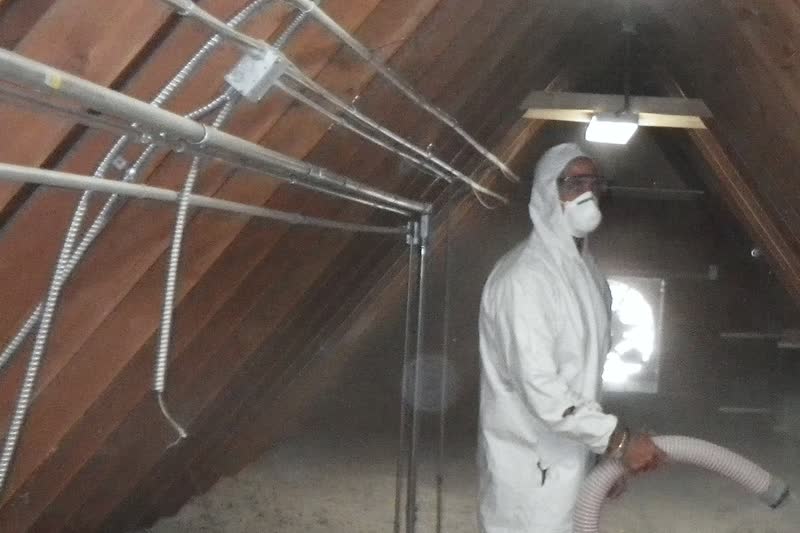
Those four cases are what attic insulation removal is for: old insulation vacuumed out, any attic the mice have used sanitized and deodorized, and every gap in the emptied ceiling sealed. Fresh fiberglass is then blown across the floor until it reaches the target in your estimate.
See all of our insulation services in Statesville.
Monday to Sunday 8:00 am to 5:00 pm.
Attic insulation, removal, air sealing and more. Open one to see how the work goes.
Blown-in fiberglass attic insulation, added to the depth your home needs, to even out hot and cold rooms and cut wasted heating and cooling.
Old, wet, matted or animal-soiled attic insulation vacuumed out, so new insulation can go in on a clean, sealed attic floor.
Sealing the gaps between your rooms and the attic, and leaky ductwork, so the air you pay to heat and cool stays inside.
Insulation blown into the closed walls of an existing house, batts in open walls for additions, remodels and new builds, and garage walls and ceilings.
Insulation for the garage ceiling under a bonus room, the wall shared with the house and the garage attic, with air leaks sealed first.
Floor insulation under the house: wet or fallen insulation pulled out, new batts between the floor joists, plastic over the dirt and the floor leaks sealed.
Savings vary. Find out why in the seller's fact sheet on R-values. Higher R-values mean greater insulating power. In blown-in fiberglass, the attic insulation we install, ENERGY STAR's estimating figure puts R-49 at about 20 inches and R-60 at about 24; the coverage chart of the product used gives the exact installed thickness for each R-value.
Roof water is patient. A cracked boot on a vent pipe, worn flashing at a chimney or a leaky valley can wet the same few square feet of insulation through a long run of storms, and the ceiling below may show nothing for a while. In ENERGY STAR's reading, insulation that's damp points to a roof needing repair before any insulation work, and that repair is a roofer's.
Some damage starts indoors. A bathroom fan is meant to vent outside; if its duct ends in the open attic, or has pulled loose at the roof, every shower sends humid air up there, and on a cold night the roof boards can chill that moisture until it drips back down. We carry a duct like that all the way outside before the new layer goes down. If a kitchen or dryer vent stops there too, we'll point it out.
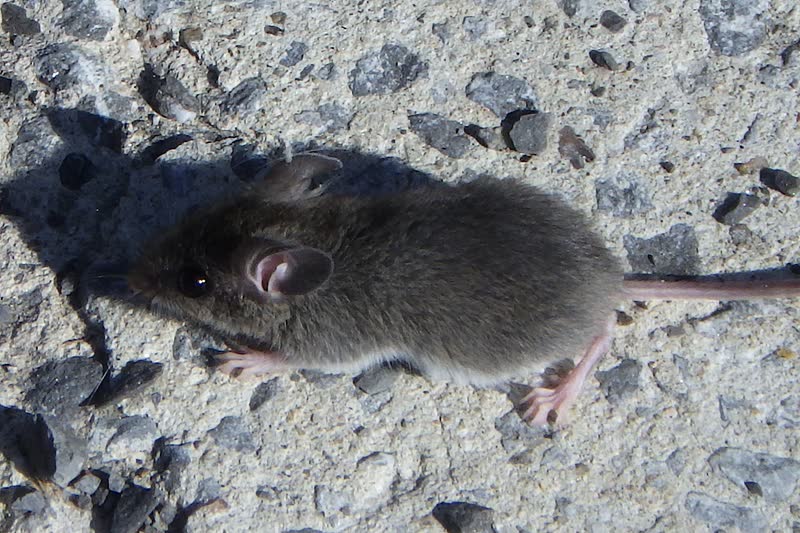
Animals do the rest. Mice and squirrels dig runs through loose-fill, bed down by the eaves and foul what they touch, and animal waste is one of ENERGY STAR's four exceptions. Removing them and blocking their way back in belongs to a wildlife control company, and we won't start until it's done. Once the mice are gone, the soiled insulation goes out through our vacuum hose, and the whole space is sanitized and deodorized before any new fiberglass goes in. Smoke is handled the same way: after a house fire, insulation that holds soot or a smoky odor is taken out rather than buried, since a new layer on top would keep the smell in the house.
Statesville's first cotton mill went up in 1893 beside the Southern Railway, and the South Race Street neighborhood grew up near it from 1894 into the 1930s, its National Register nomination records. The houses there were mostly frame and built one at a time. The types it lists as most common are the I-house, the double-pile cottage under a hip roof and the side-gable cottage with a center gable, and one-story hip-roofed and side-gable cottages were common designs for mill workers.
Under a hip roof the eaves run around the whole house, so the attic narrows to a low wedge at every outside wall, and a cramped space slows each step of a removal. Where mice bedded down along the eaves or a leak soaked a corner, that wedge is the slowest part to clear. Once it's bare, baffles go in wherever the eaves have soffit vents, so the new layer can reach the wall plates and the vents stay open.
The nomination also points to I-houses there that still have one- and two-story ells at the back. If an ell sits under a separate roof, the space beneath it may be an attic apart from the main one, and a leak or mice may have ruined that space alone. Only the ruined space comes out then. Mention an ell without a hatch when you call, since it can mean a special visit before the estimate.
Two discoveries put the work on hold. One is knob-and-tube, the cloth-covered wiring on ceramic knobs that ENERGY STAR places before about 1930. Burying it in insulation risks a fire, by ENERGY STAR's account, so an electrician has to see any that turns up before new fiberglass goes near it. In the Mitchell College Historic District, west of downtown, about four in five buildings were standing by 1930, its nomination counts. The other is vermiculite, a pour-in fill of small pebble-like pieces, gray-brown or silver-gold. The EPA says to assume it holds asbestos and to leave it alone. Testing it and handling it are jobs for an asbestos professional holding North Carolina accreditation; we don't remove vermiculite or vacuum around it, and our part waits until the attic is cleared.
A removal can be partial. If the damage is confined to one spot, under a leak or around one nest, we take out that area and leave the good insulation beside it, then blow one new layer across the entire floor so the depth comes out even. In a one-story ranch every room's ceiling faces the same attic, so a soaked corner may be the only part that has to go.
Duplexes take one more look. Census estimates put about 10 percent of Statesville's housing units in buildings with two to four homes, and in the Garfield and Green Streets Historic District, its nomination records front-gabled duplexes from about 1941 to 1959, each with a pair of front doors. Under a shared roof the attic may be open from end to end or divided by a wall. If it's open, mice seen over one unit may have tunneled to the other side under the surface, so a photo from each hatch helps show how far the damage goes.
ENERGY STAR wants the attic floor's air leaks sealed before insulation goes in, and with nothing on the floor they're easy to reach: wiring and plumbing holes, light fixtures, the hatch (weatherstripped as well) and any wall top left open. Census figures show about 42 percent of Statesville homes heating with piped gas, and the exhaust pipe of a gas-fired furnace or water heater may pass up through the attic floor. The gap around that pipe gets sheet-metal flashing and heat-rated caulk, not insulation, and a sheet-metal dam holds the fiberglass back. Recessed lights without an IC (insulation-contact) rating get the 3 inches of space ENERGY STAR asks for.
Then comes the refill, and two maps apply. R-49 is ENERGY STAR's figure for a bare attic floor in zone 3, where the 2021 national map behind its chart puts Iredell County. North Carolina's energy code map makes the county zone 4, and the chart's figure there is R-60. We'll write the target we recommend on the estimate; the full table is in our R-value guide. The removal and the refill appear as two lines. After the job you're owed a receipt, a requirement of the FTC's R-value Rule, giving the square footage insulated, the installed depth, the R-value reached and the bag count.
Each page has local notes on the homes and attics in that town.
Iredell County, about 14 miles to the south
About 42 percent of occupied homes rented; Statesville: about 48 percent
Insulation company serving MooresvilleDavie County, about 19 miles to the northeast
About 38 percent of occupied homes rented; Statesville: about 48 percent
Insulation contractor in MocksvilleRowan County, about 23 miles to the east
About 48 percent of occupied homes rented; Statesville: about 48 percent
Insulation company serving SalisburyCabarrus County, about 25 miles to the southeast
About 34 percent of occupied homes rented; Statesville: about 48 percent
Insulation contractor in KannapolisAlso in Iredell County: Harmony, Love Valley, and Troutman. Every town in Iredell County. See all service areas.
Local service pages near Statesville: Attic Insulation Removal in Mooresville, Attic Insulation Removal in Mocksville, Attic Insulation Removal in Salisbury, Attic Insulation Removal in Kannapolis, Attic Insulation Removal in Concord, Attic Insulation Removal in Clemmons, Attic Insulation Removal in Lewisville, Attic Insulation Removal in Lexington, Attic Insulation in Charlotte, Attic Insulation in Mooresville, Attic Insulation in Mocksville, Attic Insulation in Salisbury, Attic Insulation in Kannapolis, Attic Insulation in Concord, Attic Insulation in Clemmons, Attic Insulation in Lewisville.
No two attics come out the same, so there's no number on this page. How much material leaves sets the base: how many square feet the damage covers and how deep the old layer is. Batts are pulled differently from loose-fill, and soiled material needs more care. A hip roof's low edges, an ell's separate attic, knee-wall spaces or a small hatch add time. If only part of the floor is ruined, only that part is counted. Sealing, baffles and the new layer are the second half, which you can leave off if you want the removal alone. The estimate itself is free.
After the wildlife control company. Catching the animals and blocking their entry points is that company's work; we don't do it, and new insulation laid before it's done just becomes bedding. Leave the fouled layer alone until then. Our crew starts once the mice are gone: whatever they soiled is vacuumed out, everything up there is sanitized and deodorized, gaps in the bare ceiling get sealed, and new fiberglass is blown in.
As the owner, you book it; the Census Bureau estimates that renters live in about 48 percent of the occupied homes in Statesville. Tell us how big the house is, or just where it is, plus what the tenant has reported, such as droppings, a ceiling stain or an odor by the hatch, and any photos they can take from the hatch. Animals mean the wildlife control company comes in before we do. You'll get an estimate with the removal and the refill priced apart, and both decisions stay with you.
In most cases, yes. Our phone hours are 8 to 5, all week, for calls and texts, and the contact form takes a message anytime. Give the size of the house in square feet, or its address so we can measure the footprint, plus what you've spotted and a few hatch photos if you can get them. An ell, upstairs knee walls or a second hatch is worth a mention. If that still isn't enough to judge the attic, a special visit comes before the price. Before any old insulation is vacuumed out, the crew goes over the attic with you.
Yes, if that's what you want; the removal can stand as its own job. Don't leave the floor empty long, though. With nothing over the ceiling, heat from the rooms escapes freely, and NOAA's normals for its Statesville 2 NNE station show about 63 nights a winter at 32 degrees or lower, December through February. Getting both halves priced together, on separate lines, lets you pick when the second half happens.
Attic Insulation
Sound old attic insulation can stay under a fresh top-up. Wet, moldy, animal-soiled or smoke-damaged material cannot. Learn how to tell the difference, what removal involves and what to do about vermiculite.
Attic Insulation
Droppings or tunnels in the insulation? Learn who removes the animals in North Carolina, how the CDC says to clean up, when soiled insulation must come out and why the ceiling is sealed before new insulation goes in.
Census survey for Statesville, 2020 to 2024, NOAA 1991 to 2020 normals, Statesville 2 NNE, South Race Street Historic District, National Register nomination, Mitchell College Historic District, National Register nomination, Garfield and Green Streets Historic District, National Register nomination, ENERGY STAR on hiring an attic insulation contractor, ENERGY STAR attic insulation project, ENERGY STAR attic air sealing project, ENERGY STAR on sealing furnace flues and chimneys, ENERGY STAR recommended insulation R-values, Guide to Determining Climate Zones by County, PNNL for the U.S. Department of Energy (2022), North Carolina energy code (NC Office of State Fire Marshal), EPA on vermiculite insulation, FTC R-value Rule, 16 CFR 460.17 (October and November 2026). Compiled by Insulation Pros. How the town pages are made.
Statesville, NC
Open in Google Maps (opens in a new tab)Insulation Pros is an insulation contractor serving North Carolina. Most Statesville removals need only the house's size and a few photos from the hatch to price.
Droppings near the eaves, a brown ring on an upstairs ceiling, an odd smell at the hatch? Call or text about your Statesville house, or send its square footage and a few photos. You'll learn what needs to come out, or that a top-up would do. Estimates are free.
What You Can Count On
We serve homes across North Carolina. Listed here: the Triad area first, then the big cities.
Davidson County
Guilford County
Forsyth County
Rowan County
Across the State