Attic Insulation
Blown-in fiberglass attic insulation, added to the depth your home needs, to even out hot and cold rooms and cut wasted heating and cooling.
Attic insulation for Albemarle houses of every age, from the mill-boom years to the 2010s. The ceiling's leaks are sealed first, then blown-in fiberglass goes over a sound old layer, or a spoiled one is vacuumed out before anything new goes in. Most attics can be priced from the square footage, and the estimate is free.
Albemarle's housing leans old. Its median home dates from 1966, against 1976 for Stanly County as a whole, and about one housing unit in five predates 1940, the Census Bureau's 2020-2024 survey estimates. About two in three were built before 1980, most of them ahead of the state's 1978 insulation rule.
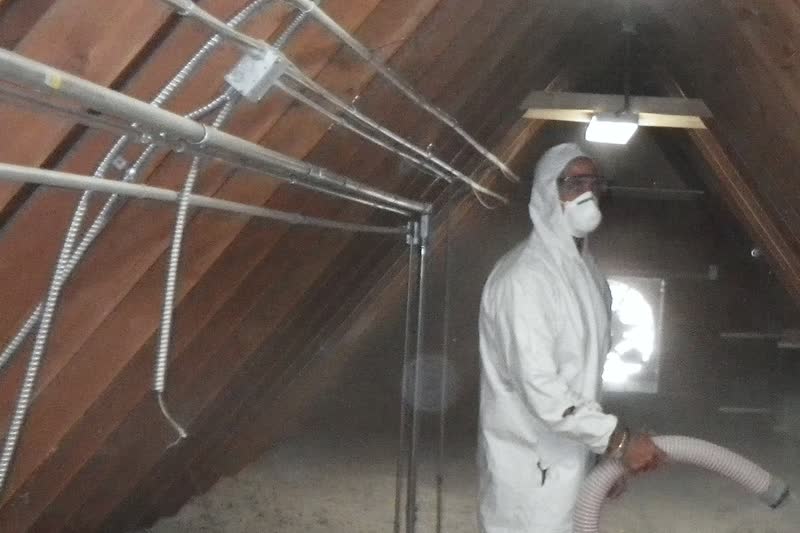
The steps stay the same for any age of house. Ceiling gaps get sealed, baffles are fitted at the soffit vents, and loose-fill fiberglass is blown over any clean, dry insulation in place until the whole floor sits at one even depth. A sound old layer stays and counts toward the total.
Our service area is all of North Carolina, Stanly County included. Send the attic's square footage, or just the street address and we'll measure the footprint, and you'll hear what the attic needs, even when the answer is nothing.
See all of our insulation services in Albemarle.

Monday to Sunday 8:00 am to 5:00 pm.
Attic insulation, removal, air sealing and more. Open one to see how the work goes.
Blown-in fiberglass attic insulation, added to the depth your home needs, to even out hot and cold rooms and cut wasted heating and cooling.
Old, wet, matted or animal-soiled attic insulation vacuumed out, so new insulation can go in on a clean, sealed attic floor.
Sealing the gaps between your rooms and the attic, and leaky ductwork, so the air you pay to heat and cool stays inside.
Insulation blown into the closed walls of an existing house, batts in open walls for additions, remodels and new builds, and garage walls and ceilings.
Insulation for the garage ceiling under a bonus room, the wall shared with the house and the garage attic, with air leaks sealed first.
Floor insulation under the house: wet or fallen insulation pulled out, new batts between the floor joists, plastic over the dirt and the floor leaks sealed.
Savings vary. Find out why in the seller's fact sheet on R-values. Higher R-values mean greater insulating power. In blown-in fiberglass, the attic insulation we install, ENERGY STAR's estimating figure puts R-38 at about 15 inches and R-49 at about 20; the coverage chart of the product used gives the exact installed thickness for each R-value.
Albemarle stayed a small courthouse town until 1891, when the railroad arrived, and the mills came after it. Many of its older houses went up in the building boom that followed. Pee Dee Avenue filled in house by house between about 1891 and 1947, its National Register nomination says, starting with frame Queen Anne houses of two stories and moving on, during the 1920s and the early 1930s, to Colonial Revival houses in brick and to period cottages.
Nothing required the builders of that era to insulate; the state's insulation rule for new houses dates only from 1978. So the attic of an Albemarle house this old could hold a thin original layer, a later top-up or close to nothing, and photos from the hatch are the quickest way to find out which.
Two finds put an older attic on hold. ENERGY STAR flags knob-and-tube wiring, used until about 1930, as a possible fire hazard under insulation, so an electrician checks it first. Pebble-like fill in gray-brown or silver-gold may be vermiculite; the EPA's advice is to assume it holds asbestos and not to disturb it. Our work pauses, and an asbestos professional takes over.
About a quarter of Albemarle's housing units date from the 1950s and 1960s, by the same Census survey. On a low-pitched ranch roof, the problem spot is the edge. The rafters come down close to the ceiling over the outside walls, and ENERGY STAR notes that insulation can be deep at the center of an attic and thin along the eaves.
Baffles are set at the soffits before any fiberglass goes in, letting the new layer run right out to the edge without blocking the vents, and then the whole floor is blown to one depth. ENERGY STAR's quick check works in any of these attics: insulation even with the joist tops, or lower, means more is probably worth adding, while joists you can't see at all suggest there may be enough already. If yours passes, the estimate says so.
Electricity heats about two in three occupied Albemarle homes and piped gas about a quarter, with oil or kerosene in about 6 percent, the Census survey estimates. NOAA's Albemarle station, about 3 miles from the city center, averages roughly twice as many heating degree days as cooling degree days in its 1991 to 2020 normals, so winter is the bigger load, though summer counts too.
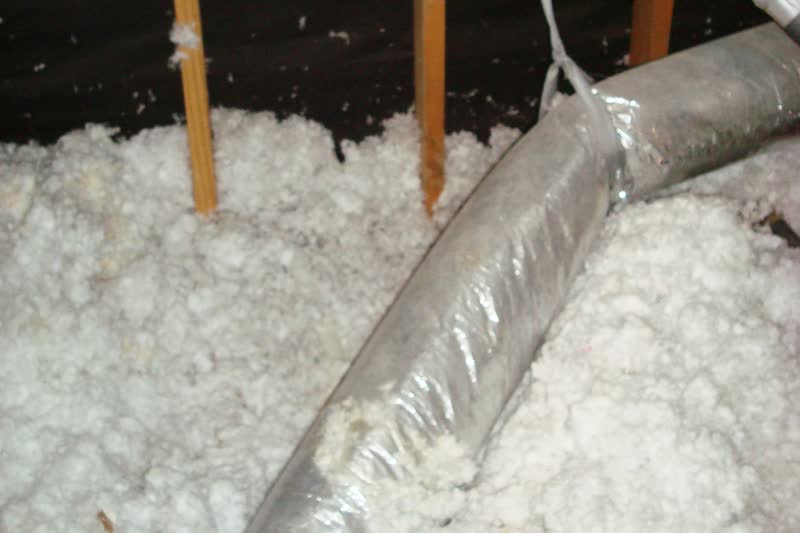
Where a heat pump or furnace moves air through ducts in the attic, those ducts are part of the job. Their reachable joints and seams are sealed with mastic or metal tape before fiberglass covers the floor. A crushed or disconnected run is for a heating and cooling contractor to repair; if we find one, you'll hear about it. The flue of a gas or oil appliance that crosses the attic keeps its clear space: its gap gets a sheet-metal cover sealed with high-temperature caulk, and a metal dam keeps insulation clear of the pipe.
Fiberglass resists heat flow, but air passes through it, so the ceiling is sealed from above first. ENERGY STAR's list of attic air leaks takes in wiring and plumbing holes, the tops of interior walls, recessed lights, dropped soffits over kitchen cabinets and the attic hatch, and each one within reach is closed before any insulation goes down.
A recessed light without an insulation-contact rating keeps the 3 inches of clear space ENERGY STAR calls for. The hatch is weatherstripped and insulated, with a dam around it so the loose-fill stays where it belongs.
Insulation soaked by a roof leak, gone moldy, holding a smell or soiled by squirrels or mice has to come out before anything new goes in. The cause is fixed first: a roofer repairs the leak, and a wildlife control company traps the animals and closes their way in, work we don't do. Once the mice are gone, the ruined layer comes out by vacuum and the attic is sanitized and deodorized; the empty ceiling is then sealed and new fiberglass blown in, the job described on our attic insulation removal page.
Call or text, or use the contact form, with the attic's square footage, or the house's, roughly how old the house is and why you're calling. Most attics can be priced from that with no visit. One that can't be judged that way, such as a house with several roof sections or an attic with no easy way in, may need a special visit first.
Your estimate gives the R-value it aims for and the fiberglass depth, lists air sealing, duct sealing and any removal one by one, then the total. No prices are printed here, since each attic sets its own: the floor area, the depth already in place, the leaks to close and anything that has to come out first. Our cost guide shows how each of those moves the number.

Each page has local notes on the homes and attics in that town.
Stanly County, 5 miles northeast
About 95 percent of homes built before 1980; Albemarle: about 66 percent
Attic insulation in BadinStanly County, 6 miles north
About 74 percent of homes built before 1980; Albemarle: about 66 percent
Attic insulation in New LondonStanly County, 9 miles northwest
About 51 percent of homes built before 1980; Albemarle: about 66 percent
Attic insulation in RichfieldStanly County, 10 miles southeast
About 79 percent of homes built before 1980; Albemarle: about 66 percent
Attic insulation in NorwoodStanly County, 10 miles northwest
About 78 percent of homes built before 1980; Albemarle: about 66 percent
Attic insulation in MisenheimerAlso in Stanly County: Locust, Oakboro, Red Cross, and Stanfield. Every town in Stanly County. See all service areas.
Local service pages near Albemarle: Attic Insulation in Concord, Attic Insulation in Kannapolis, Attic Insulation in Salisbury, Attic Insulation in Lexington, Attic Insulation in Asheboro, Attic Insulation in Charlotte, Attic Insulation Removal in Concord, Attic Insulation Removal in Kannapolis, Attic Insulation Removal in Salisbury, Attic Insulation Removal in Lexington, Attic Insulation Removal in Asheboro.
Stanly County is in climate zone 3 on North Carolina's code map and on the 2021 national map. For a house that already stands in zone 3, ENERGY STAR's chart puts the target at R-49 when the floor is bare and R-38 when 3 to 4 inches are already in place. For a new house, the state code requires R-38 at the ceiling. Your estimate settles on one target and the depth of fiberglass it takes.
Sometimes. The Pee Dee Avenue nomination describes a glazed sun room beside the main block as a pattern repeated across that district, and a wing under its own roof can have an attic of its own, with a different depth from the main one. Photos from each hatch, or a note that a space has none, help us price it. If we still can't tell what each space needs, we set up a special visit first.
If your electric bill comes from the City of Albemarle, its utility is an ElectriCities member, and ElectriCities lists home energy audits for customers of member towns; ask the city's utility office. Piedmont Natural Gas lists rebates for high-efficiency gas furnaces, and none for insulation or air sealing. Income-eligible households can ask about the state's Weatherization Assistance Program through its local providers. Rules and terms vary by program.
Check before the work starts. Stanly County Central Permitting issues the county's permits, and Albemarle City Hall can tell you whether your address goes there, to the city or somewhere else, and whether an insulation job needs a permit in the first place. The answer depends on the office, so we don't print one rule for every street.
Phone or text us 8 to 5, seven days a week; the contact form takes messages at any hour. Include the square footage, or the address so the footprint can be measured, plus the house's rough age and what's bothering you: a hot upstairs, a cold floor, a high bill. Most attics can be priced from that, and you decide in your own time.
Attic Insulation
There is no price list here, on purpose. See the seven things that move attic insulation cost up or down, why a per-square-foot number misleads and how to compare two written estimates line by line.
Attic Insulation
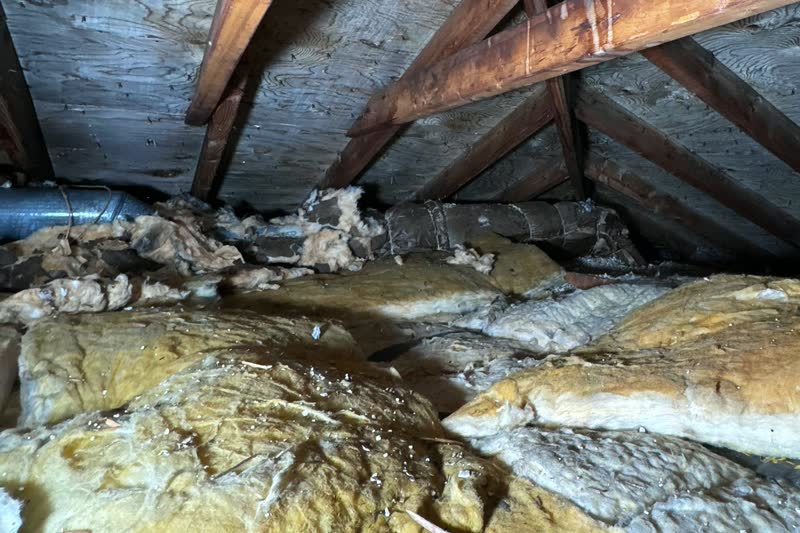
Uneven rooms, creeping energy bills and insulation you can barely see are all clues. These are the safe checks any homeowner can do from the attic hatch, and how to decide between topping off and starting over.
Census survey for Albemarle, 2020 to 2024, NOAA 1991 to 2020 normals, Albemarle station, Pee Dee Avenue Historic District, National Register nomination (NC HPO), The 1978 insulation statute, G.S. 143-139.2, North Carolina energy code (NC Office of State Fire Marshal), ENERGY STAR recommended insulation R-values, ENERGY STAR attic insulation project, ENERGY STAR attic air sealing project, ENERGY STAR on adding attic insulation, EPA on vermiculite insulation, ElectriCities residential services, Piedmont Natural Gas energy efficiency resources, Weatherization Assistance Program, NC State Energy Office, Stanly County Central Permitting (October 2026). Compiled by Insulation Pros. How the town pages are made.
Albemarle, NC
Open in Google Maps (opens in a new tab)Insulation Pros is an insulation contractor serving North Carolina, Albemarle included. Most attics can be priced from the square footage, with no visit.
Not sure what's over your Albemarle ceilings? Send the square footage and a photo or two from the hatch, and you'll get a free estimate for only the work the attic needs.
What You Can Count On
We serve homes across North Carolina. Listed here: the Triad area first, then the big cities.
Davidson County
Guilford County
Forsyth County
Rowan County
Across the State