Attic Insulation on a Home Inspection Report: What Each Finding Means
A home inspection report can carry a handful of attic notes in its own shorthand: insufficient insulation, insulation displaced, evidence of rodent activity, bath fan vents into attic. This guide translates the common ones, says what fixing each one involves and who does it, and points to our longer guides where a finding needs more than a few lines. It is written for buyers, sellers and the agents and inspectors who work with them, and it is short enough to print and keep with the report.
Two things to know up front. North Carolina's standards of practice require a home inspector to inspect and describe the insulation in unfinished spaces such as the attic, but they do not require the inspector to determine its R-value. And Insulation Pros installs and replaces blown-in fiberglass attic insulation and seals attic air leaks; where a finding belongs to a roofer, an electrician, a pest control company or an asbestos professional, this guide says so.

What a North Carolina Home Inspector Checks in the Attic
The North Carolina Home Inspector Licensure Board's standards of practice spell it out. In the attic, the inspector inspects the insulation and vapor retarders in unfinished spaces, the ventilation of the attic, and the kitchen, bathroom and laundry venting systems. The inspector describes the insulation and notes the absence of insulation in unfinished space at conditioned surfaces. The inspector is to enter the attic unless access is obstructed, entry could damage the property, or the situation looks dangerous, and to report whether the attic was fully accessible and how it was inspected.

The same standards list what the inspector is not required to report on, including the methods, materials and costs of corrections, compliance with codes, concealed insulation, and the presence or absence of pests such as rodents. Inspectors are also not required to determine insulation R-values or to disturb insulation, except to move it where readily visible evidence indicates a problem. So a note like insufficient insulation is an observation, not a measurement, and the next step is a closer look by whoever will do the work.
The table sums up the common attic notes and who handles each one:
| Report note | What it usually means | Who handles it |
|---|---|---|
| Insufficient or inadequate insulation | A thin layer, often with the joist tops showing | Insulation contractor: seal, then add insulation |
| Insulation displaced or compressed | Bare, flattened or uneven areas | Insulation contractor |
| Evidence of rodent activity | Droppings, tunnels or nesting in the insulation | Pest or wildlife control first, then insulation removal |
| Bath fan vents into attic | The fan duct ends in the attic | Run outdoors during an attic job |
| No baffles, soffit vents blocked | Insulation can block the air coming in at the eaves | Insulation contractor; a roofer for new vents |
| Vermiculite present | Pebble-like fill that may contain asbestos | Asbestos professional first |
| Attic hatch not insulated or weatherstripped | A bare lid with gaps around it | Insulation contractor, as air sealing |
| Water stains or wet insulation | A roof leak or condensation | Roofer first, then replace wet insulation |
When the report says the attic was not fully accessible
Low roof pitches, stored boxes, ducts and blocked hatches can keep an inspector out of parts of an attic, and the report should say which parts. Those areas have not been looked at. Ask for access, or have the contractor pricing the work look at them.
Insufficient or Inadequate Insulation
The inspector saw a thinner layer than they would expect. ENERGY STAR's quick test points the same way: if the insulation is level with or below the attic floor joists, so you can easily see them, you should add more.

How much is enough depends on the county. For adding insulation to an existing attic, ENERGY STAR recommends R-49 for an uninsulated attic in climate zone 3 and R-38 where 3 to 4 inches are already there; in zone 4 it lists R-60 and R-49. North Carolina's energy code sets its own minimum for new ceilings. Our guide to attic insulation R-value in North Carolina covers both and lists every county's zone.
Savings vary. Find out why in the seller's fact sheet on R-values. Higher R-values mean greater insulating power. In blown-in fiberglass, the attic insulation we install, ENERGY STAR's estimating figure puts R-38 at about 15 inches, R-49 at about 20 and R-60 at about 24; the coverage chart of the product used gives the exact installed thickness for each R-value.
Who fixes it: an insulation contractor. The air leaks in the attic floor are sealed first, baffles go in at the eaves, and blown-in insulation is added over the old layer to an even depth, unless the old layer is wet, soiled or otherwise has to come out. This is our main service.
Rather Talk It Through Than Read?
Call (336) 780-7227Monday to Sunday 8:00 am to 5:00 pm.
Insulation Displaced, Compressed or Uneven
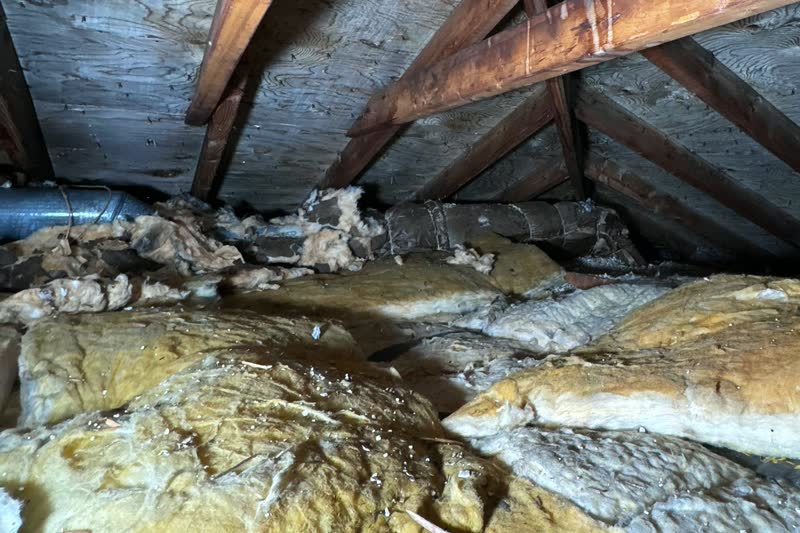
The insulation is there, but not everywhere. Cable and HVAC work, people walking to the air handler, stored boxes and settling can push it aside, flatten it or leave bare patches, often around the hatch, along walkways and near the eaves. ENERGY STAR says insulation should be evenly distributed with no low spots, and notes that an attic can have enough in the middle and very little along the eaves.

Who fixes it: an insulation contractor. Old material is leveled back into place where it can be, and new insulation is blown over the low areas to an even depth. If storage flattened it, a raised platform over full-depth insulation is a carpenter's job; our guide to attic flooring and storage explains how one is built.
Evidence of Rodent Activity in the Insulation
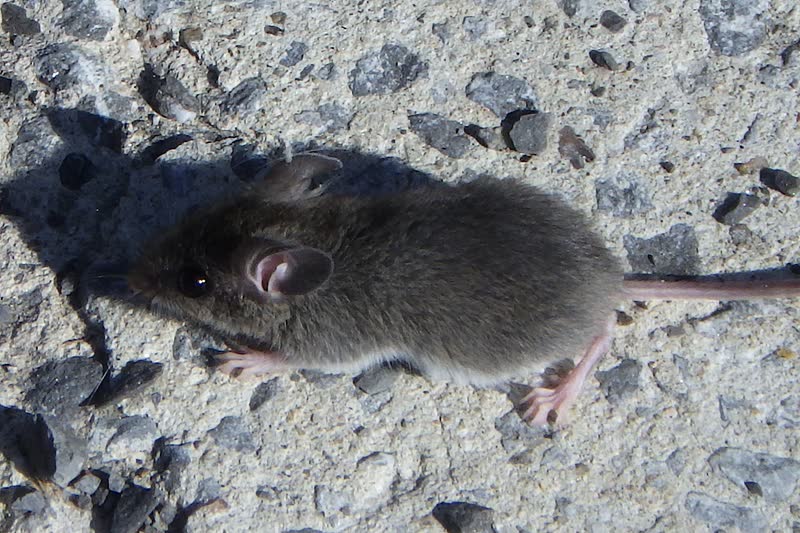
Droppings, tunnels or nests in the insulation. North Carolina's standards do not require inspectors to report on pests such as rodents, so a note about them is worth taking seriously.

Who fixes it, in order: a pest or wildlife control company finds how the animals get in, closes the openings and deals with them. Once the mice are gone, the soiled insulation is vacuumed out, the attic is sanitized and deodorized, the bare ceiling is air sealed, and new insulation is blown in. We do the removal and everything after it. We do not do pest control. Our guide to mice in attic insulation covers the order of the work. The policy forms the NC Department of Insurance describes typically exclude damage by rodents, so check yours before counting on homeowners insurance; our insurance guide has the details.
Bath Fan Vents Into the Attic
A bathroom fan's duct ends in the attic, or has come loose there, instead of carrying the air outdoors. North Carolina inspectors inspect bathroom venting systems, so it is one of the things they look for.

The Building America Solution Center explains why it matters: moist air coming out of a duct that ends in the attic can condense on cold rafters, trusses and sheathing and cause damage. It says the duct should end outdoors, through the roof or at a vented opening in the soffit or a side wall of the attic, and that it should be insulated, with an air-sealed connection.
Who fixes it: we run a bath fan duct that ends in the attic to the outdoors as part of an attic job. If the work needs a new opening in the roof, that part is a roofer's. A kitchen or dryer vent that ends in the attic is one to point out to the appliance or vent installer.
No Baffles at the Soffits, or Insulation Blocking the Vents
Insulation is packed into the eaves where it can block the soffit vents, or there are no baffles holding a channel open for air. ENERGY STAR is blunt about it: never cover attic soffit vents with insulation, and use rafter vents to keep the air moving.

Who fixes it: baffles go in at the eaves as part of an attic insulation job, before the new layer is blown. If the report says the attic has too little ventilation overall, adding vents is a roofer's work. Our guide to attic ventilation, soffit vents and baffles explains the rules.
Vermiculite or Possible Asbestos-Containing Insulation
The EPA describes vermiculite insulation as a pebble-like, pour-in product that is usually gray-brown or silver-gold. North Carolina's standards do not require inspectors to determine whether hazardous substances are present, so a note like this means the inspector saw something that looks like vermiculite and is flagging it.

The EPA's advice is to leave vermiculite undisturbed, not to store boxes in an attic that has it, not to try to remove it yourself, and to hire a professional asbestos contractor before any remodeling or renovation that would disturb it. We do not remove vermiculite. Once an asbestos professional has dealt with it, we can insulate the attic. Our guide to vermiculite attic insulation covers the details.
Attic Hatch or Pull-Down Stairs Not Insulated or Weatherstripped
The way into the attic is a hole in the ceiling with a thin lid. Without weatherstripping or insulation, it leaks air and heat at the one spot every attic job has to pass through.
Who fixes it: weatherstripping around the opening, insulation on the lid, a dam so loose-fill stays out of the opening, and a cover over pull-down stairs. Sealing pull-down attic stairs is part of our air sealing work, and our guide to attic stairs and hatches covers each step.
Other Attic Notes and Who Handles Them
A few more notes turn up in attic sections, and each has its own first call:
- Recessed lights in contact with insulation. Whether that is a problem depends on the fixture's rating. Replacing a fixture is an electrician's job.
- Knob-and-tube wiring. ENERGY STAR lists it among the conditions a professional should deal with before attic air sealing and insulation go ahead. An electrician looks at it first.
- Water stains on the roof deck or wet insulation. A roofer fixes the leak first. Wet insulation is then replaced.
- Disconnected or damaged ducts. We seal the duct joints we can reach. Reconnecting, repairing or replacing ducts is HVAC work.
- Dark streaks in the insulation. ENERGY STAR explains that darkened insulation comes from filtering dusty air from the house. The streaks mark air leaks to seal.
- Fallen or missing insulation in the crawl space. Batts under the floor, a plastic ground cover on the dirt and floor air sealing are work we do.
More on the crawl space and the lights
Our floor insulation guide covers the crawl space side, and our guide on whether insulation can touch recessed lights explains the fixture ratings.
Getting the Attic Work Priced
Whether a finding is repaired before closing, credited or left alone is between the buyer, the seller and their agents, and the purchase contract sets the dates. What a contractor can add is the work in writing. Most attics are priced from the home's square footage, with a special visit only when an attic needs a closer look first, and the free written estimate names each item: what comes out, what gets sealed, the baffles and the R-value the attic will reach. The attic pages of the report, with their photos, help. If the work has to happen before closing, our install-day guide explains how the day goes.
After the work, keep the receipt. Under the FTC's R-value Rule, the installer has to give a contract or receipt, and for loose-fill it must show the coverage area, the initial installed thickness, the minimum settled thickness, the R-value and the number of bags used. Filed with the house papers, it answers the next inspector's questions about the attic.
Get a Free Estimate
Have a report with attic notes? Send us the attic pages and the home's square footage, and we'll send a free written estimate that names each item, so the buyer, the seller and both agents are looking at the same scope.

Prefer to talk? Call (336) 780-7227.