Attic Insulation
Blown-in fiberglass attic insulation, added to the depth your home needs, to even out hot and cold rooms and cut wasted heating and cooling.
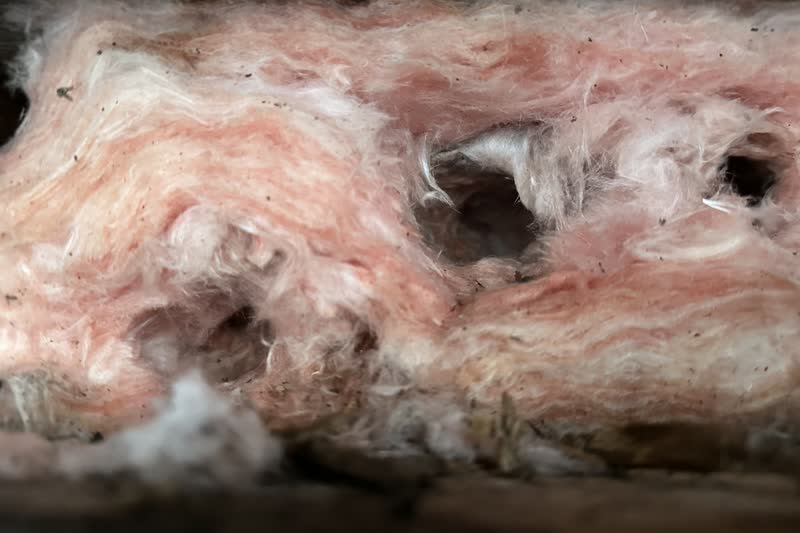
Insulation in a King attic comes out only when it has to: soaked by a roof leak, soiled by mice or full of smoke. A roofer fixes the leak, a wildlife control company traps the mice, and we vacuum, seal and refill.
By the Census Bureau's 2020 to 2024 estimates, the 1970s account for more of King's housing than any other decade, about 27 percent, and about 44 percent of the city's homes went up before 1980. A house from the 1970s is around 50 years old now, but age alone isn't a reason to pull out its insulation. ENERGY STAR says existing insulation usually doesn't need to come out, and that new can be laid over it unless the old layer is damp, moldy, foul-smelling or soiled by animal waste. If it's dry and clean, only thin, it stays and gets a top-up; see attic insulation in King for how that works.
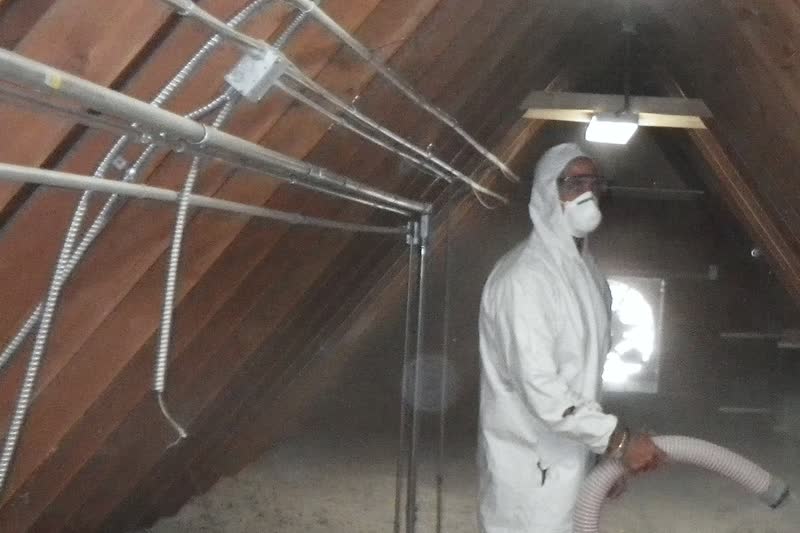
If yours fails that test, the job runs in order: the cause stopped first, the old insulation vacuumed out, the bare ceiling sealed while every gap is in view, and new fiberglass blown in to the depth your estimate names. If mice have been living up there, the attic is also sanitized and deodorized ahead of the refill. Insulation removal with nothing put back is a job we do too, if that's what you want.
See all of our insulation services in King.

Monday to Sunday 8:00 am to 5:00 pm.
Attic insulation, removal, air sealing and more. Open one to see how the work goes.
Blown-in fiberglass attic insulation, added to the depth your home needs, to even out hot and cold rooms and cut wasted heating and cooling.
Old, wet, matted or animal-soiled attic insulation vacuumed out, so new insulation can go in on a clean, sealed attic floor.
Sealing the gaps between your rooms and the attic, and leaky ductwork, so the air you pay to heat and cool stays inside.
Insulation blown into the closed walls of an existing house, batts in open walls for additions, remodels and new builds, and garage walls and ceilings.
Insulation for the garage ceiling under a bonus room, the wall shared with the house and the garage attic, with air leaks sealed first.
Floor insulation under the house: wet or fallen insulation pulled out, new batts between the floor joists, plastic over the dirt and the floor leaks sealed.
Savings vary. Find out why in the seller's fact sheet on R-values. Higher R-values mean greater insulating power. In blown-in fiberglass, the attic insulation we install, ENERGY STAR's estimating figure puts R-49 at about 20 inches and R-60 at about 24; the coverage chart of the product used gives the exact installed thickness for each R-value.
Water first. A roof can leak a little at a time, at the chimney flashing or the rubber boot on a vent pipe, and the insulation underneath can soak it up long before a stain shows downstairs. On ENERGY STAR's list of attic problems to have a professional correct before any work goes ahead, wet or damp insulation stands for a leaking roof, and a roofer makes that repair. Some water starts indoors. A bath fan duct that stops in the attic, or that has pulled loose from its roof cap, sends warm, damp shower air into the attic. Running that duct outside is our job, and we do it as part of the work. A kitchen or dryer vent that empties into the attic is one we'll point out.
For mice and squirrels, call a wildlife control company; it traps them and seals the holes they've been using. That isn't our trade, and our work waits until theirs is done; otherwise the new layer turns into a fresh nest. Once the mice are gone, we pull the fouled insulation out by vacuum, then the attic is sanitized and deodorized ahead of any new fiberglass. Smoke is the third reason: after a house fire, soot and odor can stay in the insulation overhead, so that layer comes out too.
A leak that wet one corner, or a nest in a few bays along the eaves, can mean vacuuming out that section alone and topping up around it, so the sound insulation is kept and a single new layer levels the floor. Droppings spread across the attic, or a smoky smell in every corner, mean the whole layer goes. A few photos from the opening let us judge which kind of job it is, and the estimate spells out what comes out and what stays.
With nothing left on the floor, every gap is in plain sight, which makes this the easiest time the ceiling will ever be sealed. Wire and pipe holes, wall tops, light fixtures and the hatch get closed off, and the gap at a flue or chimney gets metal flashing and heat-rated caulk instead of fiberglass. Baffles at the eaves come next, so the soffit vents keep breathing over the refill.
The EPA describes vermiculite insulation as a pebble-like, pour-in fill, usually gray-brown or silver-gold. If you see it, don't disturb it: the EPA's advice is to assume it may contain asbestos. We don't remove vermiculite; testing it and handling it is work for a trained asbestos professional, one with North Carolina accreditation. If it turns up before the job or on install day, our work stops until an asbestos professional has cleared it; after that, the new insulation can go in. Knob-and-tube wiring is the other find. ENERGY STAR calls the pre-1930 system a possible fire hazard where it touches insulation, so it goes to an electrician before any new fiberglass is blown near it.
Once the old layer is out, nothing is slowing heat through the ceiling, and King's winters are cold enough for that to matter: NOAA's 1991 to 2020 normals for the Rural Hall station, about 4 miles from King, put the average low for December through February at about 30 degrees. So plan the refill with the removal rather than leaving the ceiling bare into winter. The two appear as separate lines on the estimate, so each half can be judged on its own.
The refill's target depends on which side of the county line the house is on. Stokes County is in climate zone 4 on both the state code's map and the 2021 national one, and for an attic floor emptied of insulation, ENERGY STAR's chart gives R-60. King's Forsyth County side is zone 3 on the 2021 map, though the state code keeps it in zone 4; there the chart's figure for an empty floor is R-49. The estimate states that target and how many settled inches of fiberglass reach it. Afterward, the installer owes you a receipt under the FTC's R-value Rule: for blown-in insulation it gives the coverage area, the starting and minimum settled thickness, the R-value and a count of the bags, and it's dated and signed.
Each page has local notes on the homes and attics in that town.
Forsyth County, about 12 miles to the south
About 19 percent of homes built in the 1970s; King: about 27 percent
Insulation contractor in LewisvilleForsyth County, about 13 miles to the southeast
About 13 percent of homes built in the 1970s; King: about 27 percent
Insulation contractor in Winston-SalemForsyth County, about 17 miles to the south
About 15 percent of homes built in the 1970s; King: about 27 percent
Insulation contractor in ClemmonsForsyth County, about 19 miles to the southeast
About 13 percent of homes built in the 1970s; King: about 27 percent
Insulation contractor in KernersvilleAlso in Stokes County: Danbury and Walnut Cove. Every town in Stokes County. See all service areas.
Local service pages near King: Attic Insulation Removal in Lewisville, Attic Insulation Removal in Winston-Salem, Attic Insulation Removal in Clemmons, Attic Insulation Removal in Kernersville, Attic Insulation Removal in Midway, Attic Insulation Removal in Summerfield, Attic Insulation Removal in High Point, Attic Insulation Removal in Mocksville, Attic Insulation in Jamestown, Attic Insulation Removal in Thomasville, Attic Insulation Removal in Greensboro, Attic Insulation Removal in Lexington, Attic Insulation in Trinity, Attic Insulation Removal in Archdale, Attic Insulation in Lewisville, Attic Insulation in Winston-Salem.
Mostly on how much material comes out: the attic floor's area times the depth of the old layer. Rolled batts and blown loose-fill come out in different ways, a layer fouled by mice takes more care, and a tight hatch or a shallow roof slows the work. Damage confined to one area means only that area is priced as removal. The sealing, baffles and new fiberglass make up the rest of the estimate, which is free; this page shows no figure because the attic sets it.
Start with a wildlife control company, which traps the mice and closes off the way they get in. We don't do that part, and it has to be done before ours begins; new insulation over an open entry just gives them fresh nesting material. In the meantime, leave the soiled layer alone. Once the mice are gone, we vacuum the fouled insulation out, the attic is sanitized and deodorized, and then the ceiling is sealed and refilled.
Yes, if that's what you want; removal on its own is a job we take on. In most homes, though, the refill follows the removal right away, since a bare ceiling lets heat straight through. If you'd rather wait, say so when you call, and the estimate will show the removal by itself.
Reach us by phone or text, 8 am to 5 pm every day, or through the contact form. Send the square footage; with just an address, we can measure the footprint ourselves. Then describe what you've noticed, whether it's a brown ring on a ceiling, droppings by the eaves or a sour smell when the hatch opens. ENERGY STAR suggests taking a few phone photos of the attic if you can do it safely from the opening, and they help us judge what has to come out. Most removals can be priced that way; when one can't, we set up a special visit before giving a price.
Attic Insulation
Sound old attic insulation can stay under a fresh top-up. Wet, moldy, animal-soiled or smoke-damaged material cannot. Learn how to tell the difference, what removal involves and what to do about vermiculite.
Attic Insulation
Gray-brown or silver-gold pebbles between the joists change the plan for an attic. How to recognize vermiculite, what the EPA tells homeowners to do, who handles asbestos work in North Carolina, and when new insulation can go in.
Census survey for King, 2020 to 2024, NOAA 1991 to 2020 normals, Rural Hall station, Guide to Determining Climate Zones by County, PNNL for the U.S. Department of Energy (2022), North Carolina energy code (NC Office of State Fire Marshal), ENERGY STAR recommended insulation R-values, ENERGY STAR on hiring an attic insulation contractor, ENERGY STAR attic air sealing project, EPA on vermiculite insulation, NCDHHS on asbestos and home renovation, FTC R-value Rule, 16 CFR 460.17 (October and November 2026). Compiled by Insulation Pros. How the town pages are made.
Insulation Pros is an insulation contractor serving North Carolina, King included. With the size of the house and a few hatch photos, most King removals can be priced without a visit.
Not sure the old insulation in your King attic can stay? Call or text, or send the square footage with a photo or two from the hatch. If it can stay, we'll say so; if it can't, the free estimate shows how much has to go.
What You Can Count On
We serve homes across North Carolina. Listed here: the Triad area first, then the big cities.
Davidson County
Guilford County
Forsyth County
Rowan County
Across the State