Why Is My House So Drafty? How to Find Where the Cold Air Gets In
Why is my house so drafty? In winter, warm air rises and leaks out through gaps at the top of the house, and cold air is pulled in lower down to replace it, around windows, doors, outlets and baseboards. ENERGY STAR describes the trap most people fall into: you feel the drafts at the windows and doors and assume those are the big leaks, when in most homes the most significant leaks are hidden, many of them in the attic.
This guide shows how to find the drafts yourself, room by room, which ones are quick do-it-yourself fixes and which ones lead back to the attic. Insulation Pros seals the attic side: the attic floor, pull-down stairs and hatches, and the duct joints we can reach. Windows and doors are not our work, and this guide says who to call for them.
Where the Drafts Come From
A house trades air with the outdoors all the time, and cold weather speeds it up. ENERGY STAR's guide to sealing and insulating explains why: in cold weather, warm air rises in the house just like it does in a chimney, escapes into the attic and sucks cold air in all around the home, around windows and doors and through holes lower down. Wind adds to it, which is why the Department of Energy suggests hunting for leaks on a cool, windy day.

That is why a draft you feel at a window or an outlet can start at the top of the house. Sealing the window helps that window. Sealing the attic floor reduces the pull on every gap below it. Our guide on why air sealing comes before insulation explains the attic side in detail. The age of the house is a clue as well, and our guide on how old homes in North Carolina are has Census figures by county and city.
Why is my house suddenly drafty?
Look for what changed. A cold, windy day makes every leak stronger. Exhaust fans, a clothes dryer or a fireplace with its damper open push air out of the house, and outside air comes back in through the gaps to replace it. A hatch knocked out of place, a bath fan flap stuck open, torn weatherstripping or a duct that has come loose in the attic can all start a new draft.
How to Find Drafts Yourself
The U.S. Department of Energy's consumer guide to home energy assessments gives a simple test for leaks that are hard to find, ideally done on a cool, windy day:
- 1. Close up the house. Shut all exterior doors and windows, and close the fireplace damper.
- 2. Turn off fuel-burning appliances. The guide says to turn off combustion appliances such as gas furnaces and water heaters.
- 3. Turn on the exhaust fans. Every fan that blows air outside, such as bath fans and the range hood.
- 4. Use smoke to find the leaks. Light an incense stick and pass it slowly around the edges of likely leak spots. Where the smoke is drawn into or out of the room, there is an air leak. Keep it away from curtains and put it out when you finish.
- 5. Put everything back. Turn the fans off and the appliances back on.

Two more checks from the same guide
At night, shine a flashlight around a window or door frame while someone outside watches for light coming through the gaps. It finds large gaps, not small ones. Or shut a door or window on a sheet of paper: if you can pull the paper out without tearing it, air is getting through.
Write each leak down by room. The list tells you which fixes you can do this weekend and which ones lead to the attic.
Rather Talk It Through Than Read?
Call (336) 780-7227Monday to Sunday 8:00 am to 5:00 pm.
Room by Room: The Usual Places Cold Air Gets In
The Department of Energy's guide names the places to inspect: electrical outlets, switch plates, window and door frames, baseboards, attic hatches, wall or window air conditioners, mail chutes, electrical and gas service entrances, cable and phone lines, and vents and fans. Here is what the common ones usually mean.

Outlets and switches on outside walls
Air that comes out of an outlet has traveled through the wall around it. The Department of Energy's building science guidance says any penetration into the walls can let air flow in and out of the house, and calls for sealing around electrical boxes and wiring. Foam gaskets sold to fit behind cover plates can quiet a small draft; turn the power off at the breaker before you take a plate off. If several outlets on one outside wall run cold, the wall may have little or no insulation, and our drill-and-fill guide explains how to check and how a closed wall gets insulated.
Windows and doors
ENERGY STAR lists drafts around a closed window or door, and visible gaps around the trim, as signs of a leak, and its window and door project shows how to seal the gap behind the trim. Worn weatherstripping is a quick hardware-store fix, and ENERGY STAR notes that a window a sheet of paper slides out of easily could be tightened with thicker weatherstripping. Replacing windows or doors is a job for a window and door contractor. We don't do that work.
Baseboards and the first floor
Cold air along the baseboards of a first floor can come up from a crawl space through the holes around pipes, drains and wires. Under a house with a vented crawl space, our floor insulation guide covers sealing those holes from below and fitting batts tight to the underside of the floor, which is work we do.
Ceiling lights, bath fans and the attic hatch
These open straight into the attic. ENERGY STAR's sealing guide says that in winter, recessed lights in the ceiling below the attic draw warm air up into it. A bath fan whose housing is not sealed to the ceiling leaks around its edges, and the Building America Solution Center notes that decorative trim covering those gaps will not stop the leak. A fan duct that ends in the attic, or has come loose there, connects the bathroom ceiling to attic air; we run that duct to the outdoors as part of an attic job.
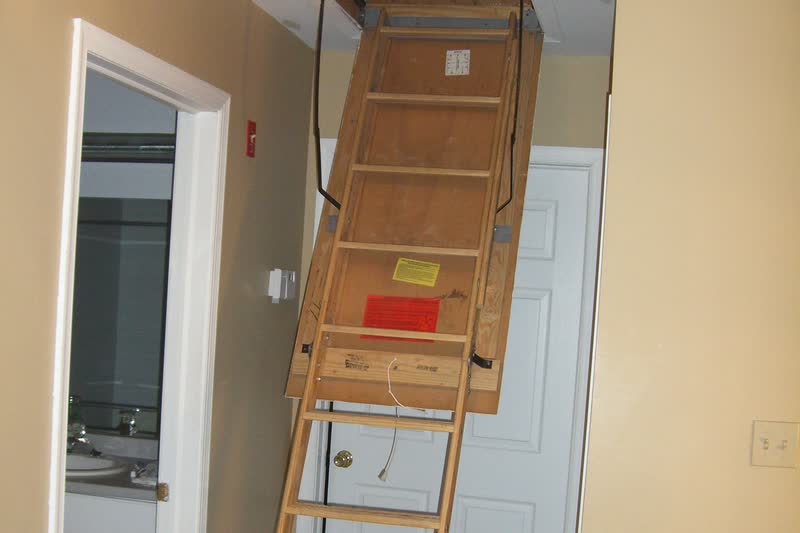
The attic hatch or pull-down stairs, with a thin lid and no weatherstripping, can be one of the larger leaks in the house, and it sits right where you feel it. Our guide to attic stairs and hatches covers weatherstripping, insulating and covering it.
The fireplace, the range hood and the dryer
A fireplace damper left open is an open hole up the chimney, so close it when there is no fire, and have a chimney professional look at a damper that will not close properly. A range hood or dryer vent whose outside flap sticks open lets cold air in; check that the flap closes when the fan or dryer is off, and call the installer or a vent professional if it is damaged.
The Leaks You Can't Feel: Up in the Attic
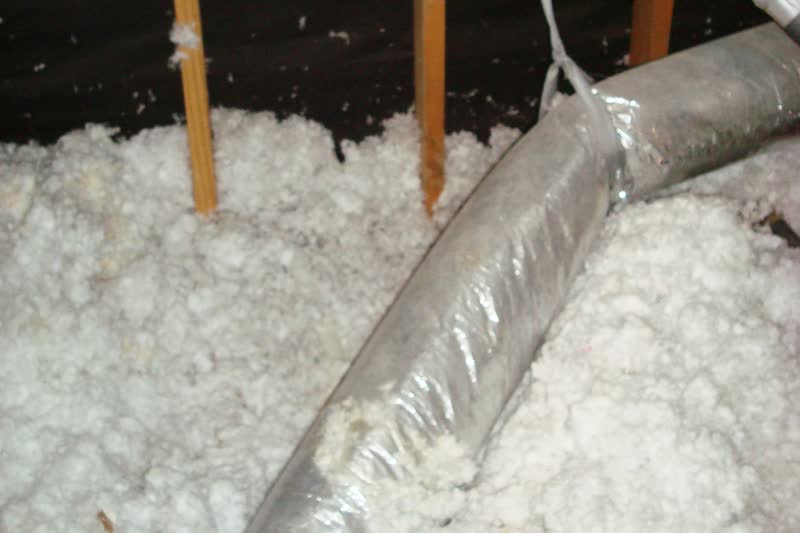
The drafts you feel are where cold air comes in. Where the warm air goes out is often out of sight, under the attic insulation. ENERGY STAR lists the common attic leaks: behind and under knee walls, the attic hatch, wiring holes, holes for plumbing and pipes, dropped soffits open to the attic, recessed lights, and furnace flue or duct chases. Its advice is not to chase every little hole: the biggest gains come from plugging the large ones.

You can see some of it from the hatch. ENERGY STAR explains that darkened patches in the insulation come from filtering dusty air from the house, and that in cold weather you may see frosty areas where warm, moist air condenses and freezes as it hits the cold attic air. Stay on the joists, and if you see loose gray-brown or silver-gold granules, back out and leave them alone, since that can be vermiculite.
Which drafts are DIY, and which need a pro?
Outlet gaskets, weatherstripping and caulk around trim are fair do-it-yourself work. ENERGY STAR calls attic air sealing a challenging do-it-yourself project, and recommends hiring a professional when the attic is hard to get into or work in, the insulation is wet or damp, kitchen, bath or dryer vents empty into the attic, there is little or no attic ventilation, or there is knob-and-tube wiring. It also warns that sealing can make gas or oil appliances that vent naturally backdraft, and recommends having them tested before and after the work.
What Sealing the Attic Side Involves
On an attic job, the gaps in the attic floor are closed while they can still be reached: wire and pipe holes, the tops of interior walls, open chases and dropped soffits, and the gap around a flue, with metal flashing and high-temperature sealant. Pull-down stairs and hatches are weatherstripped and insulated, the duct joints we can reach are sealed with mastic or foil tape, and a bath fan duct that ends in the attic is run to the outdoors. Then the insulation is pushed back into place, or new insulation is blown in to an even depth.

A Department of Energy guide to air sealing puts the payoff from sealing uncontrolled air leaks at 10 to 20 percent of heating and cooling bills. How much your house gains depends on how leaky it is now, and nobody can promise a figure.
Savings vary. Find out why in the seller's fact sheet on R-values. Higher R-values mean greater insulating power.
If you want the leaks measured, a blower door test shows how leaky the house is before the work and can confirm the result after it. Home energy audits are a paid service with us; ask what yours would include when you book. For the attic work itself, the estimate is free and lists what will be sealed.
Get a Free Estimate
Drafts at the attic stairs, cold air around the ceiling lights? Tell us roughly how big the attic is and what you found, and we'll price sealing the attic side, with the insulation on the same estimate if it needs it.

Prefer to talk? Call (336) 780-7227.