Are Attic Fans Worth It? Powered, Solar and Whole-House Fans Compared
For most North Carolina homes, attic fans are not worth it. A powered attic fan rarely saves more electricity than it uses, and over a leaky ceiling it can pull cooled air out of the rooms below. A solar attic fan avoids the electric bill but saves little and pays back slowly. A whole-house fan is a different machine, and it can work, but only on cool, dry nights, which are a short season here. What usually does more for a hot house is air sealing the ceiling and bringing the attic insulation up to the recommended depth.
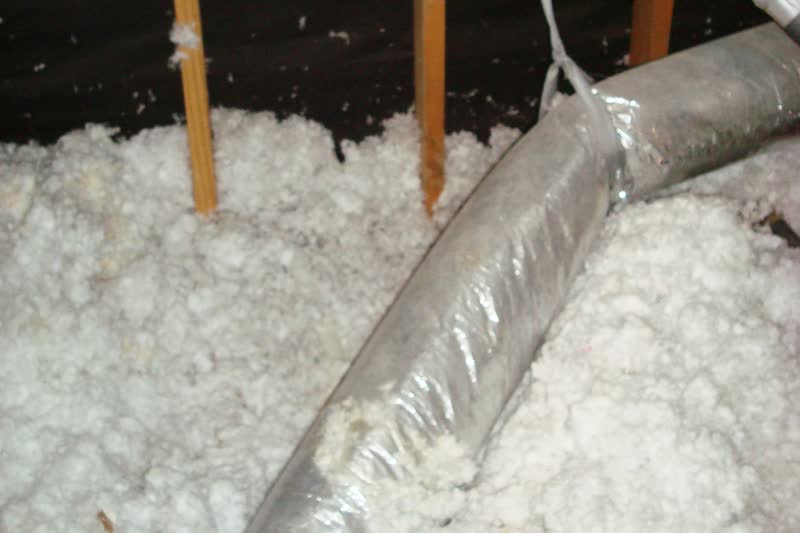
We do not sell or install attic fans. We work on the attic floor: air sealing, insulation and baffles at the eaves. So this guide sticks to what the research measured, why North Carolina's humid summers matter, and the settings and safety checks for anyone who keeps a fan.
Three Different Machines Called Attic Fans
The name covers three products that move different air for different reasons, which is why advice about them so often conflicts:
| Fan | Where it sits | What it does |
|---|---|---|
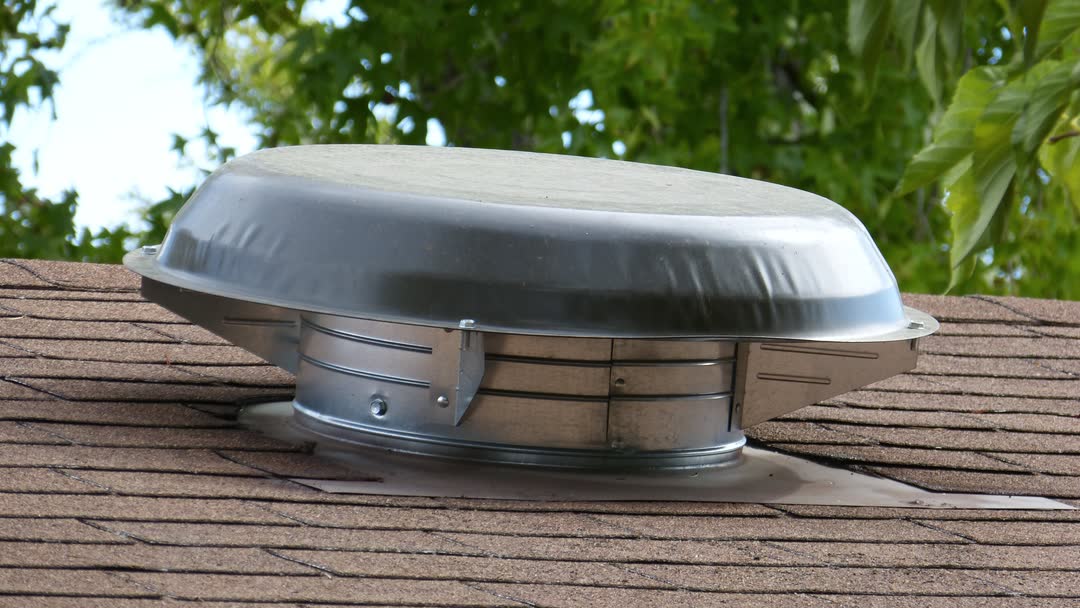
| Powered attic fan | On the roof or in a gable wall, wired to house power | Exhausts hot attic air when a thermostat switches it on |
| Solar attic fan | On the roof, with its own small solar panel | Exhausts attic air while the sun is strong enough to run it |
| Whole-house fan | In the ceiling of the house, usually a central hallway | Pulls outdoor air in through open windows and pushes it into the attic |
Is a whole-house fan the same as an attic fan?
No. A powered or solar attic fan only ventilates the attic. It never touches the air in your rooms, at least not on purpose. A whole-house fan cools the house itself: the U.S. Department of Energy describes it as pulling outdoor air into the home through open windows and exhausting it through vents in the attic and roof. The attic gets flushed along the way, but the rooms are the point.
That is why the answers differ. The question for an attic fan is whether a cooler attic saves enough air conditioning to cover the fan. The question for a whole-house fan is whether the outdoor air is cool and dry enough to replace the air conditioner for part of the year.
What the Research Says About Powered Attic Ventilators
The research is older than most people expect, and it points one way. A paper from the Florida Solar Energy Center, a research institute of the University of Central Florida, reviewed it in 2000. It found that the only examination of powered attic ventilators had shown the fans using more electricity than they saved in air conditioning.
The numbers come from a 1979 study of two instrumented side-by-side houses in Texas, published by the National Bureau of Standards. Forced ventilation trimmed the heat coming through the ceiling and into the attic ducts. Allowing for the air conditioner's efficiency, the paper puts the cooling saving at about 170 watts, against 284 watts measured for the fan itself. An earlier detailed study, the paper says, also found a real but small cooling reduction that the fan's own use outweighed.
The paper adds that most powered attic ventilators draw 250 to 300 watts while running, about a tenth of an air conditioner's peak draw, and usually switch on when the attic reaches about 105°F. Its conclusion is plain: powered ventilation does not typically produce a net saving unless the attic is uninsulated, and other ways of controlling attic heat are preferable and more cost effective.
Why moving attic air does so little for the ceiling
On a summer afternoon the roof deck gets very hot, and it radiates that heat straight down onto the top of the insulation. Detailed simulations cited by the Florida Solar Energy Center show radiation from the deck dominating the heat that reaches the rooms in midsummer. A fan swaps the air in the attic, but radiation does not travel by air, so the deck keeps shining heat down.
The same paper names three ways that limit this kind of heat more effectively: more attic insulation, a radiant barrier fastened to the roof framing, and a white, reflective roof. The first two are attic jobs. The third is a roofing decision. Our guide on whether a radiant barrier is worth it in North Carolina covers the second one.
Do attic fans pull air conditioning out of the house?
They can. ENERGY STAR says that if the soffit vents are blocked and the attic is not well sealed from the house, an attic fan will suck cool conditioned air up out of the house and into the attic, making the air conditioner work harder and raising the summer bill.
Advanced Energy, a Raleigh energy nonprofit set up by the North Carolina Utilities Commission, reaches the same verdict in plainer words. Asked whether power attic ventilators work, its answer was "not well", because they can steal air from the living space and some are strong enough to make a gas water heater backdraft, putting carbon monoxide into the home. Its advice is to check the existing vents, seal the holes between the house and the attic, and keep the insulation at a proper depth.
Rather Talk It Through Than Read?
Call (336) 870-3893Monday to Friday 8:00 am to 5:00 pm. Saturday by appointment. Sunday closed.
Are Solar Attic Fans Worth It?
A solar attic fan solves one problem: it runs on its own panel, so it adds nothing to the power bill. The Florida Solar Energy Center tested two of them on an occupied house in Cocoa, Florida, in the summer of 1997, and it is still one of the few measured results.
The house had about 1,045 square feet, roughly R-19 of blown fiberglass in the attic and a foil radiant barrier already stapled to the trusses. Even so, its attic had reached 136°F. With the two solar fans running, the daily peak attic temperature fell by an average of 22°F. Air conditioning use fell by about 6 percent, which the researchers estimated at about 460 kilowatt-hours a year. At the prices of the day, they put the payback at more than 20 years and called it not very favorable.
The paper is careful in both directions. Savings could be larger in a house with less insulation, no radiant barrier, or the air handler in the attic. They could also be overstated, because the test family kept the thermostat low and used more air conditioning than an average Central Florida home. The homeowner did say the house felt more comfortable.
What solar fans do better, and what they do not change
The researchers noted two real advantages. Solar fans were almost silent next to conventional units, and they run only in strong daytime sun, when outdoor humidity tends to be lower. A passively vented attic, the paper points out, draws in large amounts of damp air during humid evenings.
A solar fan is still an exhaust fan, though. The ENERGY STAR warning about blocked soffit vents and a leaky ceiling is about attic fans in general, and nothing in it exempts the solar kind. If the ceiling below is full of gaps, a solar fan can draw air from the rooms just as a wired one can, only less of it on cloudy days.
Whole-House Fans and North Carolina's Humid Summers
A whole-house fan can cut air conditioning, but only when the outdoor air is cooler than the indoor air, and the Department of Energy lists humidity as its main drawback: the fan does not dehumidify, which makes it less suitable for high-humidity climates. Every county in North Carolina falls in the moist, or A, regime on the code's climate map, in zones 3, 4 and 5.
The Building America Solution Center, run for the Department of Energy, says whole-house fans suit climates where cooling-season nights fall below about 67°F and the gap between the daytime high and the nighttime low is about 25°F or more. It rates humid zones 1A through 3A as likely to gain less, and zones 4A to 6A as able to use the fans, with humidity as a concern. NOAA's 1991 to 2020 climate normals for June through August show where North Carolina stands:
| Weather station | Average low | Average high |
|---|---|---|
| Asheville Regional Airport | 63°F | 84°F |
| Greensboro airport | 68°F | 87°F |
| Charlotte Douglas Airport | 68°F | 89°F |
| Raleigh-Durham International Airport | 68°F | 89°F |
| Wilmington International Airport | 71°F | 89°F |
What the numbers mean for a North Carolina house
No station in the table reaches the 25°F swing in an average summer, and every station outside the mountains sits at or above the 67°F line. Asheville and the mountain counties come closest. The Solution Center's advice for humid regions fits most of the state: leave the air conditioner off and use the whole-house fan when the season allows, generally spring and fall, then keep the fan off once summer calls for steady air conditioning.
For the in-between weeks, when nights are cool but the air conditioner runs by day, its rule of thumb is to run the fan at night only if the night will be at least 10°F cooler than the indoor air was during the day. It warns against switching back and forth between the fan and the air conditioner, because humid air pulled in by the fan has to be dried again by the air conditioner, and damp air can condense on surfaces the air conditioning has cooled. It also says never to run the fan when it is warmer outside than inside.
How much attic venting a whole-house fan needs
Far more than an ordinary attic. The Department of Energy says a whole-house fan needs 2 to 4 times the normal vent area, about 1 square foot of net free area for every 750 cubic feet per minute of fan capacity, and that installation should be done by a professional with dedicated wiring. It sizes the fan at no less than half the house's volume per minute: an 8,000 cubic foot house needs at least 4,000 cubic feet per minute. By that ratio, a 4,000 cubic foot per minute fan needs a little over 5 square feet of open vent area, which most attics do not have without new vents cut by a roofer.
Why a Leaky Ceiling Changes the Answer
Every attic fan is a pressure machine. An attic fan pushes air out of the attic, so air has to come in from somewhere. If the soffit vents are open and the ceiling is tight, it comes from outdoors. If the soffits are blocked or the ceiling is full of gaps, some of it comes up from your rooms, which is ENERGY STAR's warning in a sentence.
Ceiling leaks also work in the other direction. The Florida Solar Energy Center describes leaky supply ducts leaving the house under slight negative pressure while the air handler runs, which draws hot attic air down through the tops of interior walls, recessed lights and other bypasses. A whole-house fan does the reverse: it pushes air into the attic, so the Building America Solution Center says the ceiling has to be sealed to stop attic air leaking back into the house.
So the leaks come first whichever fan you are weighing. The Department of Energy's air sealing advice is to caulk and seal where plumbing, ducting and wiring pass through ceilings and the soffits over cabinets. Air sealing the attic floor is our core work for exactly this reason, and our guide on why air sealing comes before insulation shows where those gaps usually hide.
Better Uses of the Money Than an Attic Fan
If the goal is cooler rooms and a lower summer bill, the research points at the attic floor and the ducts, not at the roof. These steps attack the heat a fan cannot reach:
- Seal the ceiling. Closing the gaps around lights, pipes, wires, wall tops and the hatch stops the air exchange that makes every fan a gamble.
- Bring the insulation up to depth. ENERGY STAR's retrofit chart for an attic that already has 3 to 4 inches calls for R-38 in climate zone 3 and R-49 in zones 4 and 5.
- Seal and insulate attic ducts. On a hot afternoon the ducts can gain more heat than the whole ceiling, as the next part explains.
- Consider a radiant barrier. It works on the radiant heat from the roof deck that moving air does not touch.
- Keep the passive vents open. Clear soffit vents with baffles above the insulation, plus vents up high, let the attic breathe without a motor.
Why the ducts and the air handler matter so much
In many homes the ductwork runs through the attic, and the Florida Solar Energy Center calls putting the air handler up there too a common practice in much of the southern U.S. It cites a monitoring study of 48 Central Florida homes in which houses with the air handler in the attic used 30 percent more cooling energy than houses with it in a garage or elsewhere. Its worked example puts the heat gain into R-5 attic ducts at more than twice the heat through an R-30 ceiling on a hot afternoon. Duct sealing and insulation go straight at that loss, and it is the kind of attic work a fan cannot do.
Savings vary. Find out why in the seller's fact sheet on R-values. Higher R-values mean greater insulating power.
On the attic floor, ENERGY STAR's chart for an uninsulated attic calls for R-49 in zone 3 and R-60 in zones 4 and 5. Our guide to attic insulation R-value in North Carolina explains which zone your county is in. A radiant barrier helps most where ducts run through a hot attic, and it makes the most sense after the floor is sealed and insulated.
If You Keep an Attic Fan: Settings and Safety Checks
Plenty of houses already have a fan on the roof, and nobody has to tear one out. Switching it off costs nothing, while removing it leaves a hole a roofer has to close. Either way, make sure the fan is not working against you. These checks come from the sources above:
- Check the intake. Look under the eaves for soffit vents, and from the hatch make sure insulation has not buried them. ENERGY STAR's warning starts with blocked soffits.
- Leave the thermostat high or switch the fan off. The research found powered fans used more power than they saved, so running them longer or cooler does not help.
- Mind gas appliances. If a gas water heater or furnace vents through a flue, have it tested for backdrafting while the fan runs, and keep working carbon monoxide alarms.
- Whole-house fan: open the windows first. The Department of Energy says to open windows throughout the house so the suction is not concentrated in one place.
- Whole-house fan: never with the air conditioner. Run it only when it is cooler outside than inside, and keep it off for several hours before and after the air conditioner runs.
- Whole-house fan: cover it in winter. The Department of Energy calls for an airtight cover in the months the fan is not used, and a hinged, sealed door if you switch often.
Whole-house fans and combustion appliances
This one deserves its own warning. The Building America Solution Center says the depressurization from a whole-house fan can cause problems with gas or propane equipment. It does not recommend combustion appliances that draw room air, or that have a standing pilot light, in a home where a whole-house fan runs. A furnace without a standing pilot is acceptable if a switch stops the fan and the furnace running at the same time. Close the fireplace doors and damper before the fan goes on.
When to Call a Pro About an Attic Fan
Fan questions usually involve more than one trade. A roofer cuts, closes or replaces roof vents and roof-mounted fans. An electrician handles the wiring. A heating and cooling contractor deals with the air handler, the ducts and any gas appliance that might backdraft. An insulation contractor works on the attic floor: sealing the ceiling, insulating and fitting baffles at the eaves.
Call for help when the attic is very hot and the rooms below never cool, when the insulation is thin or flattened, when the soffits are buried, or when a fan seems to run all day with no effect. If the old insulation is soiled or wet, insulation removal may come first. To find out how much air leaks from the rooms into the attic, a home energy audit with a blower door test measures it, and it is a paid service we offer.
Whoever you call, get the plan in writing: which leaks get sealed, how deep the insulation goes, which bays get baffles, and whether any fan stays, goes or gets switched off. We don't sell or install attic fans, so we have no reason to talk you into one. We work on the attic floor. If the problem turns out to be a roofing, electrical or heating and cooling one, we'll say so.
Get a Free Estimate
Attic like an oven and the ceilings warm to the touch by late afternoon? Tell us roughly how big the attic is, or we'll work it out from your home's footprint, and we'll price the sealing and insulation. Most attics don't need a visit, and you won't get a fan pitch from us.

Prefer to talk? Call (336) 870-3893.